How Global Turmoil is Reshaping Investment Patterns Among Zurich's Business Elite
Geopolitical tensions and currency volatility are forcing the city's wealth managers and entrepreneurs to fundamentally rethink their portfolios and hiring strategies.
Geopolitical tensions and currency volatility are forcing the city's wealth managers and entrepreneurs to fundamentally rethink their portfolios and hiring strategies.
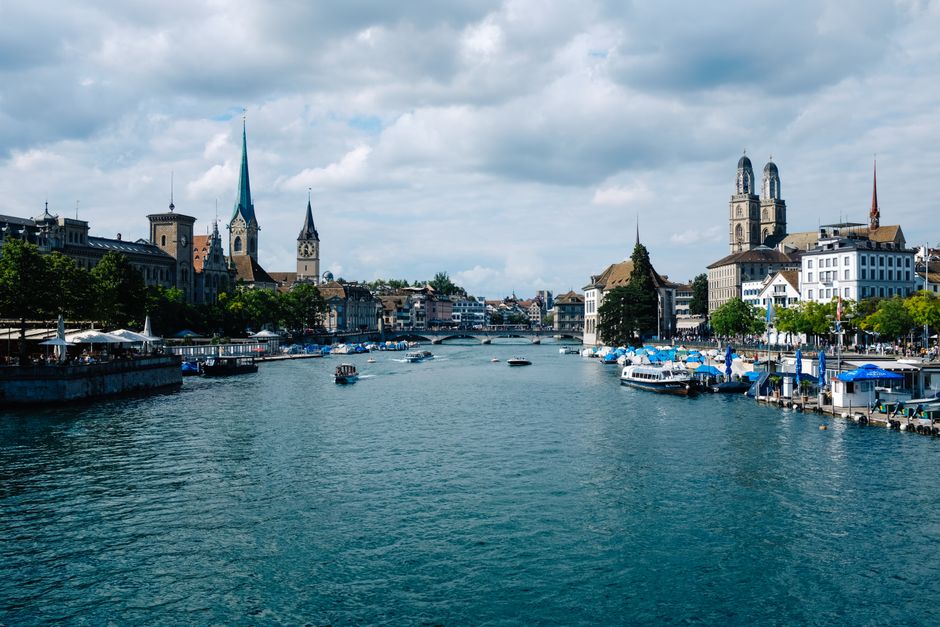
The gleaming office towers along the Bahnhofstrasse tell one story: Zurich remains a fortress of stability. But behind closed doors in the Wiedikon and Hongg districts, where many of the city's wealth management firms operate, a different narrative is emerging. Global uncertainty is forcing Zurich's investment community to recalibrate its approach to risk, with direct consequences for local business hiring, real estate prices, and entrepreneurial ambition.
The cascading crises—geopolitical tensions in the Middle East, military actions in Pakistan and Afghanistan, and disease outbreaks in Central Africa—are triggering what analysts call a "flight to safety" capital reallocation. For Zurich, traditionally benefiting from such flows, the situation is more complex. While the Swiss franc remains a preferred hedge, rising global instability is making institutional investors more conservative about expanding operations. Several mid-sized financial advisory firms on Talacker have quietly postponed recruitment plans. One commercial property manager reported that rental inquiries for premium office space in the Europaallee district have cooled notably compared to early 2026.
The cost-of-living pressures are equally pronounced locally. Zurich's median rent for a two-bedroom apartment in respectable neighbourhoods like Wiedikon now exceeds 3,200 CHF monthly—a 7% increase year-on-year. For the small-to-medium enterprises that form Zurich's business backbone, wage expectations are rising accordingly, while clients holding assets in geopolitically sensitive regions are demanding deeper due diligence. This translates to higher operational costs without proportional revenue growth.
Investment patterns are shifting too. Rather than diversifying into emerging markets—traditionally attractive for Zurich-based portfolio managers—money is concentrating in Swiss real estate and defensive equity positions. This has inflated residential property prices in sought-after areas like Altstetten and Enge, pricing out younger entrepreneurs seeking to establish households while launching ventures.
The implications are subtle but significant. Zurich's traditionally cosmopolitan business environment—built on openness to global capital flows—faces pressure from risk-averse institutional behaviour. Venture capital activity in the tech sector around the Zurich Innovation Hub has experienced a modest slowdown, with investors favouring later-stage, lower-risk bets over disruptive startups.
For Zurich's business community, the message is clear: global headwinds require sharper strategic thinking. Those who can navigate this environment—balancing capital preservation with calculated growth—will define the city's next economic chapter. Others may find the cost of doing business in Europe's most expensive city increasingly difficult to justify.
This article was compiled by AI from the sources linked above and screened before publishing. See our editorial standards.
How does this story make you feel?
Spread the word
About this article
Published by The Daily Zurich
Daily brief
Free, in your inbox before 7am. Weekdays.
More in Business