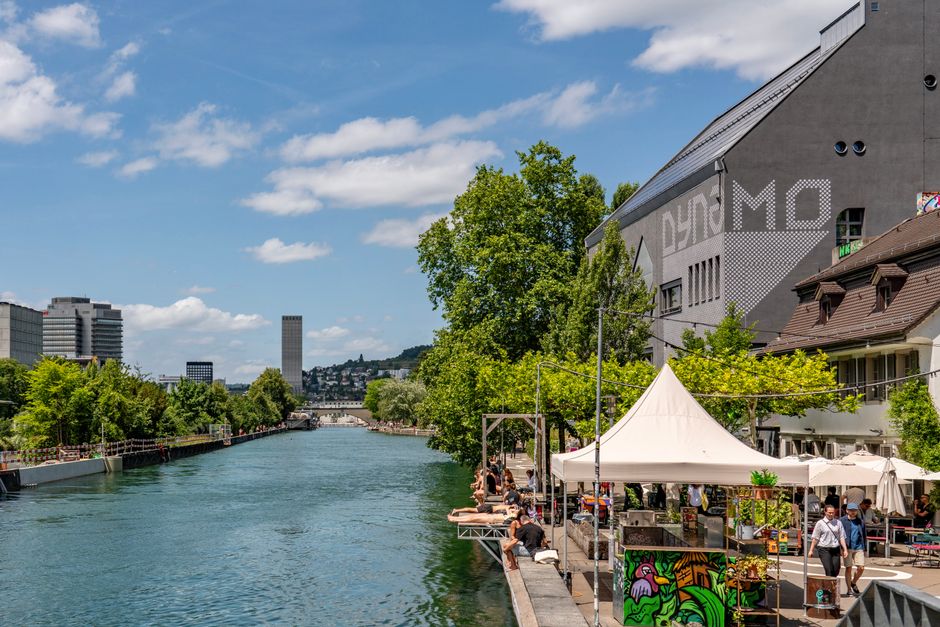
In the heart of Zurich West, where converted warehouse spaces now house venture-backed startups and design studios, a quiet revolution in sustainable logistics is unfolding. Sofia Keller's company, LogiFlow, has emerged as one of Switzerland's most promising climate-tech ventures, tackling a sector responsible for roughly 8% of global emissions.
What began in 2021 as a lean operation on Europaplatz has evolved into a team of 120 employees across three European offices. Last month, LogiFlow closed a €47 million Series B funding round led by Copenhagen-based venture firm Positron Capital, signalling strong investor confidence in Zurich's deepening startup ecosystem.
"The city's proximity to Switzerland's logistics hub and its concentration of engineering talent made Zurich the obvious choice," explains Keller in recent interviews. The company's software platform optimises delivery routes for mid-sized freight operators, reducing fuel consumption by an average of 23% while cutting costs. For a sector operating on razor-thin margins, that proposition resonates.
Zurich's innovation landscape has matured considerably over the past five years. ETH Zurich's startup incubator continues to funnel deep-tech talent into the ecosystem, while the Zurich Innovation District—spanning Zurich West, Altstetten, and parts of Wiedikon—now hosts over 3,000 startups. The city's average venture funding per capita ranks among Europe's highest, at approximately CHF 4,200 per resident annually.
LogiFlow's growth reflects broader trends. Swiss startups raised CHF 4.2 billion in 2025, with clean technology and software dominating allocation. Unlike the boom-and-bust cycles of crypto or fintech hype, sustainable logistics addresses a structural market need. Major clients already include Migros subsidiary Planzer and Austria's Gartner logistics network.
Yet challenges remain. Zurich's real estate costs—office space in Zurich West now commands CHF 900–1,200 per square metre annually—force growing companies to make difficult expansion decisions. Several competitors have relocated to more affordable European cities. LogiFlow recently secured a larger footprint in the Europaplatz development, betting on remaining anchored here.
The city's establishment has taken notice. Zurich City Council has designated clean tech as a priority cluster for innovation promotion, offering targeted tax incentives and streamlined permitting for qualifying ventures. Whether such measures prove sufficient to keep ambitious founders rooted remains an open question.
Still, LogiFlow's trajectory offers a compelling proof point: Zurich's combination of capital, talent, and regulatory stability continues to nurture ventures with global ambitions.
This article was compiled by AI from the sources linked above and screened before publishing. See our editorial standards.