Why Your Zurich Grocery Bill Depends on Global Trade Wars You've Never Heard Of
From Migros baskets to Bahnhofstrasse boutiques, everyday prices are shaped by tariffs, supply chains and geopolitical tensions most residents barely notice.
From Migros baskets to Bahnhofstrasse boutiques, everyday prices are shaped by tariffs, supply chains and geopolitical tensions most residents barely notice.
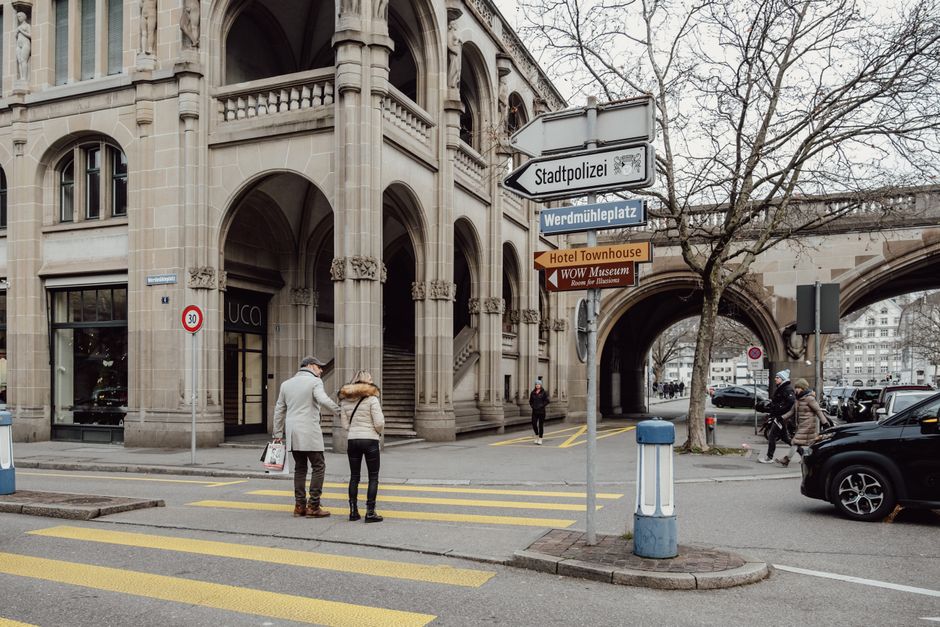
Walking through the Eaux-Vives neighbourhood on a Tuesday morning, you might not think about Venezuela's political crisis or Pakistan's border tensions while picking up tomatoes at the weekly Bürkliplatz market. But the price of those tomatoes—and nearly everything else in your shopping basket—is quietly shaped by a web of international trade relationships that have grown increasingly fragile.
Switzerland's economy depends almost entirely on global commerce. According to the State Secretariat for Economic Affairs, exports represent roughly 60 per cent of GDP, and nearly 40 per cent of food consumed domestically is imported. For Zurich's 415,000 residents, that means vulnerability to supply shocks most people never consider until they notice prices climbing at their local Coop or Migros.
Recent geopolitical flashpoints illustrate why. Tensions between major trading partners create cascading effects. When shipping routes face disruption—whether through conflict in the Middle East or sanctions targeting key economies—freight costs spike immediately. A container of electronics from Asia to Zurich can increase in cost by 20-30 per cent within weeks. Retailers absorb some costs but pass others to consumers.
The mechanics are less visible on Bahnhofstrasse than in residential districts like Wiedikon or Altstetten. While luxury boutiques can weather price volatility, families shopping at discount retailers feel it acutely. A 2025 consumer survey found that 68 per cent of Zurich households were concerned about food price stability, directly correlated with supply chain anxiety.
Switzerland's position as a neutral, wealth-concentrated hub has historically insulated residents from worst-case scenarios. But that advantage erodes when major trading partners—particularly the EU, China, and the United States—face friction. Swiss companies that import raw materials or export precision machinery face real pressure. When those pressures mount, employers negotiate wages conservatively, and wage growth stalls.
For everyday Zurichers, the lesson is straightforward: your local purchasing power is genuinely global. The coffee at Starbucks on Limmatquai, the vintage furniture from Dorotheum, the fresh fish at Fischmarkt near Bellevue—all depend on thousands of miles of fragile supply chains.
Understanding this isn't about becoming a geopolitics expert. It's about recognizing that when international tensions escalate, local inflation usually follows within 6-12 months. Prudent households might consider this when making decisions about energy contracts, grocery budgets, or larger purchases. The Zurich wealth advantage remains real, but it's no longer as insulated from global turbulence as it once was.
This article was compiled by AI from the sources linked above and screened before publishing. See our editorial standards.
How does this story make you feel?
Spread the word
About this article
Published by The Daily Zurich
Daily brief
Free, in your inbox before 7am. Weekdays.
More in Business