Why Zurich's Job Market Is Reading the Tea Leaves of Global Capital Flows
As international investment patterns shift, the city's employment landscape tells a clearer story about where money—and opportunity—is actually moving.
As international investment patterns shift, the city's employment landscape tells a clearer story about where money—and opportunity—is actually moving.
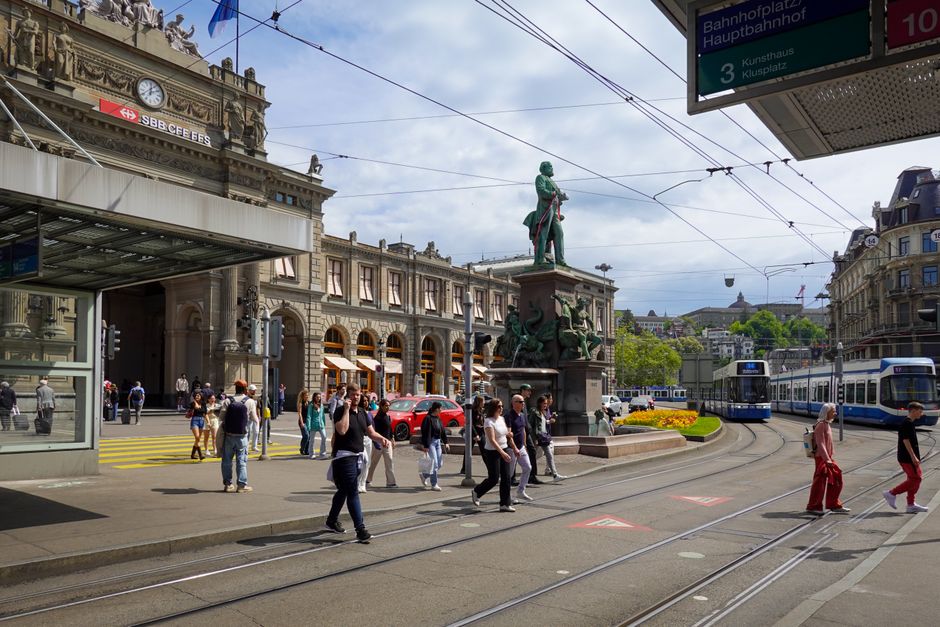
Zurich's job market has long served as a bellwether for global economic health, but reading the signals requires understanding the invisible currents of capital that flow through Bahnhofstrasse and beyond. Over the past eighteen months, employment trends in Switzerland's largest city have reflected something more nuanced than simple growth or contraction: a fundamental reallocation of investment priorities.
The data tells a striking story. While traditional banking and finance sectors along the Limmat remain dominant employers, recent hiring patterns reveal a pronounced shift toward technology infrastructure and asset management specialisation. According to the Swiss State Secretariat for Economic Affairs, tech-adjacent roles in Zurich grew 14 percent year-on-year through early 2026, even as broader financial services recruitment flattened. This divergence matters because it signals where institutional capital is flowing.
Consider the Europaallee development near the main railway station, where major asset managers and fintech operations have consolidated operations. Rents in this neighbourhood have climbed to approximately 850 francs per square metre annually—a 22 percent increase since 2024. Such commercial real estate dynamics don't lie; they follow capital, not vice versa. When multinational firms expand their Zurich footprint, it's because investment flows justify the expense.
The deeper indicator lies in salary trends. Data from recruitment agencies tracking placements across the financial district and Wiedikon's growing tech corridor shows median compensation for mid-level specialists rising 8.5 percent, while entry-level positions have stagnated around 68,000 francs. This bifurcation suggests employers are competing fiercely for experienced talent capable of managing complex, globally-distributed portfolios—but see less urgency in junior hiring. Translation: companies are consolidating operations and optimising headcount rather than expanding wholesale.
Cross-border commuting patterns offer another lens. Swiss statistics indicate that inbound commuters from Germany and France seeking Zurich employment have declined 6 percent since 2024, reversing a fifteen-year trend. This reversal typically precedes broader labour market softening, even when headline unemployment figures appear stable.
What does this mean practically? Zurich remains fundamentally sound as an employment hub, with the unemployment rate holding at 2.1 percent. Yet the composition of opportunity is reshaping. Sectors aligned with global capital reallocation—alternative investments, regulatory technology, wealth preservation structures—are hiring. Traditional banking backoffice roles continue their slow mechanisation.
For jobseekers and investors alike, the lesson is clear: economic indicators are most useful when they're disaggregated. Zurich's market isn't weak or strong in aggregate—it's discriminating, following capital flows with precision. Reading that discrimination accurately matters more than ever.
This article was compiled by AI from the sources linked above and screened before publishing. See our editorial standards.
How does this story make you feel?
Spread the word
About this article
Published by The Daily Zurich
Daily brief
Free, in your inbox before 7am. Weekdays.
More in Business