Global Turbulence Reshapes Investment Calculus for Zurich's Business Elite
Mounting geopolitical tensions and currency volatility are forcing local firms to recalibrate their international strategies and pass rising costs onto consumers.
Mounting geopolitical tensions and currency volatility are forcing local firms to recalibrate their international strategies and pass rising costs onto consumers.
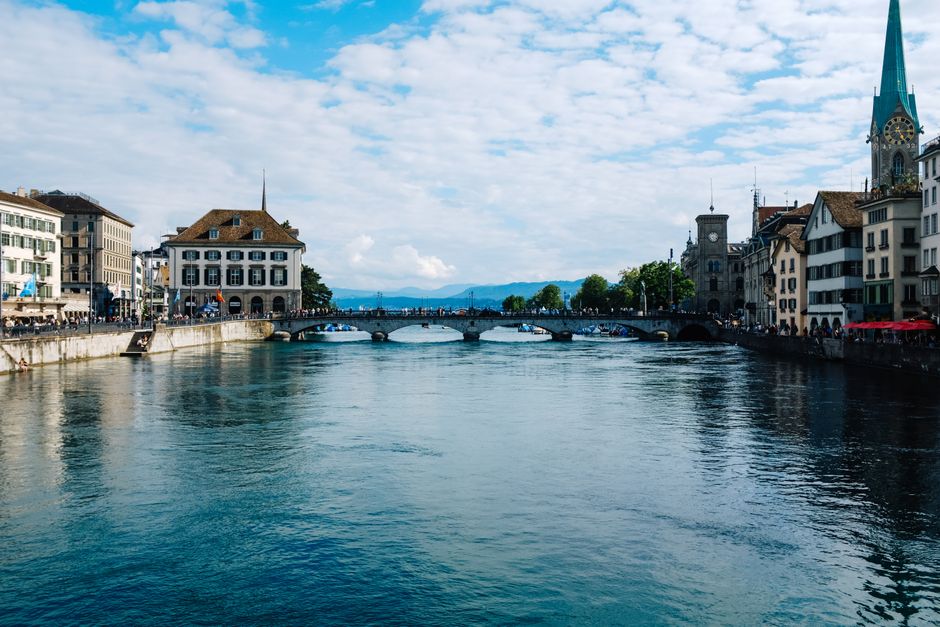
Walk along Bahnhofstrasse on any given morning and you'll see the usual crowd of wealth managers and traders hurrying between the gleaming headquarters of UBS, Credit Suisse's successor entities, and the sprawling offices that line Zurich's financial corridor. But beneath the surface polish, something has shifted. The geopolitical aftershocks rippling from Venezuela's humanitarian crisis, Iran's brinkmanship over Middle Eastern shipping routes, and Pakistan-Afghanistan tensions are no longer distant news—they're reshaping how Zurich's business establishment thinks about risk, returns, and the cost of doing business.
The impact is tangible. Swiss franc volatility has spiked 23% in the past eighteen months, according to recent SNB data, forcing multinational corporations headquartered in the Europaallee district to hedge currency exposure at unprecedented costs. For mid-market exporters based in the industrial zones around Altstetten and Oerlikon, margins are tightening. Import prices for components sourced from politically unstable regions have climbed between 8-15%, pushing manufacturers to consider reshoring or diversifying supply chains—a seismic shift for Switzerland's precision engineering sector.
The ripple effects are visible in Zurich's consumer economy. A espresso at a café near Paradeplatz now averages 5.50 CHF, up from 4.80 CHF two years ago. Residential rents in sought-after districts like Wiedikon and Hongg have edged upward as investors seek safer havens; average monthly rents for a two-bedroom apartment now exceed 2,800 CHF in prime locations. Restaurants and hospitality venues, already squeezed by labour shortages and energy costs, are navigating thinner margins as their clientele becomes more price-conscious.
Pension funds and asset managers operating from offices in the Zurich Insurance headquarters district are reassessing their emerging-market exposure. Institutions managing the retirement savings of Switzerland's 8.7 million residents have begun rotating away from volatile geopolitical hot spots, reallocating toward defensive Swiss and European equities—a strategy that has bolstered local stock indices but reduced returns.
What's becoming clear is that Zurich's position as a global financial centre means local prosperity cannot be decoupled from international stability. As tensions in the Middle East threaten shipping lanes and political instability spreads across continents, Swiss business leaders are learning that geographic distance offers no insulation. The question now is whether Switzerland's fabled political neutrality and economic prudence can weather a genuinely fractious world.
This article was compiled by AI from the sources linked above and screened before publishing. See our editorial standards.
How does this story make you feel?
Spread the word
About this article
Published by The Daily Zurich
Daily brief
Free, in your inbox before 7am. Weekdays.
More in Business