Zurich's Export Machine Faces a World on Edge
From Iran's political transition to Russian fuel queues and Europe's security anxieties, the global disorder is landing on the desks of Bahnhofstrasse bankers and Hardturm-district manufacturers alike.
From Iran's political transition to Russian fuel queues and Europe's security anxieties, the global disorder is landing on the desks of Bahnhofstrasse bankers and Hardturm-district manufacturers alike.
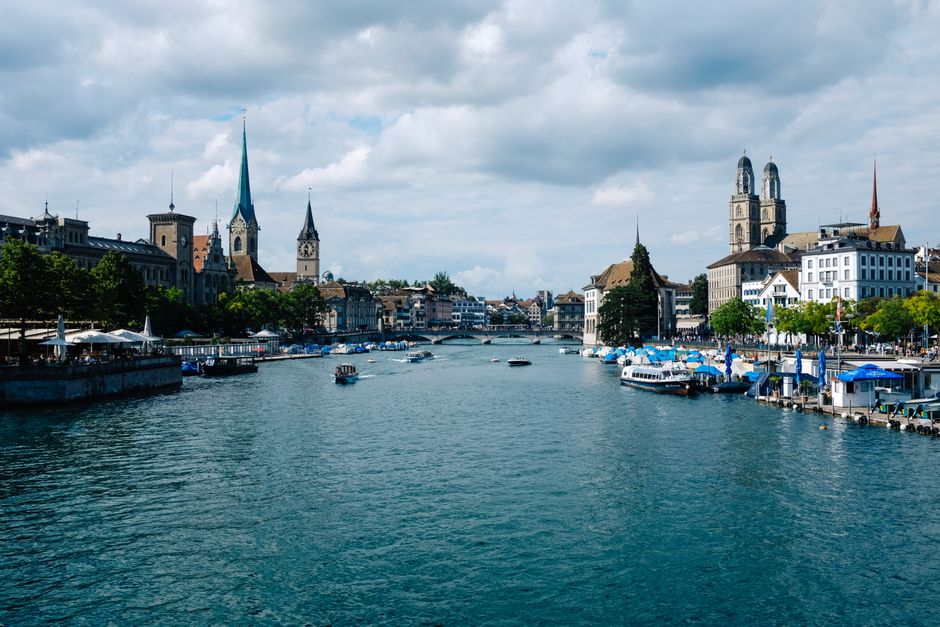
Switzerland exported goods worth CHF 25.4 billion in April 2026 alone, according to the Federal Customs and Border Security Office — and a growing share of that trade is threading through regions now defined by turbulence. For Zurich's business community, the geopolitical calendar of the past fortnight reads less like distant news and more like a risk register.
The death of Iran's Supreme Leader has opened an unpredictable succession period in a country that, despite years of sanctions, remains a latent market for Swiss precision instruments and pharmaceutical intermediaries. Russia's domestic fuel shortages — visible in long queues at filling stations across major cities — signal an economy under strain deep enough to rattle supply chains that still, indirectly, touch Swiss commodity traders. And Poland's government is openly warning of critical months ahead as Russian pressure on NATO's eastern flank intensifies. Each of these developments compresses the margin for error in cross-border planning.
At the Switzerland Global Enterprise offices on Stampfenbachstrasse, trade advisers have been fielding an above-average volume of calls from mid-sized Zurich exporters since June. The concerns cluster around two themes: the reliability of payment corridors through the Middle East, and the cost of war-risk insurance on freight moving through Eastern European logistics hubs. Neither is a new problem, but the simultaneity of shocks is new.
Zurich's Escher-Wyss district, home to several precision-engineering firms and the headquarters of Autoneum Holding, illustrates the exposure well. Companies in that corridor depend heavily on automotive supply chains running through Germany and into Central Europe. With Polish infrastructure now being evaluated partly through a military-readiness lens, lead times on cross-border components have quietly lengthened. One logistics consultancy operating out of Zürich-West reported in its June 2026 client letter that average transit time from Zurich to Warsaw had increased by roughly 18 percent compared with Q1.
The heat is literal as well as figurative. France recorded more than 2,000 excess deaths during the peak of this summer's heatwave, and extreme temperatures have disrupted freight movements through Lyon and Strasbourg — two critical waypoints for Swiss goods moving into Western European markets. Refrigerated cargo costs from Zurich to Paris have climbed approximately 12 percent since mid-June on spot rates, according to freight index data published by the Zurich-based logistics platform Freightify Europe.
The pressure points are real, but they are not uniformly disabling. Switzerland's trade infrastructure — anchored by the Swiss National Bank's currency management and the depth of trade-finance capacity at institutions on Paradeplatz — gives local exporters buffers that firms in smaller economies lack. The franc's safe-haven status, which pushed EUR/CHF back below 0.93 briefly in late June, cuts both ways: it tightens margins for exporters while reducing the cost of imported inputs.
Switzerland Global Enterprise is running a series of market-access briefings through July at its Zurich office on Stampfenbachstrasse, specifically covering Middle East transition risks and the revised EU import-control framework that takes effect on 1 October 2026. Exporters with exposure to Iranian downstream markets — even indirect exposure through UAE re-export channels — are being urged to complete compliance reviews before that October deadline.
The broader message from trade economists at ETH Zurich's KOF Swiss Economic Institute, which publishes its next quarterly outlook on 16 July, is that Swiss exporters who diversified away from Russian and Chinese concentration after 2022 are better positioned now than those who did not. The firms scrambling hardest today tend to be those that delayed that diversification, betting on stability that did not materialise.
For Zurich's business district, the practical calculus is straightforward: document your exposure, price in a longer disruption window than feels comfortable, and use the July lull — traditionally quieter before the August holiday — to stress-test supply chains before autumn order books open.
How does this story make you feel?
Spread the word
About this article
Published by The Daily Zurich
Daily brief
Free, in your inbox before 7am. Weekdays.
More in Business


