Zurich's Job Market Feels the Pull of a Fractured World
From Tehran's power vacuum to Washington's trade posture, the forces reshaping global commerce are landing squarely on Zurich's labour market.
From Tehran's power vacuum to Washington's trade posture, the forces reshaping global commerce are landing squarely on Zurich's labour market.
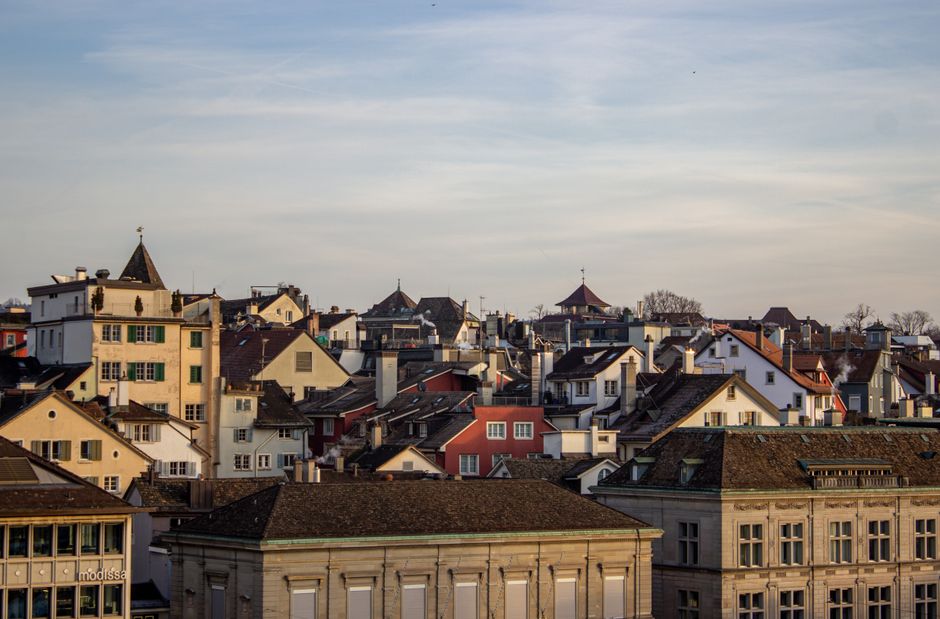
Hiring managers at Zurich's financial firms are doing something unusual this summer: sitting on approved headcounts and waiting. The combination of leadership uncertainty in Iran following Ayatollah Khamenei's death, ongoing tariff friction between the United States and its trading partners, and a sweltering Fourth of July that shut down American consumer activity has pushed multinational decision-makers into a defensive crouch—and that hesitation is showing up in the job postings, or rather the absence of them, along Zurich's Bahnhofstrasse and in the glass towers of the Glattpark business district.
This matters right now because Switzerland sits at the intersection of nearly every pressure point in the global economy. Roughly 40 percent of Swiss GDP comes from exports, and Zurich's professional-services sector—banking, insurance, consulting, pharma management—is deeply exposed to sentiment in boardrooms from London to Singapore. When global executives pause, Zurich recruiters feel it within weeks, not months. The second half of 2026 was supposed to mark a hiring rebound after a cautious 2025. That rebound is arriving later than expected, and in a different shape than anyone planned.
At the Swiss Economic Institute, KOF, researchers flagged in their June 2026 employment outlook that the share of Swiss firms planning to increase headcount over the next three months had slipped to 18 percent, down from 24 percent in March. The sharpest drop was in financial services and business consulting—precisely the sectors that dominate Zurich's inner-city employment base. UBS's Paradeplatz headquarters and Zurich Insurance's campus on Mythenquai both confirmed in investor communications earlier this year that workforce planning for the second half remains under review pending macroeconomic clarity.
The pharma corridor along the A1 motorway toward Baden tells a more complicated story. Roche's Zurich liaison offices and several mid-size biotech firms based in the Technopark on Technoparkstrasse have continued posting roles in regulatory affairs and data science, partly because life-sciences hiring runs on longer cycles tied to clinical pipelines rather than quarterly sentiment. Still, even here, roles requiring significant travel to Middle Eastern markets or US regulatory coordination have been quietly deprioritised since late June.
Peru's election of Keiko Fujimori has opened a minor but notable side conversation among Swiss commodity-trading firms clustered near Zurich's Central station. Peru is the world's second-largest copper producer, and Fujimori's economic platform leans toward private-sector openness. Several Geneva-based traders have already begun expanding their Zurich back-office teams to handle anticipated copper contract volumes. That is a genuine bright spot in an otherwise cautious picture.
Zurich's unemployment rate held at 2.1 percent in May 2026, according to the State Secretariat for Economic Affairs, SECO—a figure that flatters the headline but masks a quieter churn. Lateral moves within firms are replacing external hiring. The city's WorkLink programme, run through the Amt für Wirtschaft und Arbeit on Stampfenbachstrasse, reported a 12 percent rise in retraining consultations during the first five months of the year, with most inquiries coming from mid-career professionals in banking operations and trade-finance roles that firms are automating or offshoring.
English-language skills remain the single fastest ticket to a new role in Zurich right now, particularly as firms handling US client portfolios need staff comfortable navigating the new compliance requirements that came with Washington's 2025 tariff architecture. Short courses at the Zurich University of Applied Sciences, ZHAW, in Winterthur and at the Digital Society Initiative on Rämistrasse have seen waiting lists extend into October.
Employers who have budget approved and roles open should move fast. Candidates sitting on multiple offers are making decisions within ten days, according to data from recruitment platform Jobcloud published in late June. Waiting for a geopolitical horizon to clear before posting a job is a strategy that tends to leave the best candidates in someone else's office before the fog lifts.
How does this story make you feel?
Spread the word
About this article
Published by The Daily Zurich
Daily brief
Free, in your inbox before 7am. Weekdays.
More in Business


