Zurich’s Summer Heat: The story behind the scene and the people who created it
As temperatures climb toward 34 degrees, the city’s public swimming culture serves as both a cooling refuge and a meticulously managed social experiment.
As temperatures climb toward 34 degrees, the city’s public swimming culture serves as both a cooling refuge and a meticulously managed social experiment.
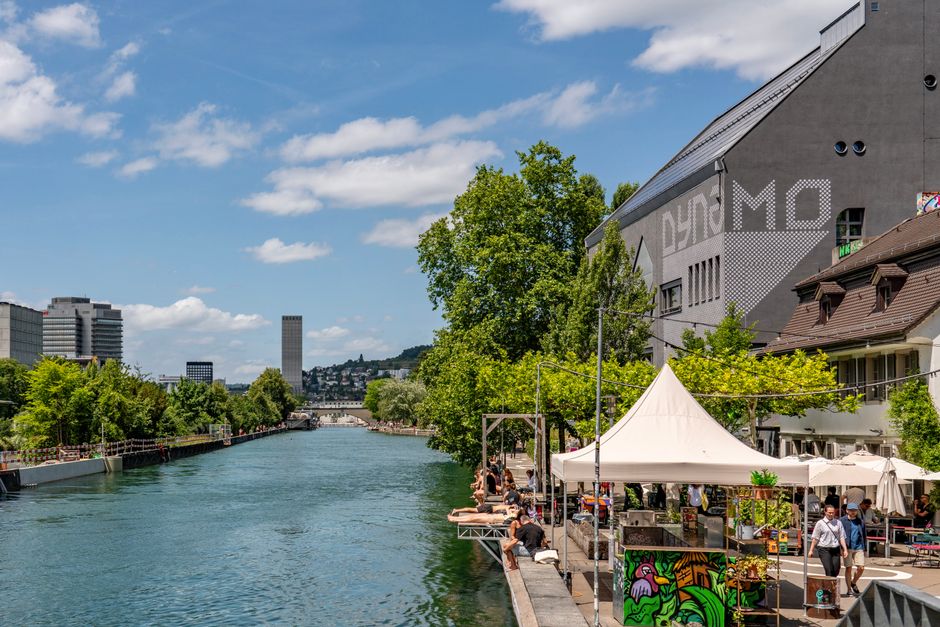
The mercury hit 33.8 degrees Celsius at the Zurich-Kloten station by noon today, pushing thousands of residents toward the Limmat and the lake. While the crowds at the Flussbad Oberer Letten seem like a chaotic display of mid-summer leisure, the reality is a carefully orchestrated logistics operation maintained by Sportamt Zürich. This public infrastructure is not an accident of geography, but a legacy of city planning designed to keep a high-pressure financial hub from overheating, both literally and figuratively.
Behind the sunbathers lining the concrete decks of the Letten, a team of twenty city employees works in rolling shifts. They monitor water filtration levels and safety buoys at the 14 officially designated river and lake bathing spots. The culture of the 'Badi'—the local term for these communal pools—originated in the 19th century as a response to industrial pollution in the Limmat. Today, the Stadt Zürich invests approximately 45 million Swiss francs annually into maintaining these aquatic spaces, ensuring that the water quality meets the stringent standards required by the Cantonal Laboratory.
You can see the result of this labor at the Frauenbadi on Stadthausquai. Built in 1888, the site is managed by a small collective of attendants who oversee a strictly enforced 'no men' policy during daylight hours, a tradition that has remained intact despite the city’s rapid demographic shifts. The space functions as a sanctuary, requiring a modest entry fee of 8 francs. It is here that the intersection of Zurich’s rigid social order and its deep-seated urge for relaxation becomes visible.
Economic indicators suggest that this year’s heatwave is exerting more pressure on the local retail sector than in 2025. Data from the Zürcher Kantonalbank indicates that during weeks where temperatures exceed 30 degrees for four consecutive days, spending in the central district of Niederdorf drops by nearly 12 percent as residents retreat to the water. The entrepreneurs running the 'Badi-Bars' are the silent beneficiaries of this shift. At the Werdinsel, a team of student staff manages a logistical chain that delivers over 2,000 liters of local craft beer and mineral water per day, sourced largely from the nearby Feldschlösschen breweries.
If you plan to join the masses this evening, skip the main stretch of the Mythenquai. The congestion there typically hits capacity by 2:00 PM on days like today. Instead, head toward the lesser-known access points near the Wollishofen boat landing. For those looking to escape the concrete, the municipal transport office (VBZ) has increased the frequency of the 'Badi-Bus' line 33, which now runs every six minutes to accommodate the surge in traffic. Pack light, carry a reusable water bottle, and remember that the city’s water fountains—all 1,200 of them—are fed by the same alpine springs that sustain the municipal reservoir, making them the safest and cheapest way to stay hydrated through the weekend.
How does this story make you feel?
Spread the word
About this article
Published by The Daily Zurich
Daily brief
Free, in your inbox before 7am. Weekdays.
More in culture