Zurich's Digital Archives Are Drowning in Duplicate Images — and the Numbers Reveal Why It Matters
A surge in redundant digital files is costing Zurich's public institutions storage budget, staff hours, and archival accuracy.
A surge in redundant digital files is costing Zurich's public institutions storage budget, staff hours, and archival accuracy.
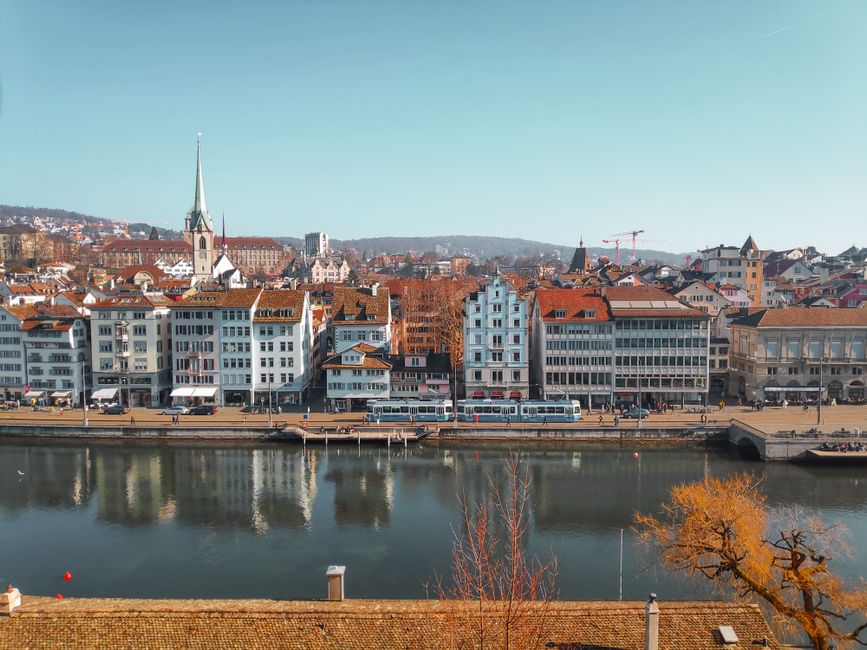
Swiss federal archiving standards require public institutions to maintain clean, deduplicated image records — but across Zurich's municipal and cultural sector, the scale of duplicate image accumulation has reached a point where the costs are measurable and rising. An internal review process underway at the Stadtarchiv Zürich on Neumarkt this spring found that duplicate or near-identical digital images can account for between 20 and 40 percent of total image file volume in poorly managed institutional repositories, according to estimates published by the Swiss Federal Archives in Bern in its 2025 digital governance guidelines.
The problem is not unique to Zurich, but the city's density of data-producing institutions — ETH Zürich, the Zentralbibliothek on Zähringerplatz, and the Kunsthaus Zürich on Heimplatz among them — makes it a particularly acute case. When the same photograph of a construction project in Schwamendingen or a civic event on the Münsterbrücke gets uploaded, re-edited, and re-saved by four different departments, the duplication compounds. Storage costs compound with it.
Cloud storage pricing for Swiss public institutions typically runs between CHF 0.02 and CHF 0.04 per gigabyte per month under cantonal framework contracts — a figure that sounds trivial until you multiply it across a mid-sized institution managing several hundred thousand image assets. ETH Zürich's IT services directorate has publicly discussed managing petabyte-scale research data environments. At that scale, even a 25 percent duplication rate translates into hundreds of thousands of francs in avoidable annual storage expenditure.
Beyond raw storage costs, there is the human cost. Archivists and digital asset managers at institutions like the Museum Rietberg on Gablerstrasse estimate that manual deduplication tasks can consume anywhere from two to five working days per project cycle when automated tooling is absent. The Zentralbibliothek Zürich, which holds more than six million items in its collections and has been expanding its digitisation programme since 2022, has invested in batch-processing software specifically to address this bottleneck. Duplicate image replacement — the process of systematically identifying, flagging, and substituting redundant files with a single canonical version — has become a formal workflow step, not an afterthought.
The Swiss norm SN EN ISO 19005, which governs long-term digital archiving formats, does not explicitly mandate deduplication, but archivists across German-speaking Switzerland have increasingly treated it as a prerequisite for meeting the standard's requirements on file integrity and retrievability. A 2024 survey by Bibliothek Information Schweiz, the sector's professional body, found that fewer than 35 percent of cantonal-level institutions had a formally documented deduplication policy in place.
Practical responses vary. Smaller organisations in Zurich's Kreis 4 and Kreis 5 cultural belt — independent archives, gallery documentation offices, neighbourhood history projects — often rely on open-source tools such as dupeGuru or ExifTool to run periodic audits. Larger institutions are increasingly licensing enterprise-level digital asset management platforms, several of which now include AI-assisted image similarity scoring as a standard feature. One platform widely used in Swiss municipal contexts can flag visually similar images with a hash-comparison accuracy rate above 98 percent, according to vendor documentation.
For citizens and smaller organisations wondering where to start, the Stadtarchiv Zürich runs public consultation hours every second Thursday afternoon. The city's IT coordination office, based on Werdmühleplatz, also publishes updated guidance on cantonal digital record-keeping norms each January. The next revision is due in early 2027.
The practical advice from archivists is consistent: establish a single canonical file location before a digitisation project begins, agree on a naming convention across all contributing departments, and run an automated hash-check before any batch upload goes live. Catching duplicates before ingestion is far cheaper than replacing them after the fact — a lesson Zurich's institutions are learning in Swiss francs and staff hours alike.
How does this story make you feel?
Spread the word
About this article
Published by The Daily Zurich
Daily brief
Free, in your inbox before 7am. Weekdays.
More in News


