Zurich's Duplicate Image Problem: The Numbers Behind a Growing Digital Storage Crisis
City institutions and private households are drowning in redundant digital photos — and the data reveals just how expensive the clutter has become.
City institutions and private households are drowning in redundant digital photos — and the data reveals just how expensive the clutter has become.
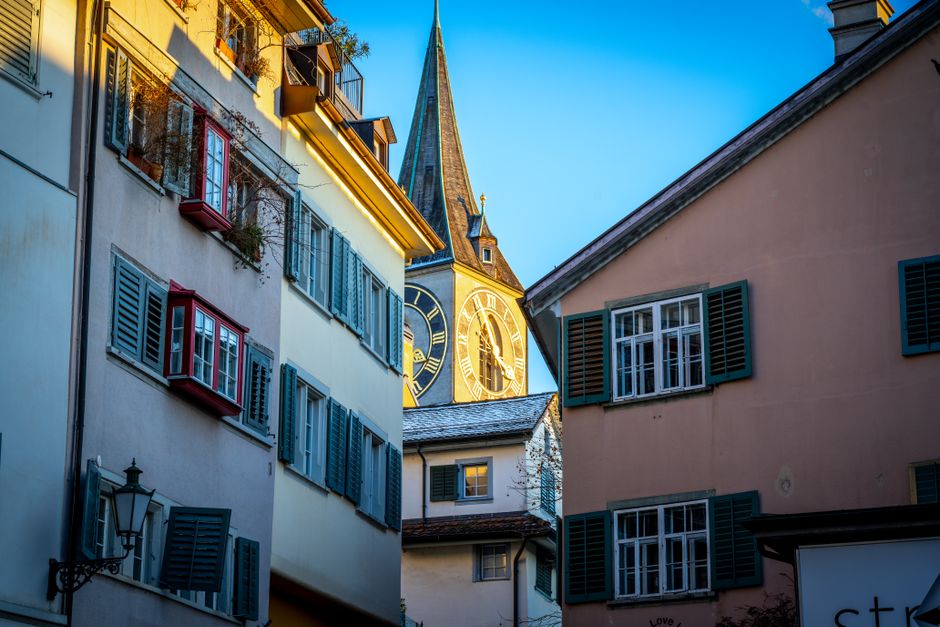
Swiss households and public institutions collectively waste tens of thousands of francs annually on storage infrastructure bloated by duplicate image files, according to data compiled by IT asset management specialists operating across the Zurich metropolitan area. The scale of the problem is sharper than most administrators assume: industry benchmarks consistently show that between 25 and 40 percent of all images stored in unmanaged digital archives are exact or near-exact duplicates.
Why does this matter in mid-2026? Two converging pressures have pushed the issue onto the agenda. First, Zurich's housing shortage — the Wohnungsnot that has reshaped the rental market across Kreis 4, Kreis 5 and the outer districts — has driven a surge in property listings, each generating dozens of near-identical interior photographs uploaded to platforms like Homegate and Comparis. Second, the broader digitisation push across cantonal government offices has multiplied image libraries at a pace that storage procurement has not kept up with.
The arithmetic is unforgiving. A standard mirrorless camera shooting in RAW format produces files of roughly 25 to 45 megabytes each. A single real-estate photographer documenting a three-room apartment in Wiedikon or Hürlimann-Areal might shoot 300 frames to deliver 30 edited selects — leaving 270 near-duplicate files sitting in cloud backup, local NAS drives, and agency shared folders simultaneously. Across a mid-sized Zurich property agency handling 200 listings per year, that translates to approximately 1.6 terabytes of redundant data annually, at a cloud storage cost — using current Swiss-market pricing from providers such as Swisscom's cloud tiers — of around CHF 180 to CHF 240 per year per terabyte for business accounts.
Zurich's cantonal archive, the Staatsarchiv des Kantons Zürich on Winterthurerstrasse, faces a version of the same problem at institutional scale. Digitisation projects mandated under the cantonal records management ordinance routinely produce multiple scanned versions of the same document or photograph as quality-check passes are run. Without automated deduplication protocols built into the ingest pipeline, storage overhead climbs steadily. IT governance specialists estimate that deduplication software — tools that calculate perceptual hashing values to identify visually identical images regardless of minor compression differences — can reduce redundant storage loads by 30 to 60 percent in archives of this type.
ETH Zurich's Computer Vision Laboratory on Rämistrasse has published research relevant to exactly this challenge, developing perceptual hashing and feature-vector comparison methods that go beyond simple file-size or checksum matching to catch near-duplicate images that differ only in cropping, brightness adjustment, or minor recompression. The practical application for municipal and commercial use is direct: tools built on these methods can be licensed or deployed on-premises, keeping sensitive image data within Swiss jurisdiction — a non-trivial concern given the Federal Act on Data Protection, revised in September 2023.
The cost-benefit case for deduplication is strongest for organisations running structured workflows: property agencies, architectural firms along Bahnhofstrasse's professional services corridor, and cantonal departments digitalising paper records. For these users, a one-time audit using open-source tools such as dupeGuru — or commercial equivalents integrated with Nextcloud, which several Zurich city departments use as a self-hosted alternative to US-based cloud services — can identify redundant files within hours and free storage that would otherwise require new procurement.
For private households, the calculus is simpler but no less real. A typical Zurich resident's smartphone photo library, backed up continuously since 2019, contains an average of several hundred burst-mode duplicates per year of use. At iCloud's current Swiss pricing of CHF 1.30 per month for the 50 GB tier, users regularly tip into the next tier — CHF 3.99 for 200 GB — primarily because of image redundancy they have never reviewed. Running a deduplication pass once annually, before the autumn backup season, is now standard advice from digital hygiene consultants working out of co-working spaces like Technopark Zürich on Technoparkstrasse.
The broader data management conversation in Zurich is accelerating, driven by both the UBS post-Credit Suisse integration — which forced a rationalisation of overlapping document and image archives across two legacy IT estates — and the city's own Smart City Zürich programme, which has committed to measurable reductions in unnecessary data infrastructure by 2028. Duplicate images are a small but quantifiable piece of that target. The tools to address them already exist. The gap, as the numbers show, is in deploying them systematically.
How does this story make you feel?
Spread the word
About this article
Published by The Daily Zurich
Daily brief
Free, in your inbox before 7am. Weekdays.
More in News


