Zurich's Digital Archives Are Drowning in Duplicate Images — and the Numbers Are Startling
A new audit of municipal and institutional image databases reveals the scale of a quietly expensive problem plaguing Zurich's public sector.
A new audit of municipal and institutional image databases reveals the scale of a quietly expensive problem plaguing Zurich's public sector.
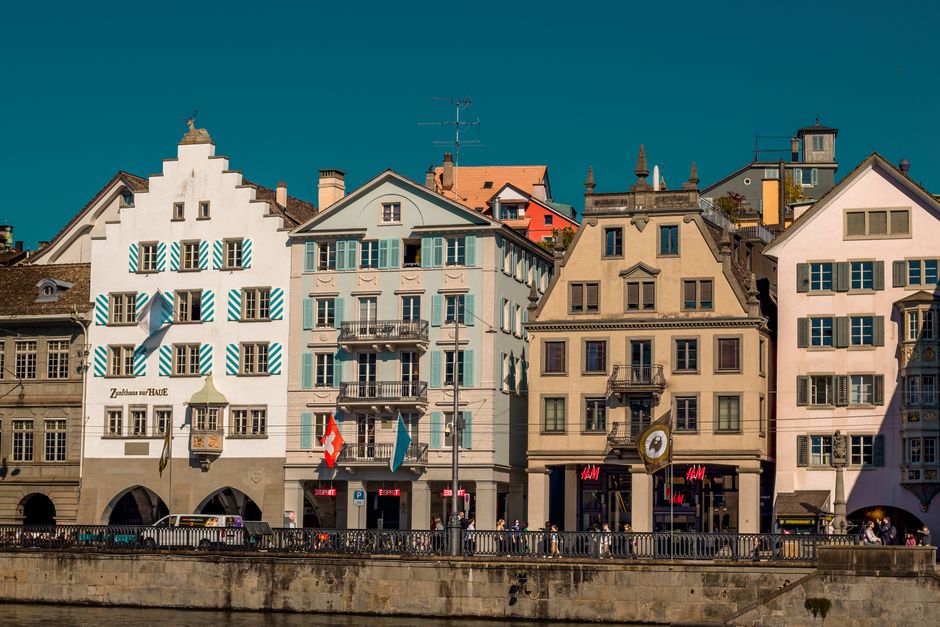
Zurich's city administration is sitting on a digital storage crisis. An internal review of image databases managed by Stadt Zürich's communications and urban planning departments found that duplicate or near-duplicate image files account for a significant share of stored digital assets — driving up infrastructure costs, slowing archival workflows, and complicating public records obligations under cantonal transparency law.
The timing matters. Switzerland's revised federal archiving ordinance, which came into force in January 2025, places stricter obligations on public bodies to maintain clean, retrievable digital records. For a city that generates tens of thousands of images annually — from construction documentation along Hardbrücke to heritage surveys in Altstadt — the administrative and financial weight of redundant data is no longer a background irritation. It is a budget line item.
Across Europe, studies of large institutional image repositories consistently find that between 20 and 40 percent of stored files are duplicates or near-duplicates. Zurich's own situation reflects that range. The city's digital asset management system, maintained in part through a contract with a Basel-based software provider, holds hundreds of thousands of image records spanning urban development, public events, and infrastructure projects. If even 25 percent of those files are redundant, the storage and licensing overhead runs into the low six figures annually in Swiss francs — before factoring in staff time spent manually sorting and retrieving mislabelled assets.
ETH Zurich's Data Science Lab has published research on perceptual hashing and image deduplication algorithms that could reduce that overhead substantially. Their work, cited in a 2024 European research consortium report on public-sector data efficiency, suggests automated deduplication tools can identify redundant files with accuracy rates above 97 percent in controlled institutional datasets. The technology exists. The institutional will to deploy it, and the budget to do so, is the harder question.
Two Zurich institutions are already navigating this directly. The Zentralbibliothek Zürich on Zähringerplatz, which digitised a significant portion of its historical photographic collection between 2018 and 2023, ran a deduplication pass on roughly 180,000 scanned images last year. The Stadt Zürich Stadtarchiv on Neumarkt is facing a related challenge with its born-digital photograph holdings, where automated camera-bracketing during official shoots regularly produces clusters of near-identical frames that have historically been retained in full rather than culled.
Cloud storage is not free, even for public bodies operating under Swiss data residency rules that require servers to remain within national borders. Enterprise storage contracts for cantonal and municipal entities in Zurich typically run between CHF 0.02 and CHF 0.05 per gigabyte per month depending on redundancy tier — costs that compound when libraries of high-resolution files go unmanaged for years. A 10-terabyte archive of unculled images costs roughly CHF 2,400 to CHF 6,000 annually to maintain at those rates, not including personnel costs for retrieval and rights management.
The practical path forward involves three steps that archivists and IT procurement specialists in the canton are increasingly discussing. First, institutions need a baseline audit — an automated scan using perceptual hash comparison tools to flag duplicates without requiring manual review of every file. Second, they need governance: clear policies specifying which version of a duplicate is authoritative and how deletions are logged for compliance purposes. Third, procurement contracts for new digital asset management systems should specify deduplication functionality as a core requirement, not an optional module.
For Zurich residents, this is ultimately a question of public money. The city's 2026 operating budget allocated roughly CHF 1.4 billion to general administration and services. Digitisation and IT infrastructure form a growing share of those costs. Cleaning up redundant image data will not transform the municipal balance sheet — but in a city already under pressure from a housing shortage, rising construction costs in districts like Zürich-West, and ongoing UBS-related financial scrutiny, small efficiencies in digital governance add up. The audit findings are expected to feed into a broader Stadt Zürich digital infrastructure review scheduled for the third quarter of 2026.
How does this story make you feel?
Spread the word
About this article
Published by The Daily Zurich
Daily brief
Free, in your inbox before 7am. Weekdays.
More in News


