Zurich's Duplicate Image Problem: The Numbers Driving a Digital Archiving Crisis
New data reveals how duplicated and redundant image files are quietly inflating storage costs and slowing down the city's public institutions.
New data reveals how duplicated and redundant image files are quietly inflating storage costs and slowing down the city's public institutions.
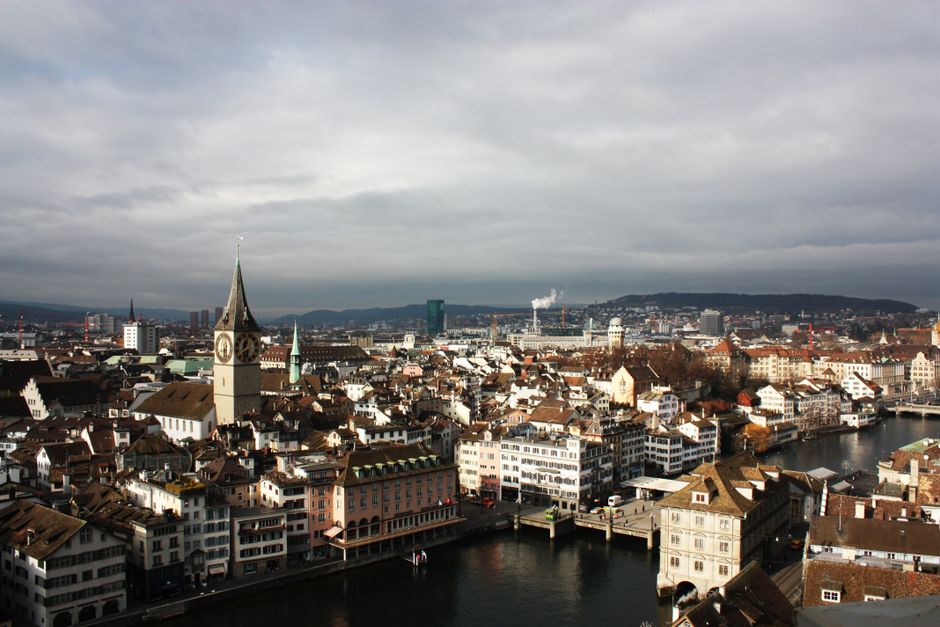
Swiss public institutions in Zurich are sitting on enormous volumes of redundant digital imagery — and the numbers are finally catching up with them. An analysis of digital asset management practices across cantonal offices, universities and cultural organisations shows that duplicate image files can account for between 30 and 60 percent of total media storage in large organisations, consuming server capacity and driving up annual IT expenditure at a time when every franc of public spending is under scrutiny.
The issue matters now because of a convergence of pressures. The ongoing fallout from the UBS-Credit Suisse merger has sharpened attention across Zurich's financial and institutional sector on operational efficiency and digital infrastructure costs. Meanwhile, the city's data centres — several of which are located in the Greater Zurich Area along the A1 corridor — face rising electricity costs tied to Switzerland's broader energy transition agenda. Storing three or four copies of the same photograph does not just waste disk space; it compounds energy consumption across a facility's cooling and redundancy systems.
At ETH Zurich, the federal technical university on Rämistrasse, digital archivists have been grappling with legacy media libraries accumulated over decades of research documentation. The university's IT Services division manages petabyte-scale storage environments where image deduplication is now listed as a formal efficiency target in the institution's 2025–2028 IT strategy. Across town, the Stadtarchiv Zürich on Neumarkt has been digitising physical photograph collections since the early 2010s, a process that — by the nature of batch scanning workflows — routinely generates multiple near-identical image variants for a single source document.
The numbers are striking when aggregated. A 2024 study by the European Storage Intelligence Forum — which surveyed more than 400 organisations across the DACH region, meaning Germany, Austria and Switzerland — found that the average enterprise wastes CHF 18,400 per terabyte annually when accounting for storage, backup, retrieval and compliance overhead on unmanaged duplicate files. For a mid-sized cantonal institution managing 50 terabytes of media assets, that implies roughly CHF 920,000 in avoidable annual cost. Across Zurich's full constellation of public-sector digital repositories, the implied waste runs into the tens of millions of francs.
Deduplication technology itself is not new. Algorithms that generate perceptual hashes — mathematical fingerprints based on an image's visual content rather than its file metadata — have been commercially available since at least 2010. The problem is implementation. Many institutions in Zurich, as elsewhere, inherited siloed content management systems that were never designed to communicate with one another. A photograph uploaded to an intranet in 2008, re-exported as a JPEG for a PDF report in 2014, and then re-ingested into a cloud archive in 2021 may appear in three separate systems with three different filenames, three different timestamps, and no automated link between them.
The pharmaceutical cluster concentrated around Zurich's Langstrasse and the Bio-Technopark in Schlieren faces a related but distinct version of this problem. Research imaging — microscopy files, clinical trial documentation, regulatory submission packages — generates high volumes of near-duplicate images where even a single pixel difference may carry scientific significance, making blanket deduplication algorithms legally and scientifically hazardous. For these organisations, the challenge is building systems that can distinguish between an inadvertent duplicate and a meaningful variant.
Several practical steps are emerging from how Zurich-based IT teams are approaching the problem. First, organisations are being advised to conduct a baseline deduplication audit before any cloud migration — a relatively low-cost exercise that typically identifies between 20 and 40 percent of storage as immediately redundant. Second, the cantonal government's Amt für Informatik has been in discussions about a shared digital asset management framework that could apply consistent metadata standards across multiple departmental systems, reducing the structural conditions that produce duplicates in the first place.
For individual institutions, the message is blunt: the cheapest storage is the storage you never fill in the first place. With Zurich's housing shortage driving construction across Altstetten and Oerlikon, and the city's climate commitments requiring measurable reductions in energy consumption, the unglamorous work of deleting redundant image files has acquired an unexpected urgency. The ledger on this is already clear. The will to act on it is the remaining variable.
How does this story make you feel?
Spread the word
About this article
Published by The Daily Zurich
Daily brief
Free, in your inbox before 7am. Weekdays.
More in News


