How Zurich's Digital Archives Got Buried Under Millions of Duplicate Images — And What's Being Done About It
A decade of rapid digitisation across cantonal institutions left a hidden crisis in municipal databases, and the reckoning is now underway.
A decade of rapid digitisation across cantonal institutions left a hidden crisis in municipal databases, and the reckoning is now underway.
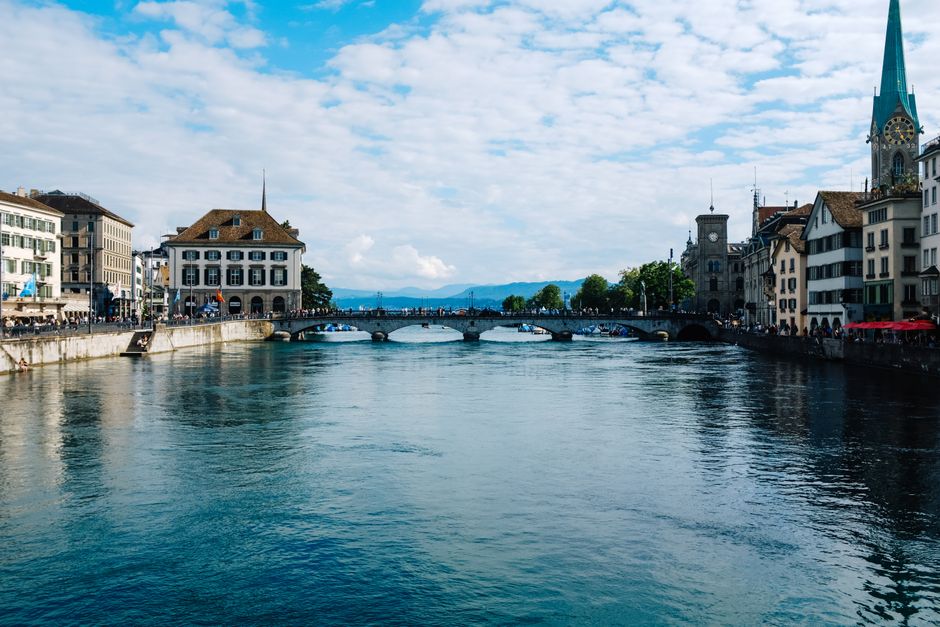
Zurich's civic digital infrastructure is carrying a problem that nobody planned for and almost nobody talked about publicly until this year: a vast, redundant accumulation of duplicate image files clogging the archival systems of at least a dozen cantonal and municipal bodies. The issue came into sharper focus this spring when the Stadtarchiv Zürich, based on Alfred-Escher-Strasse, acknowledged internally that its digitised photographic holdings contained significant duplication rates that were straining both storage budgets and retrieval functionality.
The problem did not emerge overnight. It is the direct product of how Swiss public institutions rushed to digitise paper and photographic records between roughly 2012 and 2022 — a decade in which speed was prioritised over systematic deduplication. Multiple departments scanning the same source materials, contractors delivering overlapping batches, and the absence of a unified metadata standard all fed the same outcome. What should have been a clean digital transition became, in practice, a layered mess of near-identical files stored under different filenames across incompatible systems.
The canton of Zurich was not alone in this. Across Switzerland, the push to comply with federal archival guidance — including the 2013 revision of the Bundesgesetz über die Archivierung — encouraged institutions to digitise quickly. ETH Zurich's library system, one of the largest research repositories in the German-speaking world, built its own deduplication protocols early and largely avoided the worst of it. Municipal bodies were less fortunate. The Zentralbibliothek Zürich on Zähringerplatz and several district administrative offices in Aussersihl and Höngg are understood to have faced the same structural challenge: files ingested in bulk from external scanning contractors, with no automated check against existing holdings at the point of entry.
By 2024, the cost implications were becoming impossible to ignore. Cloud storage pricing for public-sector contracts in Switzerland had risen sharply following the post-2022 energy crisis, and the Federal Data Protection and Information Commissioner had begun tightening guidance on what public bodies must retain, what they may delete, and under what conditions. Holding duplicate images was no longer just an efficiency problem — it carried potential compliance risk.
The term now circulating inside Zurich's digital governance circles is "duplicate image replacement" — a structured workflow in which redundant files are identified algorithmically, reviewed by a human archivist, and replaced with a single canonical version linked by consistent metadata. It is less dramatic than it sounds, but operationally it requires significant upfront investment. The Stadtarchiv Zürich and the Amt für Städtebau have each begun scoping projects this year. The canton's IT directorate, Finanzdirektion, allocated funds in the 2026 budget cycle for a pilot covering around 400,000 image records across three municipal departments — a figure that archivists privately describe as a fraction of the total problem.
What makes the Zurich case worth watching is the direct democracy dimension. Any significant cantonal IT procurement above a defined threshold is subject to parliamentary scrutiny at the Kantonsrat, and citizens retain referendum rights over major budget decisions. A full-scale deduplication and reindexing programme across all cantonal archives would almost certainly cross thresholds that invite political debate — particularly at a moment when Zurich's housing shortage is putting every franc of public expenditure under scrutiny.
The practical path forward, as understood by institutions that have already navigated similar crises — including the Stadt Winterthur, which completed a smaller-scale archival rationalisation in 2023 — is incremental. Institutions are advised to begin with their most actively accessed collections, apply hash-based comparison tools to identify exact and near-duplicate files, and build the metadata infrastructure before attempting mass deletion. For residents and researchers relying on Zurich's public digital records, the near-term advice is straightforward: if you are working with municipal image archives, flag anomalies you encounter through the Stadtarchiv's formal feedback channel, since user reports remain one of the fastest ways duplicates surface in systems that have not yet been algorithmically scanned. The clean-up is underway. It will take years.
How does this story make you feel?
Spread the word
About this article
Published by The Daily Zurich
Daily brief
Free, in your inbox before 7am. Weekdays.
More in News


