Duplicate Images in Public Records Are Costing Zurich Residents Time and Money
A growing problem in the city's digital property and planning databases is creating real headaches for homeowners, tenants, and administrators across Zurich.
A growing problem in the city's digital property and planning databases is creating real headaches for homeowners, tenants, and administrators across Zurich.
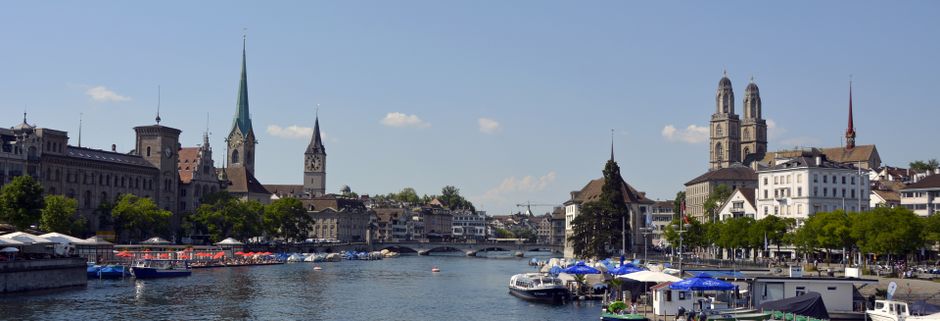
Duplicate images embedded in Zurich's official property, planning, and housing databases have become a tangible obstacle for residents trying to navigate the city's already stretched administrative systems. Building permit applications, rental listings registered with the Stadtentwicklung Zürich office, and heritage property filings all rely on digitised photo records — and when the same image appears multiple times under different reference numbers, it slows verification, inflates storage costs, and in some cases triggers false matches that delay decisions by weeks.
The timing matters. Zurich is in the middle of a housing shortage acute enough to have its own shorthand — Wohnungsnot — and any friction in the planning and permits pipeline has direct consequences for how quickly new units reach the market. The city's residential vacancy rate sat at roughly 0.07 percent as of the most recent cantonal survey, one of the lowest figures in Europe. With so little slack in the system, administrative bottlenecks are not a minor inconvenience. They contribute to the backlog.
The issue surfaces most visibly at two points of contact. At the Stadthaus on Stadthausquai, where residents submit building and renovation applications, staff have flagged that digitised floor-plan photographs and site images uploaded through the online portal frequently duplicate when applicants resubmit after a correction. Each duplicate is stored as a new file, tagged differently, and must be manually reconciled before a case officer can proceed. At the Grundbuchamt — the land registry office — similar duplication occurs when notarised property documents are scanned and indexed, particularly for older buildings in districts like Wiedikon and Aussersihl where physical archives are being converted retroactively.
ETH Zurich's chair for information architecture has been studying the broader challenge of redundant data in urban digital infrastructure since 2023, part of a wider European research program examining smart-city data hygiene. The work does not single out any specific municipal authority, but the underlying finding is consistent: unmanaged duplicate visual records increase processing time and create uncertainty about which image constitutes the authoritative version of a property's condition or layout. For residents contesting a landlord's damage claim, or a heritage board determining whether a Altstadt façade qualifies for protection, that ambiguity has real stakes.
Practically, duplicate image replacement — the process of systematically identifying redundant files, confirming which version is canonical, and purging the rest — requires both technical tooling and a clear governance policy about who holds the authority to delete a record. Zurich's data protection framework under cantonal law adds a layer of complexity: records tied to property may also contain incidental personal data, meaning deletion cannot be purely automatic. A process that sounds routine becomes a legal and technical coordination exercise.
For anyone submitting documents to city offices in 2026, a few practical steps reduce the risk of contributing to the problem. The Stadtentwicklung portal explicitly recommends compressing images to under 5 MB and using a single, clearly named file rather than multiple versions of the same photograph. Applications submitted via the older PDF-upload pathway — still available for certain heritage filings — are more susceptible to duplication than those submitted through the structured XML form introduced in March 2025.
Tenants dealing with deposit disputes that hinge on property condition photographs should request a written confirmation from their Liegenschaftsverwaltung — property management office — that the images on file carry a unique reference number and a logged submission date. Under Swiss tenancy law, the burden of proving pre-existing damage falls on whoever makes the claim, and an undated or ambiguously referenced image is easier to challenge.
The city's IT directorate is expected to publish updated guidelines for digital document submission before the end of the third quarter. Until then, residents and practitioners working through offices in Kreis 1 and Kreis 3 are advised to check directly with the relevant Amt before resubmitting any image-heavy application after a correction. A phone call to the relevant case desk often resolves what an automatic portal rejection cannot.
How does this story make you feel?
Spread the word
About this article
Published by The Daily Zurich
Daily brief
Free, in your inbox before 7am. Weekdays.
More in News


