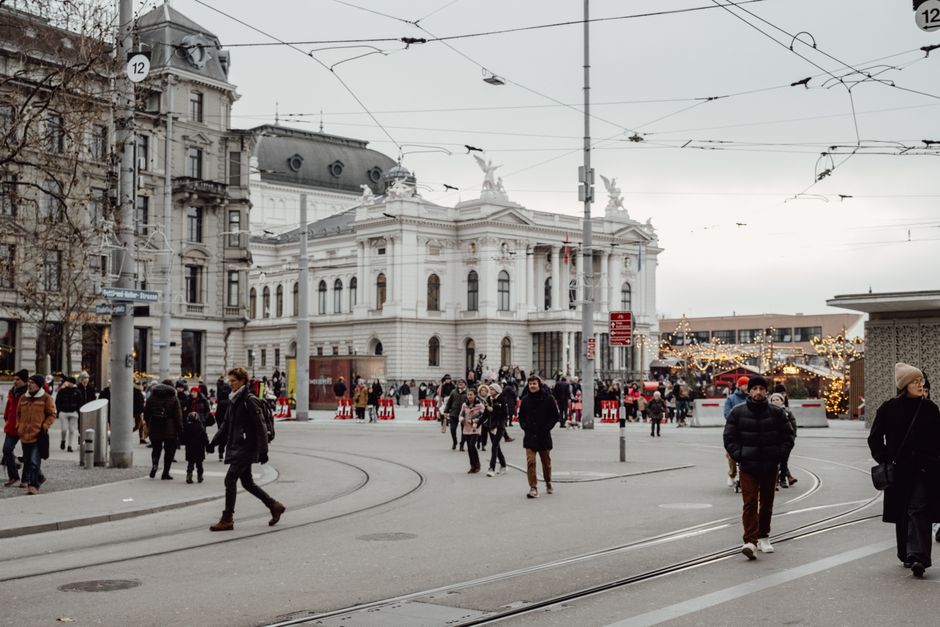
Zurich's city archive, the Stadtarchiv at Neumarkt 4, completed a phased audit of its digitised visual holdings in June 2026, identifying roughly 340,000 duplicate image files accumulated across municipal departments since a mass scanning drive began in 2019. The cleanup, which falls under the city's broader Digitale Verwaltung programme, is now being held up as a benchmark by urban data managers in Vienna and Amsterdam — two cities struggling with similar backlogs of redundant records.
The problem is more consequential than it sounds. Public institutions from transit agencies to planning departments now publish thousands of photographs, maps and architectural renders each year. Without systematic deduplication, storage costs balloon, retrieval slows, and licence compliance becomes a nightmare — particularly when images sourced from commercial providers end up filed multiple times under different department codes. For a city like Zurich, where public sector data infrastructure feeds into services used by roughly 450,000 residents, the administrative friction is real and measurable.
What Zurich Is Actually Doing
The city's current approach relies on a combination of perceptual hashing software and manual curatorial review handled by staff at the Stadtarchiv and coordinated with the Amt für Städtebau, the urban planning office on Lindenhofstrasse. Perceptual hashing assigns a compact digital fingerprint to each image, flagging near-identical files even when they differ slightly in resolution or file format. This matters in planning workflows, where the same site photograph might be saved as a JPEG by one department and a TIFF by another.
The ETH Zurich Computer Vision Lab has collaborated informally on methodology, advising on threshold-setting for automated flags — a detail that distinguishes the Zurich process from cruder keyword-search approaches used elsewhere. The city confirmed in its 2026 Q1 administrative report that storage costs on its primary municipal server infrastructure fell by approximately 12 percent following the first round of deduplication completed in March 2026.
Kreise 4 and 5 — the Langstrasse corridor and the Industrie quarter, both of which have been subject to intensive urban redevelopment documentation over the past decade — generated the highest concentration of duplicate records, according to the same internal report. Planners photographing demolition sites, new builds and public space interventions had been saving redundant copies to both project-specific folders and shared departmental drives simultaneously.
How Other Cities Compare
Vienna's MA 01, the city's administrative directorate responsible for digital services, launched its own image audit in January 2026 but is working without a dedicated hashing tool, relying instead on file-size and metadata comparisons — a method archivists consider substantially less reliable. Amsterdam's Stadsarchief has publicly documented its deduplication backlog as part of a transparency initiative, estimating in a February 2026 report that roughly 18 percent of its digitised photographic collection contains at least one duplicate entry.
London's equivalent function sits across multiple boroughs with no unified standard, which digital governance specialists point to as the principal reason deduplication has remained inconsistent across the capital's 33 local authority archives. Singapore, by contrast, centralised its national image registry through the National Archives of Singapore in 2023 and has since achieved sub-5-percent duplication rates — a figure Zurich city officials have cited internally as a longer-term target, according to the Q1 report.
The Zurich process is not without critics. Some heritage advocates associated with the Zürcher Heimatschutz preservation group have raised concerns — without formal objection — that automated flagging risks misfiling historically distinct images captured moments apart at the same location. The city says its human review layer addresses this, but the workflow adds time and, in a city where municipal hourly labour costs are among the highest in Europe, adds expense.
The next audit cycle is scheduled for the fourth quarter of 2026, at which point the Stadtarchiv plans to extend deduplication protocols to video files for the first time. Departments uploading new materials will also face a revised submission checklist requiring metadata tagging at source — a change that, if adopted consistently, should reduce the volume of duplicates entering the system rather than simply clearing the existing backlog.