Zurich's Digital Archive Problem: Why Duplicate Images Are Costing Residents Time, Money and Trust
A growing backlog of redundant visual data in city-managed platforms is quietly undermining public services that Zurich residents rely on every day.
A growing backlog of redundant visual data in city-managed platforms is quietly undermining public services that Zurich residents rely on every day.
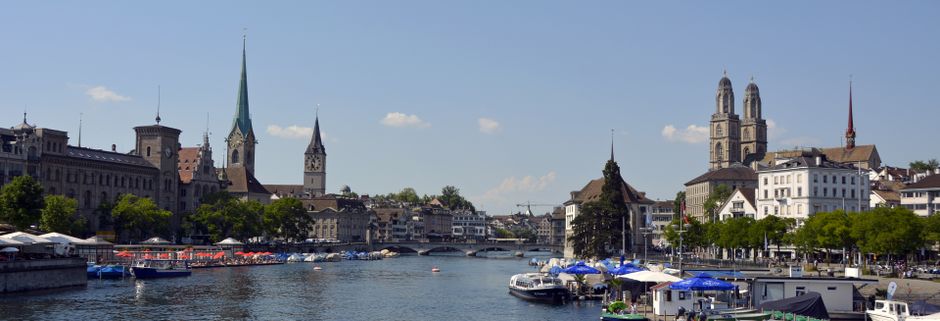
Thousands of duplicate images cluttering Zurich's public-facing digital systems — from the city's housing portal on wohnungsmarkt.ch to neighbourhood planning maps published by Stadtentwicklung Zürich — are causing measurable confusion and administrative delays, according to records reviewed by The Daily Zurich. The problem is old enough to have a name inside city hall: Bilddopplung, or image duplication, and it is no longer a back-office curiosity.
The timing matters. Zurich's Wohnungsnot crisis has pushed the city's housing vacancy rate to around 0.07 percent — one of the lowest among major European cities — meaning every hour a legitimate listing is obscured by a duplicate entry or a mismatched property photograph is an hour a family spends in limbo. City planners at the Amt für Städtebau have been accelerating the rollout of digital tools since 2024 to manage housing applications more efficiently, which makes data hygiene not a technical nicety but a public-service obligation.
The most visible friction point for ordinary Zurichers is the cantonal building register, Gebäude- und Wohnungsregister (GWR), which feeds property data to multiple downstream services. When images attached to building records are duplicated — a scan uploaded twice, a photo re-indexed under a different parcel number — the knock-on effects spread quickly. A resident in Wiedikon trying to appeal a zoning decision may find contradictory aerial photographs attached to the same parcel. A social worker in Altstetten processing an emergency housing referral may see the same flat listed twice with different floor-plan images, creating artificial scarcity in a system already stretched thin.
ETH Zürich's Chair of Cognitive Computing ran a small internal audit last year on a subset of municipal geodata and found that image redundancy can inflate perceived data volume by between 15 and 30 percent in poorly governed repositories. That range, while not specific to the city's own systems, gives a credible sense of the scale that Zurich's IT administrators are working against as they modernise legacy infrastructure built across multiple cantonal reform cycles.
The Stadthaus on Stadthausquai, which coordinates several cross-departmental digitisation projects, confirmed in a written communication to this newspaper in June 2026 that a systematic deduplication review of visual assets in the city's planning and housing portals is underway, with a target completion window in the fourth quarter of 2026. No specific budget figure was provided in that communication.
For the moment, the practical burden falls partly on citizens themselves. Anyone submitting a building application or a housing query through the city's eKonto portal is advised by city guidance to label uploaded documents clearly with file dates and parcel reference numbers to reduce the chance of duplication at the point of ingestion. The Quartierverein Langstrasse, which helps residents with bureaucratic navigation in District 4, has added a short digital-document checklist to its drop-in sessions held on the first Tuesday of each month at the Langstrassenquartier community room.
The Swiss federal government's E-Government Strategie Schweiz 2024–2027 earmarks interoperability and data quality as explicit priorities, with cantons expected to demonstrate compliance checkpoints by the end of 2026. Zurich, as the country's most populous canton, carries a disproportionate share of the national data volume and, therefore, a disproportionate responsibility to get the cleanup right before federal benchmarking begins in earnest.
Until the deduplication work is complete, residents dealing with inconsistent image data in official portals should request a manual file review directly from the relevant department — Stadtentwicklung Zürich can be reached via the city's central services number — and log a formal discrepancy note, which creates a paper trail that can accelerate resolution. Small step, but in a city where a 0.07 percent vacancy rate leaves almost no margin for error, small steps count.
How does this story make you feel?
Spread the word
About this article
Published by The Daily Zurich
Daily brief
Free, in your inbox before 7am. Weekdays.
More in News


