Duplicate Images in Zurich's Digital Public Records Are Costing Residents Time and Trust
When the same photo appears twice in a cantonal database or a city planning portal, the consequences for ordinary Zürchers run deeper than a glitchy website.
When the same photo appears twice in a cantonal database or a city planning portal, the consequences for ordinary Zürchers run deeper than a glitchy website.
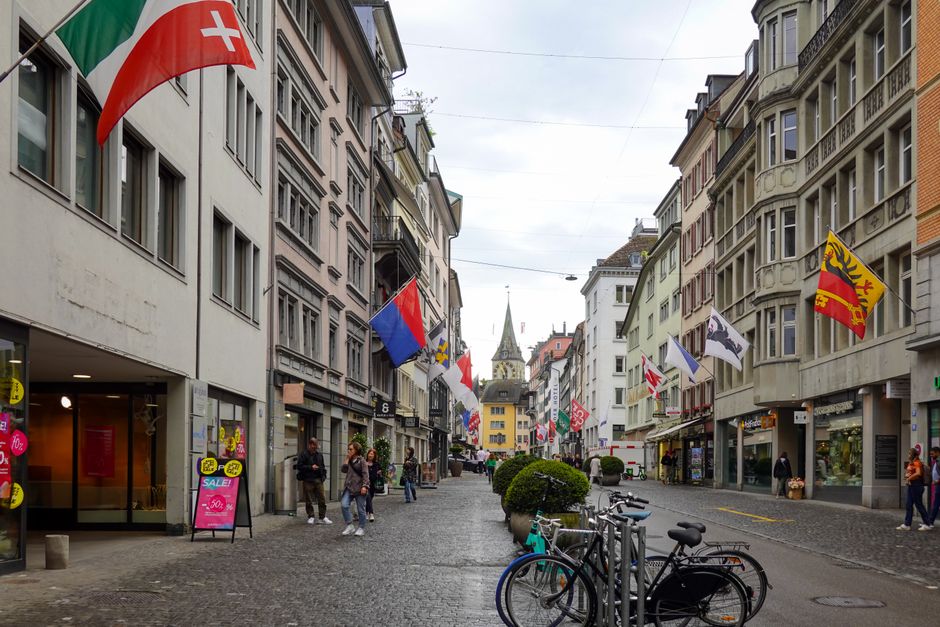
Zurich's cantonal administration quietly acknowledged this spring that duplicate image entries across its digital land registry and urban planning portals have generated hundreds of redundant file records, slowing processing times for building permit applications and muddying public-facing property databases that residents rely on when appealing development decisions. The problem is not cosmetic. It is procedural, and it has real consequences for people trying to navigate one of Europe's most expensive and contested housing markets.
The timing matters. The city is in the grip of a well-documented Wohnungsnot — a housing shortage that has pushed average asking rents in districts like Wiedikon and Oerlikon above CHF 2,800 per month for a three-room flat, according to figures published by the Swiss Federal Statistical Office in its 2025 structural survey. Any friction in the permit pipeline, even friction caused by a database housekeeping failure, adds weeks to approvals at a moment when the city's Amt für Baubewilligungen is already handling a surge in densification applications under the revised cantonal spatial planning law that took effect in January 2025.
The issue surfaces most visibly in two systems that Zürchers use regularly. The first is GIS-ZH, the Canton of Zurich's public geographic information portal, which hosts aerial photographs, parcel boundaries, and construction zone overlays. When image assets are duplicated — often because separate departments upload the same base photograph under different file names — search results return redundant entries that confuse residents trying to understand what planning zone their street falls under. Langstrasse residents filing objections to a proposed commercial conversion on Militärstrasse, for example, must cross-reference zoning maps with building photographs; duplicate entries force manual verification that most people simply cannot do.
The second system is the city's own Bauplaner online portal, managed by the Stadtentwicklung Zürich office in the Stadthaus on Stadthausquai. Internal reviews conducted as part of a broader e-government audit found that duplicate image attachments were among the leading causes of application processing errors flagged by clerks in the first quarter of 2026. The audit, referenced in a Stadtrat communiqué dated 14 March 2026, did not publish a full error count, but noted the category as a priority for remediation before the end of the third quarter.
ETH Zurich's Chair of Information Management in Engineering has been studying precisely this class of data quality failure in municipal systems. Researchers there have documented that in mid-sized European cities, unresolved duplicate media assets in public planning databases can extend average permit review cycles by between four and eleven working days — not because the duplicates themselves block decisions, but because they generate downstream verification loops that clerks must resolve manually before a file can advance.
The practical upshot for Zürchers is straightforward, if frustrating. If you are submitting a building application or a formal objection through the city's online portal, attach your own clearly labelled photographs rather than relying on images pulled from GIS-ZH — and include a file-naming convention that specifies date, parcel number, and content in the filename itself. The Stadtentwicklung Zürich office confirmed in its March communiqué that manually uploaded, clearly identified attachments bypass the automated image-matching step that is most prone to duplication errors.
For residents in Höngg, Altstetten, or other outer districts where densification projects are multiplying, neighbourhood associations can request a pre-submission consultation at the Stadthaus on Stadthausquai. That meeting — free of charge and bookable online — allows clerks to flag database conflicts before a full application is logged, saving weeks in the review queue.
The cantonal IT directorate has committed to deploying a deduplication script across GIS-ZH by 30 September 2026. Until then, the burden of clean data falls, as it so often does, on the people who can least afford the delay.
How does this story make you feel?
Spread the word
About this article
Published by The Daily Zurich
Daily brief
Free, in your inbox before 7am. Weekdays.
More in News


