'My Photos Are Gone': Zurich Residents Speak Out on the Hidden Cost of Duplicate Image Purges
Automated tools designed to clear storage clutter are wiping irreplaceable personal photographs, and communities across the city are starting to push back.
Automated tools designed to clear storage clutter are wiping irreplaceable personal photographs, and communities across the city are starting to push back.
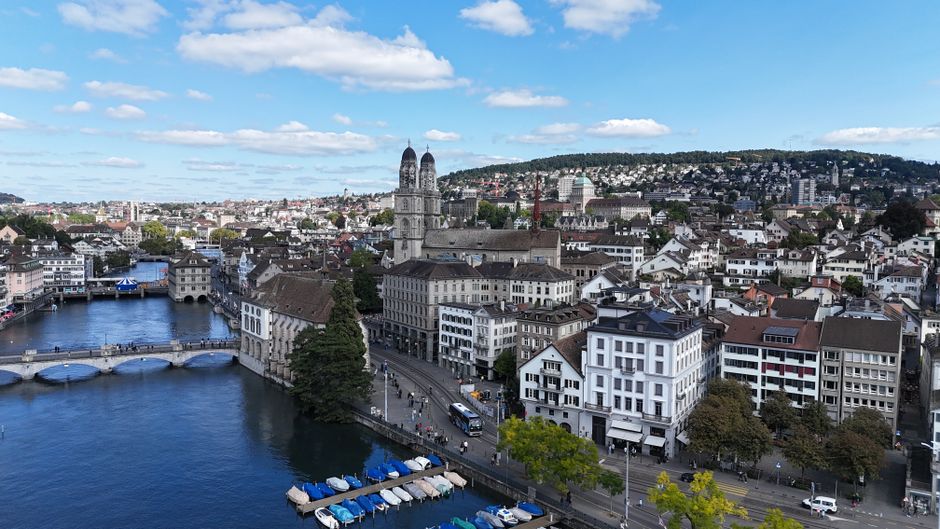
A growing number of Zurich residents have discovered, often weeks after the fact, that automated duplicate-detection software has quietly deleted photographs they considered impossible to replace. The problem, once dismissed as a niche technical grievance, has surfaced in housing co-operatives in Aussersihl, at community digital literacy workshops run by the Volkshochschule Zürich on Bändlistrasse, and in private conversations inside the city's network of shared maker spaces. Residents describe opening gallery apps or cloud folders to find entire visual records of family events, neighbourhood gatherings or personal milestones simply gone.
The timing matters. Zurich's housing shortage has pushed larger numbers of people into shared flat arrangements, where communal devices and shared network-attached storage systems are increasingly common. When one resident runs a deduplication sweep without consulting flatmates, the consequences can cascade across multiple people's archives simultaneously. The city's high smartphone penetration rate compounds the problem: Swiss households rank among the most device-dense in Europe, meaning digital libraries are large, cross-device, and difficult to reconstruct once trimmed.
At the Rote Fabrik cultural centre on Seestrasse, a Saturday session on digital archiving drew more than thirty participants in June 2026, organisers said afterward on the venue's public event log. Attendees raised the duplicate-image issue repeatedly. Several described scenarios in which photos taken at unique angles, in low light or under conditions that produced visually near-identical but contextually distinct images had been flagged as redundant and deleted. The software, they explained, uses pixel-level hash comparisons rather than any assessment of personal significance.
Volkshochschule Zürich, which offers regular courses in digital skills at its main premises near Lagerstrasse, has added a module on storage management to its autumn 2026 catalogue specifically in response to participant feedback gathered since January. The addition is modest but reflects a documented shift in what Zurich adults say they need help understanding. Course coordinators told participants at a May preview session that the most common misconception they encounter is the assumption that cloud backup and local deduplication tools operate independently — in fact, many sync before purging, meaning deletions propagate across every linked device within minutes.
Renters in the Langstrasse quarter and around Hardbrücke, areas with high concentrations of shared accommodation, describe a further complication: landlords and property management companies increasingly offer building-wide NAS (network-attached storage) systems as a selling point. Tenants sign lease addenda granting shared-server access, often without reading the maintenance clauses that permit automated cleanup routines. Zurich's tenancy advice organisation, the Mieterverband Zürich on Militärstrasse, has fielded questions about digital asset loss under shared-tenancy arrangements, though it has noted publicly that Swiss tenancy law does not yet address digital storage rights explicitly.
The practical advice emerging from community workshops is consistent and specific. First, disable automatic deduplication in any shared environment until all parties have agreed on rules. Second, use a manual review tool — several open-source options are free — that shows image pairs side by side before any deletion is confirmed. Third, maintain at least one offline backup on physical media, stored separately from the main device; an external 2TB drive now retails for under CHF 80 at major electronics retailers on Bahnhofstrasse and in Sihlcity.
ETH Zurich's Department of Computer Science has published accessible guidance on perceptual hashing and its limitations as part of its public-facing research communication, noting that images captured seconds apart in changing light conditions can share hash signatures above a common match threshold even when they record visually and emotionally distinct moments. That gap between technical similarity and human meaning is precisely what residents in Zurich's co-operatives and shared flats are now articulating to digital advisers and, increasingly, to their building managers.
The Volkshochschule Zürich autumn course on storage management opens for registration on 15 August 2026. The Rote Fabrik has provisionally scheduled a follow-up archiving session for September. For residents who have already experienced losses, digital forensics recovery services operate from offices in the Zürich West district, with retrieval assessments typically starting at CHF 120 per device.
How does this story make you feel?
Spread the word
About this article
Published by The Daily Zurich
Daily brief
Free, in your inbox before 7am. Weekdays.
More in News


