Zurich's Duplicate Image Problem: What Happens Next and the Key Decisions Ahead
City authorities and archivists face a reckoning over thousands of redundant digital files clogging public databases — and the clock is ticking on a costly clean-up.
City authorities and archivists face a reckoning over thousands of redundant digital files clogging public databases — and the clock is ticking on a costly clean-up.
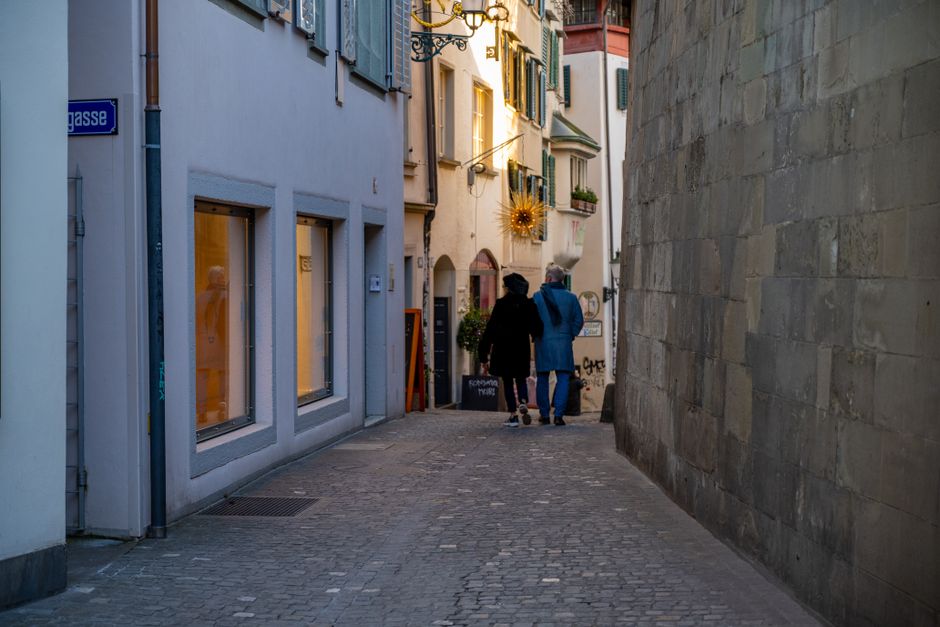
Zurich's municipal digital archive is sitting on a growing backlog of duplicate images — redundant photographs, scanned documents, and design assets spread across at least three separate city information systems — and administrators are now being pushed to decide how, and how fast, to fix it.
The problem has crystallised this summer after a joint audit by the Stadtarchiv Zürich and the cantonal office for digital governance identified tens of thousands of duplicate image files stored simultaneously in the city's document management platform, its public-facing geoportal on maps.zh.ch, and a third internal content repository used by city communications. No public cost figure has been officially released, yet the storage and licensing overhead is widely acknowledged inside the administration to be substantial. The audit's findings, circulated internally in June 2026, are now feeding into budget discussions that will shape the city's IT roadmap for the next three fiscal years.
Why does this matter right now? Zurich has staked significant political capital on its Smart City strategy, a programme overseen by the Amt für Städtebau that promises more efficient, data-driven public services by 2030. Redundant image libraries are more than a tidiness issue: they create version-control failures, slow down search and retrieval systems used by staff at the Stadthaus on Stadthausquai, and complicate compliance with Switzerland's revised data protection law, nDSG, which came into force in September 2023 and requires documented data minimisation practices.
Two institutions are at the centre of the clean-up conversation. The Stadtarchiv Zürich, based on Neumarkt in the Altstadt, holds digitised historical collections going back centuries; staff there have flagged that automated ingestion tools brought in during a 2021 migration project created silent duplicates whenever file-naming conventions differed by a single character. Separately, ETH Zürich's IT services division — which shares certain infrastructure agreements with city bodies for research-adjacent data projects — has been dealing with a parallel deduplication exercise inside its own image repositories, giving city administrators a nearby reference point for both the technical approach and the timeline required.
At the Geomatik und Vermessung Zürich office, which publishes aerial photography and cadastral imagery through the city's open-data portal, the issue is more acute. Aerial survey images are large files — individual orthoimage tiles can run to several hundred megabytes — and duplication there has measurable cost implications. Storage pricing on the city's hybrid cloud contract, renewed in early 2025, charges per terabyte per month; administrators have declined to release the specific tariff, but the structural incentive to eliminate duplicates is not in doubt.
Three choices now sit on the desks of Zurich's digital governance committee. First, do they deploy an automated deduplication algorithm across all three repositories simultaneously, accepting the risk of accidental deletion, or run a slower manual verification process archive by archive? A simultaneous run could take weeks rather than months but requires a robust roll-back protocol. Second, which office takes operational lead — the Stadtarchiv, with archival expertise, or the central IT directorate, with infrastructure access? Responsibility has not yet been formally assigned. Third, how much of the cleaned-up image library eventually gets published under an open licence on the city's existing open-data platform, opendata.swiss, where Zurich is already one of Switzerland's most active municipal contributors?
The budget calendar is the hard constraint. The city's Finanzplan deliberations for 2027–2029 begin in earnest in September 2026. Any investment in new deduplication tooling — whether a commercial product or a bespoke integration — will need a line-item proposal submitted before that window closes. Officials who miss the September deadline face waiting another full fiscal cycle.
For Zurich residents and businesses that rely on public geodata, architectural permits, and historical image searches, the practical upshot is straightforward: services may run faster and return cleaner results once the clean-up lands. The harder question is whether the political will and the budget alignment arrive before the backlog grows another year larger.
How does this story make you feel?
Spread the word
About this article
Published by The Daily Zurich
Daily brief
Free, in your inbox before 7am. Weekdays.
More in News


