Zurich's Digital Archive Crisis: The Key Decisions Ahead on Duplicate Image Replacement
City institutions and cultural bodies face a reckoning over how to clean up years of redundant digital assets — and who pays for it.
City institutions and cultural bodies face a reckoning over how to clean up years of redundant digital assets — and who pays for it.
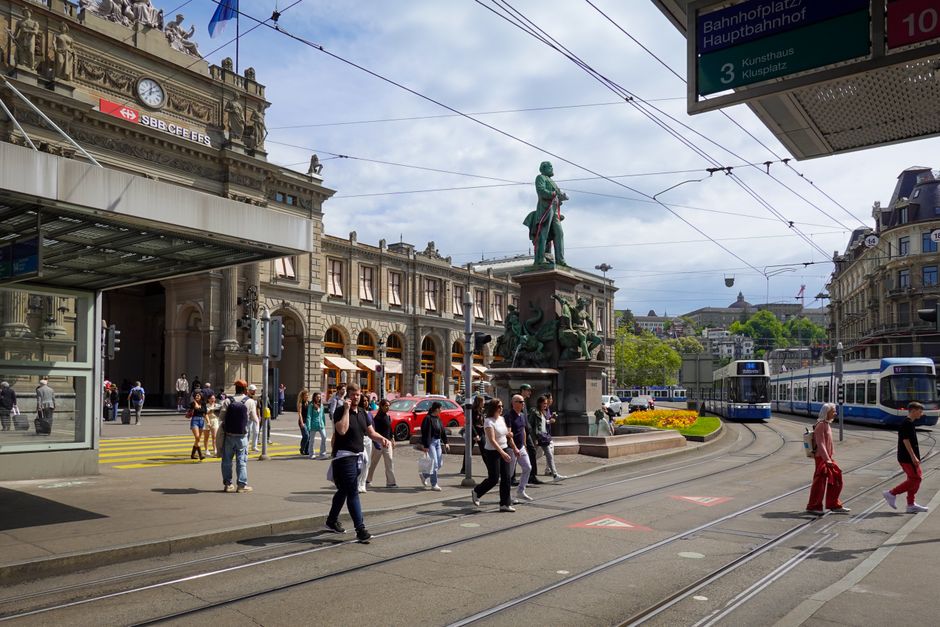
Zurich's largest public institutions are sitting on sprawling digital image libraries riddled with duplicates, and the question of how to replace or rationalise those assets is moving from a back-office headache to a budget-line priority. The Stadt Zürich's digitisation office confirmed earlier this year that a review of civic image archives had identified significant redundancy across departmental databases, forcing administrators to decide, before the end of Q3 2026, whether to invest in automated deduplication software or commission a manual audit — a choice with very different cost and staffing implications.
The timing matters. Switzerland's public institutions accelerated digital archiving during and after the pandemic years, often without unified standards. The result is layered image repositories that contain multiple versions of the same photograph, scan or graphic asset. For a city that positions itself as a technology hub — ETH Zurich alone ranked third globally in the QS World University Rankings 2025 — the inefficiency is awkward. More concretely, duplicated assets consume storage, inflate licensing costs and create legal exposure when image rights have expired on some versions but not others.
The pressure is most visible at two institutions. The Zentralbibliothek Zürich on Zähringerplatz, which holds one of Switzerland's most extensive photograph collections, began a structured deduplication pilot in January 2026 covering roughly 40,000 digitised items from its historical press archive. Staff there have described the process as painstaking: automated tools flag potential duplicates, but human reviewers must still confirm whether two near-identical images represent distinct historical moments or are genuinely redundant. The pilot was initially budgeted for completion by April; it has since been extended.
The Stadtarchiv Zürich on Neumarkt faces a similar crunch. Its visual holdings grew substantially after absorbing several smaller neighbourhood collections between 2022 and 2024. Administrators must now decide whether to adopt the same deduplication framework being tested at the Zentralbibliothek, or to procure a separate system better suited to civic administrative records. The two institutions operate under different cantonal and municipal funding streams, which complicates a joint procurement approach.
Private-sector pressure is adding urgency. Several Zurich-based media companies and pharmaceutical communications teams — the life-sciences corridor around Schlieren and Altstetten uses substantial licensed image libraries for regulatory submissions — have flagged that duplicate assets can trigger compliance problems with the European Medicines Agency. A single pharmaceutical dossier submitted with contradictory image metadata can delay approval. That is a cost no firm wants to absorb.
The Stadt Zürich's digitisation office is weighing three broad paths. First, a centralised municipal image management platform — estimated in internal planning documents at between CHF 800,000 and CHF 1.2 million for initial implementation — that would sit above departmental systems and enforce consistent metadata standards going forward. Second, a lighter-touch approach that relies on open-source deduplication tools already in use at institutions such as the Schweizerisches Nationalmuseum, which applied similar software to its ethnographic photograph collection in 2023. Third, a phased manual review, department by department, which is cheaper upfront but likely to take until 2029 to complete across all city directorates.
The cantonal government in Bern is watching. A federal working group on digital heritage standards is expected to publish guidelines in autumn 2026, and Zurich institutions that have already committed to a particular approach before those guidelines land could find themselves partially out of compliance — or, conversely, ahead of the curve if their chosen system aligns with what Bern recommends.
For organisations navigating this now, the practical advice from procurement specialists is straightforward: document the current state of your image holdings before committing to any replacement framework, because you cannot set a realistic budget without knowing the scale of the problem. Institutions that completed baseline audits in the first half of 2026 are already in a stronger position to respond quickly once federal guidance arrives. Those still debating whether to audit at all are likely to find themselves reactive rather than ready when the cantonal deadline for digital-asset compliance reporting lands in March 2027.
How does this story make you feel?
Spread the word
About this article
Published by The Daily Zurich
Daily brief
Free, in your inbox before 7am. Weekdays.
More in News


