What Zurich's luxury auction results and price data are really signalling
Recent high-end property transactions reveal a market bifurcated between ultra-prime waterfront assets and broader softening in the prestige segment.
Recent high-end property transactions reveal a market bifurcated between ultra-prime waterfront assets and broader softening in the prestige segment.
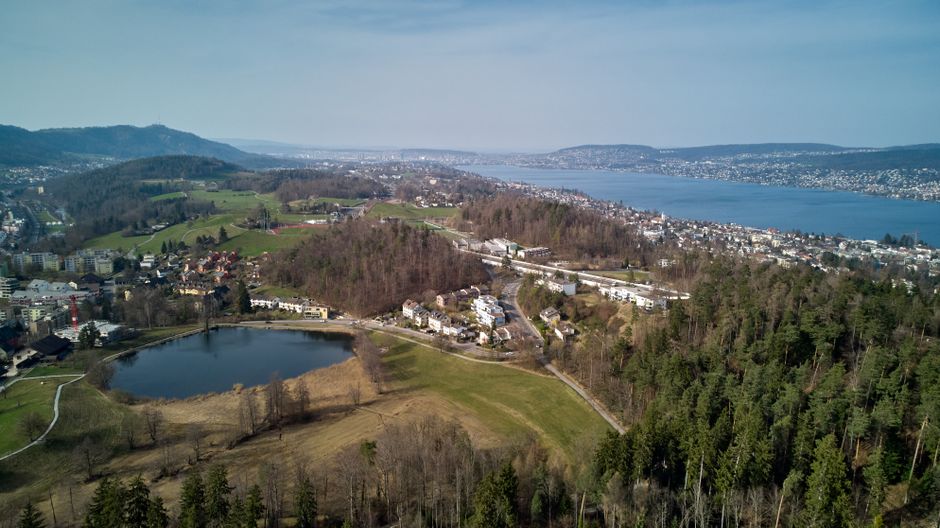
Zurich's luxury property market is sending contradictory signals. While headline prices remain elevated—the city's median sits at CHF 15,000 per square metre—recent auction outcomes and transaction data suggest a widening divide between trophy assets and the wider prestige sector.
The most telling indicator comes from the lakefront. Properties along Bellerivestrasse and Quaistrasse in Seefeld and Enge continue to command premiums of 30–40 per cent above city-wide averages, with waterfront villas regularly exceeding CHF 25,000 per sqm. Yet auction house data from the past eighteen months reveals something important: competition for these trophy lots has intensified while average sale times have lengthened. A Zurichberg villa that might have cleared in three weeks five years ago now typically spends four to six weeks on the market—a material shift in a market accustomed to rapid absorption.
The middle-market prestige segment—properties in the CHF 4–8 million range across Wiedikon, Hongg, and lower Seefeld—shows more pronounced cooling. Transaction volumes have contracted roughly 12 per cent year-on-year, and asking-price-to-final-sale gaps have widened to 5–7 per cent, up from historical norms near 2–3 per cent. This suggests sellers in this bracket are recalibrating expectations more rapidly than ultra-prime vendors, who retain deeper liquidity pools and international appeal.
Kreis 5 and Wipkingen, once characterized as emerging prestige addresses, now exhibit different momentum. While these neighbourhoods attracted speculative interest two to three years ago, recent data shows price appreciation has flatlined relative to the broader market. Apartments in converted industrial spaces—once commanding 15 per cent premiums—now trade at parity with comparable Wiedikon stock. This signals a normalization of perception rather than a crash, but it's material nonetheless.
Foreign investment patterns are equally instructive. Currency headwinds and Swiss tax scrutiny have reduced non-resident demand for trophy properties, though wealthy domestic acquirers have partially offset this. The result: a market increasingly driven by local wealth rather than international capital flows—a structural shift with long-term implications for price formation.
The data tells a coherent story: ultra-prime assets with unique characteristics (lakefront location, historical pedigree, bespoke finishes) retain pricing power but face longer sales cycles. Prestige properties without distinctive features face real pressure. For vendors, the message is clear—differentiation now matters more than ever. For buyers, the bifurcation creates opportunity: those seeking prime waterfront will likely face continued strength; those shopping the broader luxury segment may find newly rational pricing.
This article was compiled by AI from the sources linked above and screened before publishing. See our editorial standards.
How does this story make you feel?
Spread the word
About this article
Published by The Daily Zurich
Daily brief
Free, in your inbox before 7am. Weekdays.
More in Property