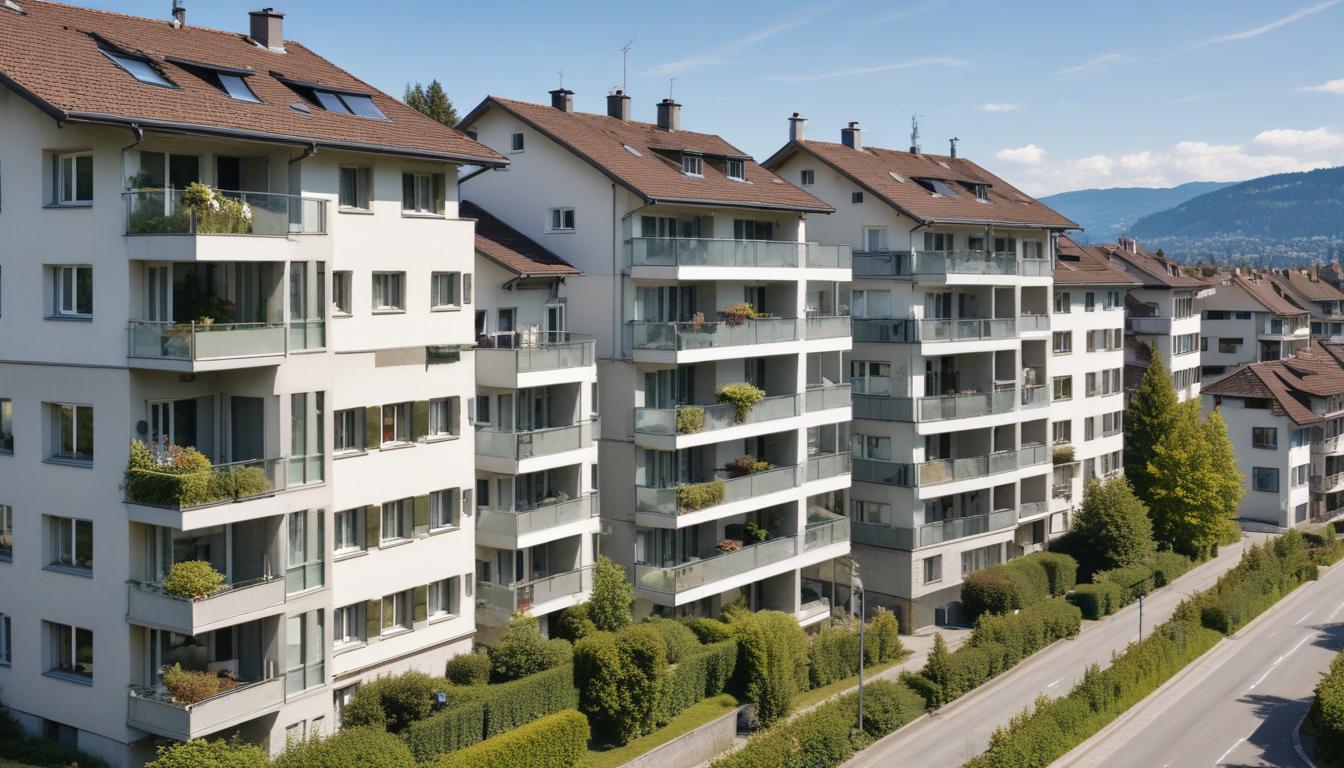
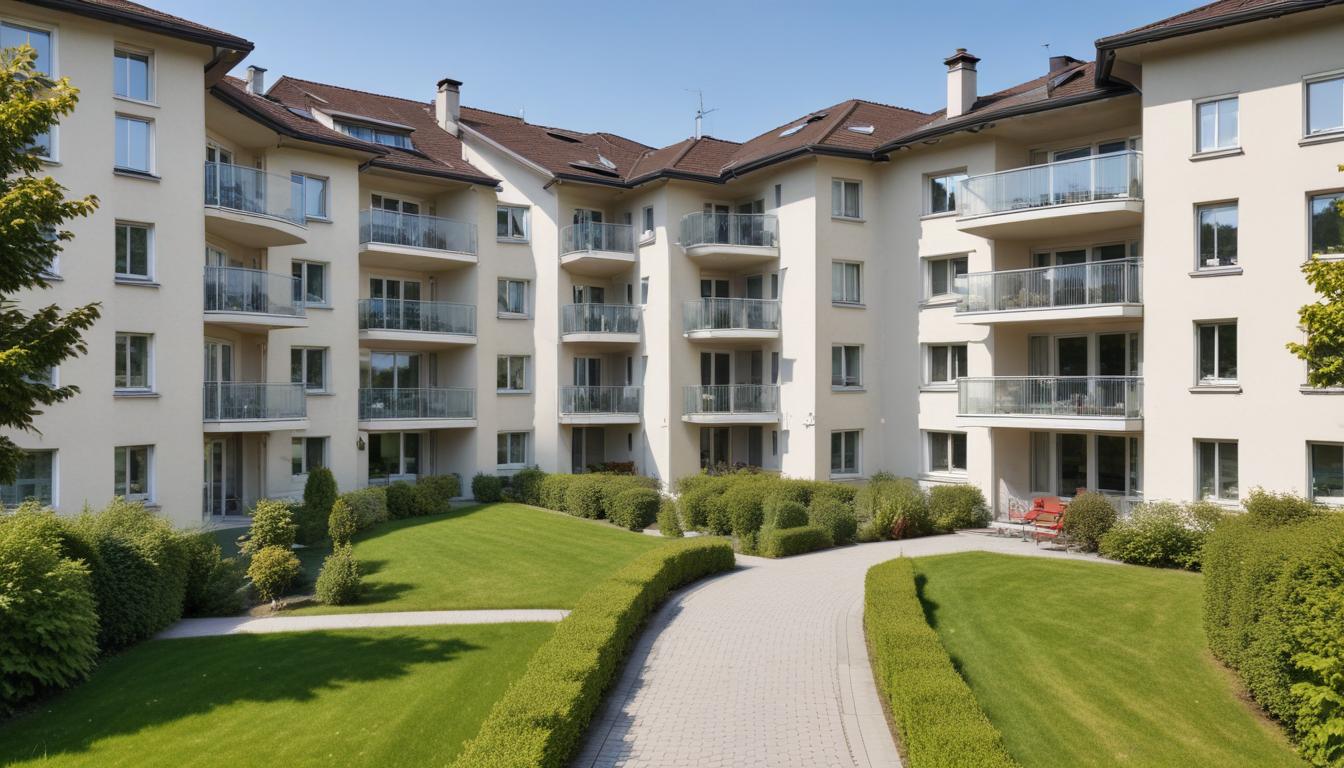
For decades, Altstetten carried a reputation as Zurich's workaday backyard: industrial rail yards, affordable rents, and families priced out of the lakeside postcards. Today, that calculus is shifting fast. The neighbourhood is emerging as the city's most intriguing property laboratory, where social housing mandates are colliding with development opportunity in ways that could reset Zurich's affordability crisis.
The catalyst is simple arithmetic. With the city average sitting around CHF 15,000 per square metre and young professionals increasingly locked out of Seefeld, Enge, and even Kreis 5, developers are looking west. Altstetten's lower land values—still hovering below CHF 8,000 per sqm in parts along Aussersihlstrasse and near the Hardbrücke—are attracting institutional investors and housing cooperatives with serious capital. The result is a pipeline of mixed-tenure projects that blend market-rate, affordable, and cooperative housing in a way that's increasingly rare elsewhere.
The Zurich city council's 2020 mandate requiring 35 per cent "social" housing in new developments has turbocharged this trend. Altstetten, with its underutilised industrial sites and ownership fragmentation, offers the scale developers need to hit those targets while still achieving returns. Projects around Europaplatz and along the Sihl valley are exemplary: new mid-rise schemes housing 300–500 residents with mixed incomes, ground-floor markets, and public plazas replacing warehouse footprints.
Local institutions are watching closely. The Baugenossenschaft Zurich cooperative movement has expanded its Altstetten presence markedly, while cantonal housing authorities have flagged the neighbourhood as a testing ground for their affordability toolkit. The Stadtrat's June development strategy explicitly identified Altstetten as a priority zone for "inclusive density"—code for delivering housing at scale without the Seefeld price premium.
For investors, the calculus is compelling: capital appreciation potential remains strong (rents rising 3–4 per cent annually), regulatory tailwinds are favourable, and the neighbourhood's improving transit links—including continued investment in the Uetliberg rail corridor—are shifting perceptions. It's no longer sacrifice real estate; it's strategic positioning.
The irony is sharp: as Zurich struggles nationally with Europe's highest property prices, the solution may lie not in restricting the market but in redirecting it. Altstetten is proving that affordability and investor appeal aren't opposites—they're overlapping circles waiting to be exploited. Whether that formula holds as the neighbourhood gentrifies will define Zurich's next chapter.
This article was compiled by AI from the sources linked above and screened before publishing. See our editorial standards.