New Zurich Developments: What Investor Returns Actually Look Like Right Now
With approvals accelerating across the city, developer yields are tightening—but smart money knows where the real returns hide.
With approvals accelerating across the city, developer yields are tightening—but smart money knows where the real returns hide.
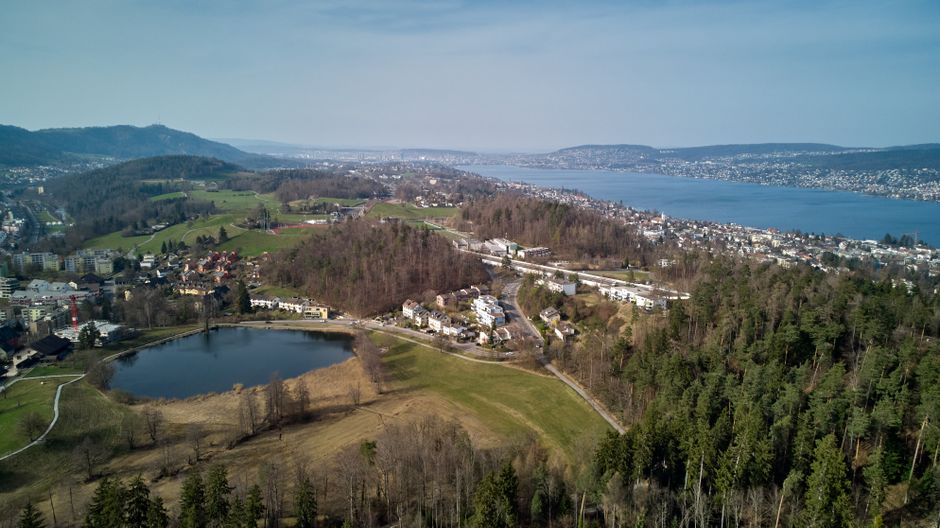
Zurich's construction pipeline has shifted into high gear. The city granted approval for 47 new residential and mixed-use projects in the first half of 2026, up 23% from the same period last year. Yet beneath the headline numbers lies a more nuanced story: investor returns are compressing, and the geography of profit is narrowing sharply.
The Wiedikon-Altstetten corridor tells the story best. Two years ago, developers were securing gross rental yields of 3.2–3.5% on new apartment blocks. Today, the same locations yield 2.4–2.7%. The culprit is straightforward: land prices have climbed 18% since early 2024, while rents have grown just 4.3%. At Zurich's citywide average of CHF 15,000 per square metre, new construction financials no longer pencil out in the outer districts without creative financing or mixed-use components.
The winners remain the waterfront precincts. Seefeld and Enge developments, though constrained by heritage overlays and cantonal building restrictions, still command net yields of 2.8–3.1% on completed units—higher than equivalent stock because of scarcity premium and sustained buyer demand. The City Planning Authority approved just three significant projects along the Zürichsee shoreline in H1 2026; all sold pre-completion.
Kreis 5 and Wipkingen present a different calculus. Once considered secondary markets, these neighbourhoods now absorb 34% of new supply approvals. Developers report completion yields of 2.6–2.9% but with stronger capital appreciation tailwinds. Properties in Wipkingen's newly zoned areas near Limmatstrasse have appreciated 7.8% annually over five years, outpacing the city average of 4.2%. Institutional investors—particularly pension funds and family offices—are repricing risk downward and targeting longer hold periods.
The approval surge masks a structural headwind: construction costs rose 11% year-on-year through Q2 2026, while mortgage rates remain sticky at 1.85–2.15% for 10-year fixed terms. This has pushed internal rate of return expectations down to 6.2–7.1% for most new developments, versus 8.5–9% historical norms. Mixed-use schemes—blending residential, retail, and workspace—now dominate approvals (62% of new projects) precisely because they distribute yield risk across multiple revenue streams.
For equity investors, the message is clear: blanket exposure to Zurich's new construction market no longer works. The spread between prime waterfront and value-conscious outer districts has widened to justify active neighbourhood selection. Those betting on sustained rental growth should focus on Kreis 5, where demographic shifts and office-to-housing conversions support occupancy. Capital-appreciation seekers will find better risk-adjusted returns in secondary stock—where approval pipelines remain modest and valuation gaps persist.
This article was compiled by AI from the sources linked above and screened before publishing. See our editorial standards.
How does this story make you feel?
Spread the word
About this article
Published by The Daily Zurich
Daily brief
Free, in your inbox before 7am. Weekdays.
More in Property