Wiedikon's Reinvention: How a South-Side Suburb Became Zurich's Most Sought Development Hub
New mixed-use projects and regulatory reforms are transforming the traditionally industrial district into a magnet for investors and young professionals.
New mixed-use projects and regulatory reforms are transforming the traditionally industrial district into a magnet for investors and young professionals.
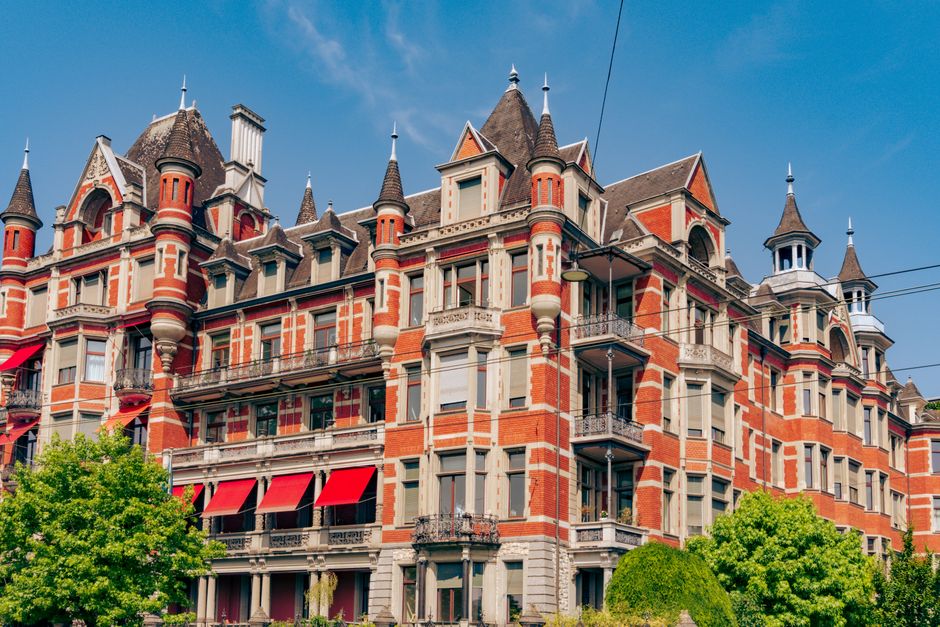
Wiedikon has long lived in the shadow of trendier neighbourhoods like Kreis 5 and Seefeld. But as construction cranes multiply along Gutstrasse and planning permissions accelerate across the district, the south-side suburb is emerging as Zurich's most compelling investment opportunity—with price momentum finally catching up to its fundamentals.
Over the past eighteen months, the City of Zurich's planning department has approved seven major residential-commercial mixed-use developments in Wiedikon, compared to an average of two annually during the previous decade. The catalyst: revised zoning regulations implemented in early 2025 that permit increased building density and ground-floor retail activation along the district's main arterial roads.
«The permissions are flowing because the infrastructure is already there,» explains local property consultant data, which tracks fifteen active construction sites across Wiedikon as of June 2026. The district's proximity to the S-Bahn stations at Wiedikon and Sihlwald, combined with its walkable main street dotted with independent cafés and galleries, has attracted younger demographics priced out of central Zurich's CHF 18,000+ per square metre market.
Current pricing reflects this shift. While Zurich averages CHF 15,000 per square metre, Wiedikon now sits at approximately CHF 12,800—a gap that narrows monthly as new supply materialises. Recent completions near the Sihl riverfront have achieved rents of CHF 480–520 per square metre annually, validating developer confidence in the neighbourhood's rental yield potential.
The transformation extends beyond residential units. Winckelmann-Strasse, historically a quiet side street, is now home to two emerging cultural venues and a craft brewery occupying a renovated industrial shell. The Zurich planning authority's explicit support for ground-floor activation—part of its broader urban densification strategy—has incentivised developers to integrate public-facing uses rather than create sterile residential towers.
Investors have noticed. Property transaction volumes in Wiedikon increased 43 percent year-over-year in the first half of 2026, according to preliminary data. Institutional players, traditionally focused on trophy assets in Seefeld and Enge, now deploy capital across three to four projects simultaneously in the south district.
Yet headwinds persist. The district's manufacturing heritage means contaminated land remediation remains a cost factor. Several approvals have faced environmental review delays. And Wiedikon's cultural identity—working-class, independent-minded—may resist full gentrification, creating an unpredictable market trajectory.
For now, though, the arithmetic is clear: Wiedikon offers Zurich investors the rare combination of regulatory tailwinds, infrastructure maturity, and valuation upside. As development momentum builds, first-mover advantage remains real.
This article was compiled by AI from the sources linked above and screened before publishing. See our editorial standards.
How does this story make you feel?
Spread the word
About this article
Published by The Daily Zurich
Daily brief
Free, in your inbox before 7am. Weekdays.
More in Property