property
Zurich's Höngg Delivers Quality Homes at Lower Prices Than Rivals
While Seefeld and Enge command trophy prices, the hillside district of Höngg is quietly delivering what savvy Zurich buyers stopped expecting: quality and relative affordability in the same postcode.
How we reported this
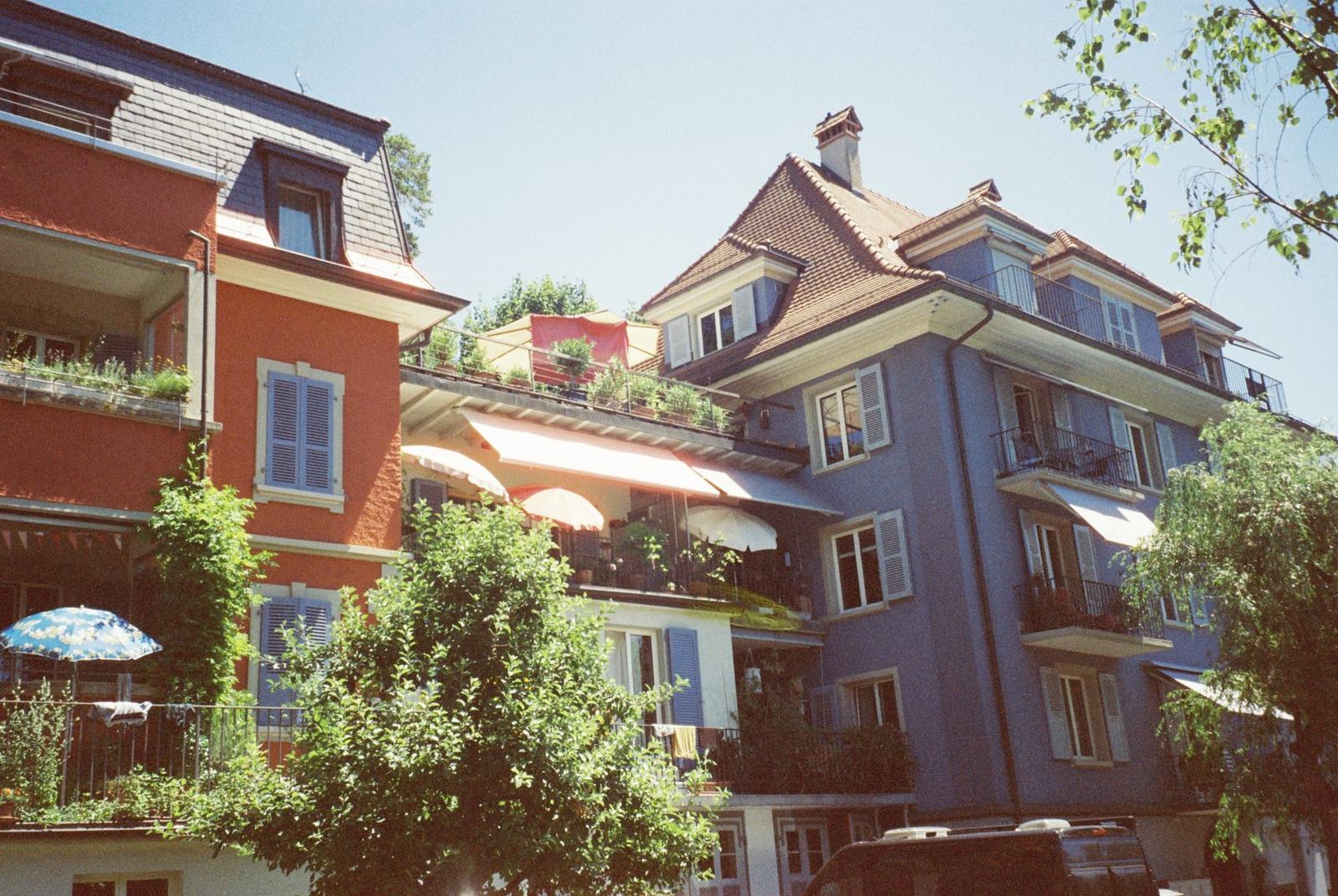
Höngg is no secret, but it is still underpriced. The hilltop district on Zurich's northwestern edge, part of Kreis 10, sharing a boundary with the increasingly fashionable Wipkingen, is trading at a meaningful discount to the city's CHF 15,000-per-square-metre average, even as it offers tram access to the Hauptbahnhof in under 15 minutes and unobstructed views across the Limmat valley toward the Alps. For buyers priced out of Seefeld or unwilling to pay Enge's waterfront premium, Höngg is where the calculus is changing.
The timing matters. Switzerland's real estate market entered 2026 facing tighter mortgage affordability rules and a rental vacancy rate in the canton of Zurich that has hovered near historic lows for several years. Demand for owner-occupied flats in well-connected outer districts has climbed steadily as a result, and estate agents active in Kreis 10 have noted a compression of the price gap between peripheral and central Zurich locations. That gap still exists in Höngg, but for how much longer is the question driving buyer urgency this summer.
The district's appeal is not new, but it is sharpening. The Regensdorferstrasse corridor, running north from the Höngg tram terminus of line 13, is lined with late-19th and early-20th century residential blocks that have been incrementally renovated over the past decade. The nearby Friedhof Rehalp, no, that belongs to Witikon, the local anchor is the Kirchgemeindehaus Höngg on Limmattalstrasse, a community focal point that signals the kind of embedded civic life that younger owner-occupiers increasingly prize. The Migros cooperative's large-format store at Käferholzstrasse serves as a practical daily anchor, while independent wine merchants and small restaurants along Regensdorferstrasse have given the strip a low-key urban texture that a decade ago it lacked entirely.
The Price Gap That Still Exists
Concrete numbers tell the story clearly. Residential resale transactions in Höngg recorded through cantonal land registry data in recent years have shown per-square-metre prices in the CHF 10,500-12,500 range for standard 3.5 and 4.5-room flats in good condition, well below the city-wide average and a fraction of the CHF 20,000-plus commanded by comparable space on Zürichhorn or along the Seefeld lakefront. New-build developments in the district, including the Espenhof residential project on the northern slope completed in the early 2020s, pushed the upper range toward CHF 13,000 per square metre for premium specifications, but comparable new product in Enge or Riesbach regularly clears CHF 17,000 to CHF 19,000.
The discount reflects history as much as geography. Höngg was a separate municipality until its incorporation into Zurich in 1934, and the village-within-a-city character, narrow lanes off Würzgrabenstrasse, allotment gardens on the western slopes, the vineyards of the Rebhügel, has kept it off the radar of the international buyer cohort that tends to cluster around the lake. That cohort is precisely who has driven premium inflation in Seefeld since 2018. Höngg has not had that problem, and its prices reflect it.
What Buyers Should Do Now
The practical advice from watching this district is to move before the gap closes further. Line 13 tram frequency improvements planned under the city's VBZ network timetable revisions will cut journey times to Escher-Wyss-Platz, the Kreis 5 hub that has become one of Zurich's most dynamic commercial nodes, making Höngg even more commutable than it already is. Infrastructure upgrades reliably compress price differentials in Swiss cities; it happened to Altstetten in Kreis 9 after the Zürich West development accelerated post-2010, and the pattern is repeating.
Buyers targeting a 3.5-room flat in good condition should budget CHF 900,000 to CHF 1.1 million for existing stock, with new-build or fully renovated units approaching CHF 1.3 million. That remains well below equivalent Seefeld product. Investors considering rental yield should note that Höngg's rental demand is structurally supported by proximity to the Schulthess Klinik on Lengghalde and several ETH Zurich affiliated research facilities in the Hönggerberg science campus, an employment anchor that generates consistent tenant demand regardless of the broader economic cycle.
The window is open. The question is whether it stays that way past 2027.
This article is general information only and is not personal financial or investment advice. Consider your own circumstances and seek licensed professional advice before making financial decisions.