Technology
Why Zurich's Tech Ecosystem Is Playing a Different Game From Every Other City in Europe
From ETH Zurich spin-offs to Google's largest engineering office outside the United States, the city on the Limmat has quietly built something that Silicon Valley veterans increasingly fly in to study.
How we reported this
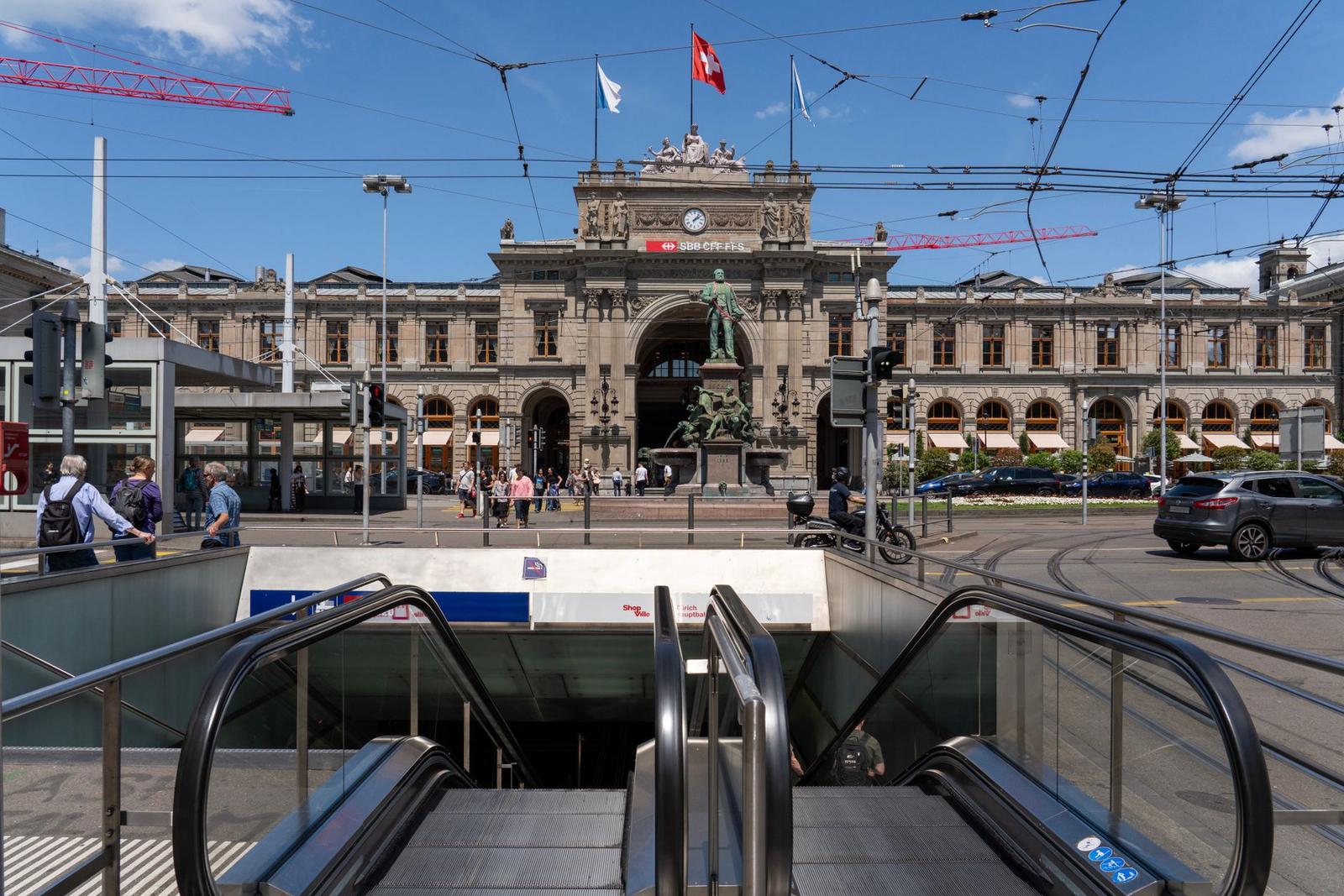
Zurich has more machine learning researchers per square kilometre than any other city in continental Europe. That single fact, drawn from a 2025 analysis by Startup Genome, explains why global tech executives keep turning up in Zürich's District 5, the former industrial quarter along Hardstrasse that has become the closest thing Switzerland has to a startup row, even as broader European tech investment cooled sharply through 2025.
The timing matters. With Russia's war grinding through its fourth year and European governments scrambling to reshore semiconductor supply chains, the pressure on tech hubs to deliver sovereign capacity in AI, chip design and cybersecurity has never been higher. Zurich is unusually well-positioned to answer that pressure, and the city knows it.
The ETH Effect, and What Comes After It
The engine is ETH Zurich, the federal polytechnic on Rämistrasse that has produced more Nobel laureates per faculty member than almost any institution outside the Ivy League. But the real story in 2026 is what happens when graduates leave the building. ETH Transfer, the university's commercialisation arm, logged 28 new spin-off companies in 2025 alone, a record. Many of them set up within walking distance, clustering around the Technopark Zürich campus on Technoparkstrasse in Westend, where desk rents run around CHF 650 per workstation per month, steep, but competitive given what the address signals to investors.
Google has had an engineering presence in Zurich since 2004, and its office at Brandschenkestrasse 110, Google's largest in Europe, now employs roughly 5,000 engineers. That concentration has created a secondary talent market. Engineers who spend five years at Google Zurich and then leave to found companies carry not just technical skills but a network that stretches to Mountain View and back. Several of Switzerland's most-watched AI startups of the past two years, including large-language-model infrastructure firm Corewave and privacy-computing specialist Secretarium, were founded by exactly this cohort.
Capital, Regulation and What Zurich Gets Right
Venture capital has followed the talent. Swiss venture investment hit CHF 3.2 billion in 2025, according to Swiss Venture Club data released in February 2026, with Zurich absorbing roughly 60 percent of that total. The city's fundraising environment differs from London or Berlin in one specific way: a higher proportion of capital comes from corporate venture arms and family offices rather than dedicated VC funds. Roche Venture Fund and Zurich Insurance's Z Zurich Foundation both made first investments in deep-tech companies last year, a sign that the traditional financial establishment is no longer treating tech as a separate asset class.
Regulation is the other differentiator. Switzerland is not an EU member, which means Swiss companies can design products under Swiss law, generally more permissive on data-handling for B2B applications, while still accessing EU markets through bilateral agreements. That jurisdictional flexibility is a genuine competitive advantage that startups in Frankfurt or Amsterdam cannot replicate. The Swiss Federal Data Protection Act, updated in September 2023, struck a balance that several founders describe as workable in a way that GDPR simply is not for early-stage companies testing products quickly.
The practical consequence for anyone building a tech company or looking to join one: Zurich rewards patience and depth over the rapid scaling culture you find in London. Salaries are high, a senior software engineer at a mid-stage startup can expect CHF 130,000 to CHF 160,000 base, but so is the cost of living, and the city's culture skews toward research-grade rigour rather than move-fast iteration. Companies that thrive here tend to be working on problems that take years to solve: quantum computing, protein folding, autonomous industrial systems. The city's pitch to the world, in 2026, is not speed. It is depth. And right now, that is exactly what the global tech industry says it needs.