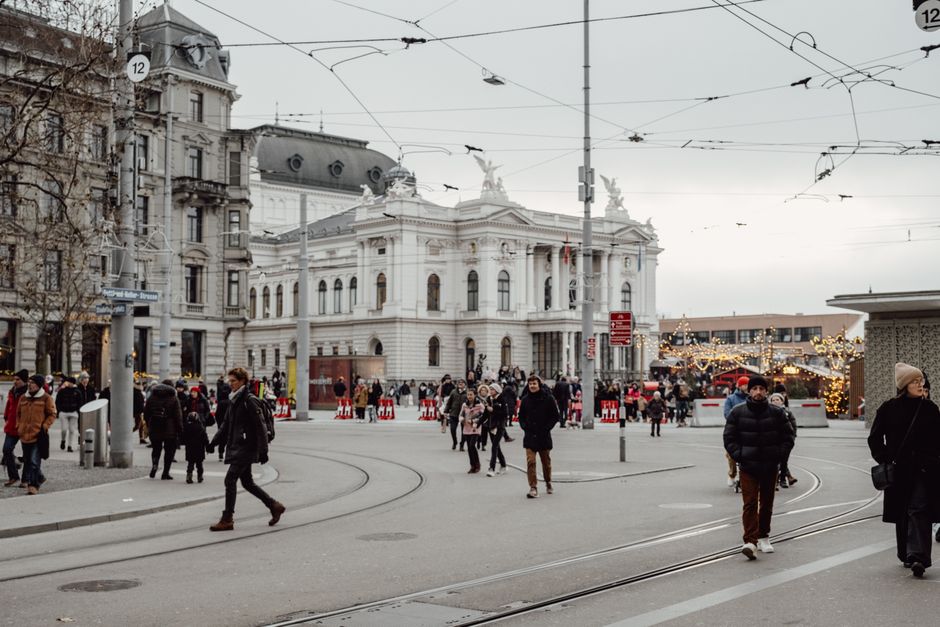
Walk through the Markthalle on Helvetiaplatz any Saturday morning, and you'll witness something quietly revolutionary: thousands of Zurichers selecting vegetables grown within 50 kilometres of the city. It's the opposite of the Instagram-optimised wellness narrative dominating global food culture. Yet it's become the quiet backbone of how this city actually eats.
Globally, 2026 has seen wellness trends pivot sharply. Adaptation fatigue is real—consumers have cycled through keto, intermittent fasting, and plant-based perfectionism. Now, the pendulum swings toward what researchers call "radical locality." Zurich, however, never really left this station. A 2025 survey by the Zurich Chamber of Commerce found that 67% of residents prioritise locally sourced produce, compared to a European average of 38%. This isn't trend-chasing; it's embedded cultural practice.
The infrastructure reflects this. Beyond the Markthalle, neighbourhoods like Wiedikon and Aussersihl host weekly farmers' markets where prices average 15–25% higher than supermarket equivalents—yet attendance grows yearly. Meanwhile, global wellness platforms promote £60 adaptogenic smoothies and imported chia seeds. Here, the conversation centres on seasonal Swiss chard, Appenzell cheese, and why August strawberries require no marketing.
What's changed recently is accessibility. The Genossenschaftsbund (cooperative movement) has expanded Community Supported Agriculture schemes across districts like Hongg and Schwamendingen. Membership typically costs 400–600 francs quarterly, delivering weekly boxes of produce directly to households. By contrast, similar services in London or Berlin command double the price and half the selection.
Healthcare professionals note the shift. Switzerland's integrated wellness model—combining prevention with medical practice—now explicitly champions local nutrition. The Zurich Institute of Public Health published guidelines in early 2026 emphasising that seasonal eating patterns support metabolic health more reliably than imported superfoods. This aligns with global research but feels almost quaint in its simplicity.
The younger demographic offers texture. While global Gen-Z wellness culture champions aesthetic kale bowls and blockchain-tracked ingredients, Zurich's equivalent gravitates toward fermentation workshops in Kreis 4 and potato cultivation classes. It's less performative, more practical.
Price consciousness plays a role too. As global inflation bites, Zurich's local food economy offers psychological reprieve: you know where your food originates, you support regional farmers, and—counterintuitively—you often spend less than importing trendy alternatives.
This isn't to suggest Zurich is immune to global trends. Oat milk appears in every café. Yet the city's wellness philosophy remains rooted in something older and more durable: trust in proximity, seasons, and systems you can see. In an era of overwhelming wellness noise, that restraint feels revolutionary.
This article was compiled by AI from the sources linked above and screened before publishing. See our editorial standards.