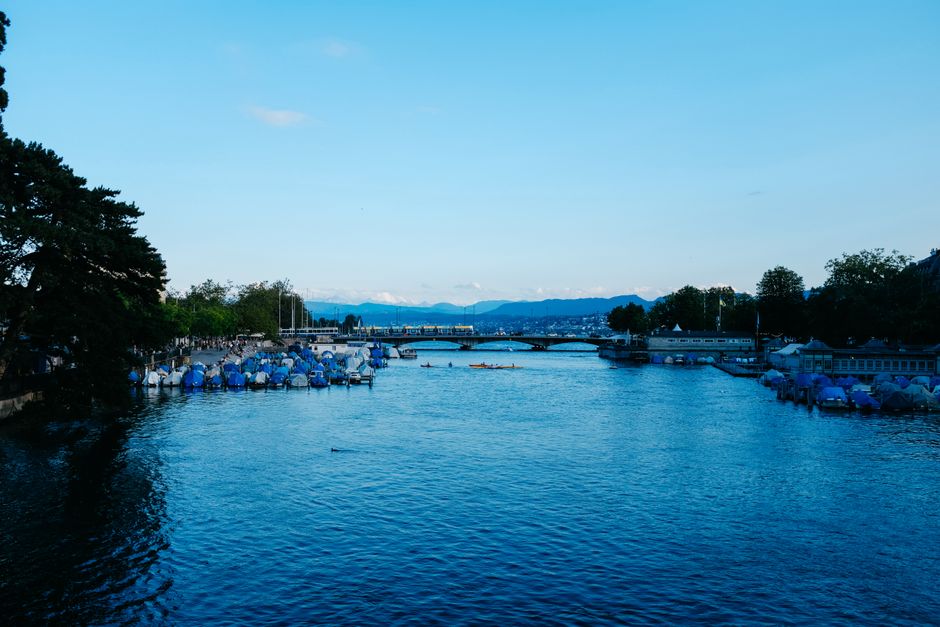
Zürich's reputation for precision extends, it turns out, to how its residents structure their inner lives. Enrolment in meditation and yoga programs across the city rose roughly 34 percent between 2023 and 2025, according to figures compiled by the Swiss Yoga Federation, and studios in Kreis 4 and Kreis 5 — the city's most densely populated residential quarters — are now reporting waiting lists for morning classes that would have been unthinkable five years ago.
The timing matters. After two consecutive years of record-breaking heat across Central Europe, and with mental health referrals at Swiss cantonal clinics climbing for the third straight year, the pressure to find sustainable coping mechanisms has sharpened considerably. Public health researchers at the University of Zurich's Epidemiology, Biostatistics and Prevention Institute published findings in April 2026 showing that adults who maintained a consistent 15-to-20-minute daily mindfulness practice reported 28 percent lower perceived stress scores than those who did not — a modest but statistically significant gap. Consulting your own GP or a licensed practitioner at one of the city's Gesundheitszentren remains the right first step before starting any new routine, but the population-level data is generating genuine interest.
Where Zürich Residents Are Actually Showing Up
The Seebad Enge, the historic bathing pavilion anchored into the western shoreline of Lake Zürich, has become a quiet hub for early-morning breath-work sessions. Groups of eight to fifteen people gather on the wooden decking from around 6:30 a.m. on weekdays, running through Pranayama sequences before the city's office workers arrive. Entrance costs CHF 8 in summer, and no booking is required. The practice has spread organically through word of mouth rather than any organised program.
A few kilometres north, the Hürlimann Areal in Wollishofen — a former brewery complex redeveloped into a mixed-use wellness and residential district — houses Yogaloft Zürich, one of the city's larger dedicated studios. It offers 60-minute Hatha and Yin classes from CHF 25 per drop-in session, with a 10-class pass running CHF 195. Studios in the Hürlimann complex benefit from the building's original thermal baths, which remain open to the public via the Thermalbad & Spa Zürich next door — a combination that residents describe as unusually effective: a yoga session followed by 32-degree mineral water immersion at Badstrasse 4 has become a Saturday-morning ritual for a recognisable cohort of Zürich professionals.
On Uetliberg, the 871-metre ridge that forms the city's western edge, a growing number of people are treating the 90-minute return hike not as exercise but as moving meditation. The SZU railway line from Selnau station makes the trailhead reachable in under 20 minutes from the city centre, meaning the practice fits comfortably inside a lunch break extended by 30 minutes.
Small Habits, Consistent Execution
What practitioners and instructors consistently emphasise is specificity over ambition. The habits that stick in Zürich, according to program coordinators at the Paracelsus Klinik on Zollikerstrasse — a integrative medicine facility that has run structured mindfulness courses since 2019 — share three features: they take under 20 minutes, they are anchored to an existing daily trigger such as a commute or a meal, and they do not require additional equipment. The clinic's eight-week Mindfulness-Based Stress Reduction course, based on the Jon Kabat-Zinn protocol, costs CHF 480 and runs three times annually, with the next cohort beginning in September 2026.
The science supporting short, consistent practices over occasional long sessions has strengthened considerably in recent years. A 2024 meta-analysis in the journal Psychological Medicine reviewed 136 randomised controlled trials and found that daily practices of 13 minutes produced measurable improvements in attention and emotional regulation within eight weeks — a finding that aligns neatly with what Zürich residents are self-reporting.
For anyone looking to start: pick one anchor point in your existing day — the tram ride on Line 7, the bench overlooking the Limmat at Rathaus, the five minutes before opening a laptop — and attach a single breath-based or body-scan practice to it. Keep it short enough that skipping it feels more effortful than doing it. The city, with its lakes, ridgelines and world-class healthcare infrastructure, gives you everything else you need.