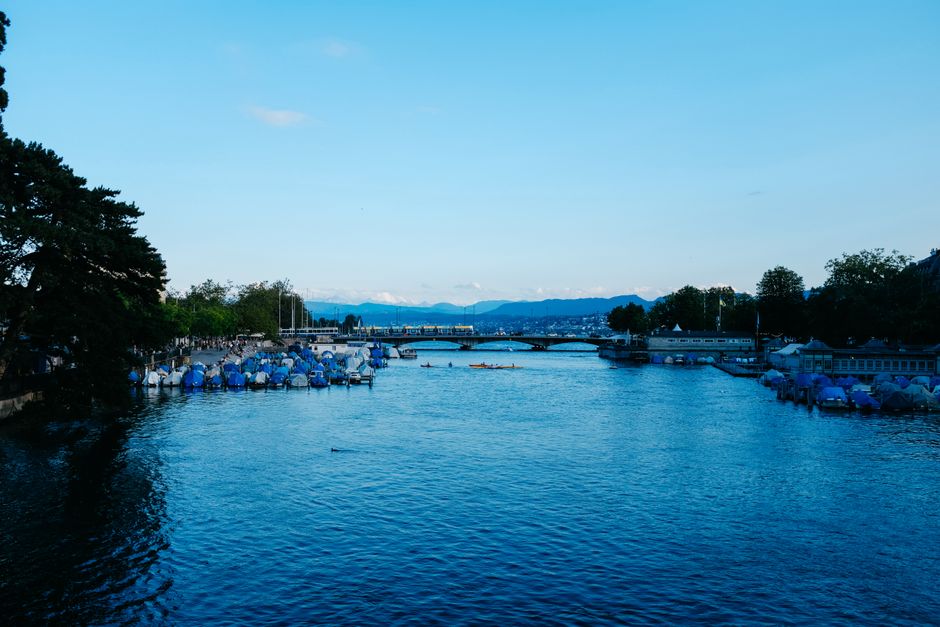
On any given Tuesday morning before 8 a.m., the packed gravel path running south along the Limmat from Zürich HB toward Platzspitz carries a steady stream of runners who are not, by and large, training for anything. They are simply getting to the day the way they always do. This is what a mature outdoor fitness culture looks like: not a trend, but a default.
That culture has real momentum behind it right now. July in Zurich arrives with long light and relatively mild temperatures — this week is sitting around 24°C — and public health researchers at the University of Zurich have consistently flagged summer as the period when sedentary residents are most likely to adopt new movement habits that actually stick through autumn. The city has also been steadily investing in its trail and waterfront infrastructure since the 2020 Stadtentwicklung Zürich mobility report recommended expanding low-barrier active-recreation corridors. Three new wayfinding posts went up along the Zürichsee lakefront between Bürkliplatz and Tiefenbrunnen in April 2026.
The Routes Locals Actually Use
The 7.2-kilometre Seeuferweg along the western bank of Lake Zurich, from Bürkliplatz down to Wollishofen, is arguably the city's most democratic running strip. It is flat, well-lit, and open year-round. Regulars here tend to run it in 35-to-45-minute loops before work, pairing the outbound leg against the morning light and the return into the city as a cool-down. The Mythenquai stretch is particularly useful in summer because the dedicated pedestrian and cycle lanes are clearly separated — a detail that matters when you are trying to keep a rhythm at 6:30 a.m.
Uetliberg is the other anchor of Zurich's outdoor fitness geography, and it demands more from you. The Planetenweg trail from the summit down toward Triemli covers just over nine kilometres and drops roughly 400 metres in elevation. Intermediate runners typically treat it as a Saturday-morning commitment rather than a daily one, but a subset of Wiedikon and Friesenberg residents who live on the mountain's lower slopes have integrated the first two kilometres of ascent from Triemli S-Bahn station into a 45-minute weekday circuit. The S10 line running to Uetliberg station from Zürich HB takes 26 minutes and costs CHF 4.40 with a Zurich City Zone 110 pass — meaning the access cost for most residents is already covered by their monthly travel subscription.
The Zürich Läuft program, run by Zürich Sport and available through the city's online sports portal at zuerichsport.ch, offers free guided group runs on Wednesday evenings from Landiwiese, departing at 6:15 p.m. It has drawn between 40 and 90 participants per session since restarting in March 2026 after a two-year pandemic-era hiatus. Participants cite the accountability structure as the main reason they show up consistently — a finding that aligns with behavioural research from ETH Zurich's Health Sciences department, which in a 2024 paper found that social commitment mechanisms increase exercise adherence by approximately 34 percent over solo-intention alone.
Building It Into the Week
The residents who run most consistently in Zurich share a few practical patterns worth noting. They pick routes with a fixed endpoint that serves a second purpose — a bakery, an S-Bahn stop, a swimming pontoon. The Frauenbadi on Utoquai, open from May through September with an early-morning admission fee of CHF 8, functions as exactly this kind of destination for dozens of female regulars who run the Seepromenade and then swim before work. The combination of trail and cold water has become a summer ritual for a specific demographic of Seefeld and Riesbach residents.
Anyone thinking of establishing their own version of this routine would do well to start with the city's Sport Zürich trail map, available free at any of the 34 Zürich Sport branches, or downloadable via the Zürich city app. The lakefront and Sihl River paths are the most forgiving entry points. Uetliberg can wait until the habit is set. And for anyone experiencing joint pain, fatigue, or breathlessness that feels unusual, a conversation with a Hausarzt before ramping up mileage is the sensible first step — Switzerland's GP network being one of the most accessible in Europe for precisely this kind of early-stage guidance.