Switzerland's over-65 population will cross the one-million mark in Zurich canton by 2035, according to projections published by the Federal Statistical Office in Bern earlier this year. That number is forcing a quiet rethink of how the city designs its public spaces, organises its healthcare, and markets movement to people who remember when "wellness" meant a brisk walk and an early bedtime.
The timing matters. Across Europe and much of the industrialised world, health ministries are scrambling to contain the long-term cost of sedentary ageing. The World Health Organization's Global Action Plan on Physical Activity 2018–2030 set a target of reducing physical inactivity by 15 percent — a goal that, at the halfway mark, most member states are failing to meet. Zurich is not failing. But it is not coasting, either.
What Zurich Already Gets Right
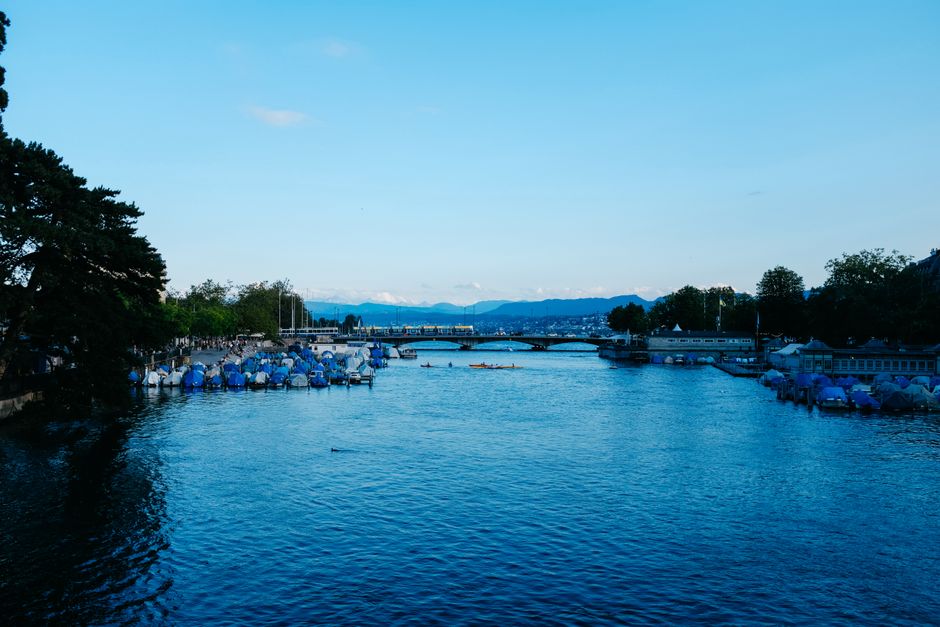
The infrastructure here is, frankly, unusual. The Zürichsee lakefront promenade — stretching from Bürkliplatz south through Enge and Wollishofen — is one of the most consistently used outdoor exercise corridors in central Europe, and it is free. On any given weekday morning before 9 a.m., the path is populated by Nordic walkers in their seventies, retirees on e-bikes, and small organised groups from Pro Senectute Kanton Zürich, the cantonal seniors' organisation based on Baumackerstrasse that runs structured walking and gymnastics programmes explicitly designed for the 60-plus age group. Pro Senectute's annual participation figures for physical activity programmes in the canton exceeded 14,000 individuals in 2024.
Uetliberg, the 870-metre ridge that sits at the western edge of the city and is reachable by the S10 train from Zürich HB in under 25 minutes, serves a similar social function. The trail network there is graded, well-maintained, and routinely used by organised hiking groups that self-describe as retirement-age. The city's Sportamt — the municipal sports office — has mapped and rated more than 40 walking routes suitable for reduced-mobility users across the urban area, a project that was updated and re-published in spring 2025.
Compare that to London or Berlin, where equivalent municipal provision is patchier, often dependent on borough-by-borough funding, and rarely marketed with seniors specifically in mind. Even in Japan, which leads global rankings on longevity, the formal infrastructure for guided senior movement in urban settings tends to cluster around private gyms or community centres rather than free public corridors.
Where the Gaps Are
The harder problem is uptake among those who need it most. Swiss research published in the journal Gerontology in early 2025 found that physically inactive Swiss adults over 70 were significantly more likely to live alone, to have lower household incomes, and to lack a tertiary education — demographics that self-directed wellness culture tends to miss entirely. A monthly Pro Senectute gym membership in Zurich costs between CHF 40 and CHF 65 depending on the programme, which is modest by Swiss standards but not nothing for someone on AHV pension income alone.
Globally, the hormonal dimension of active ageing is getting more attention than ever before, with clinicians increasingly discussing how declining oestrogen and testosterone affect muscle mass, bone density and motivation in adults over 60. Switzerland's GP networks are well-placed to address this — the country has one of the highest rates of primary care access in the OECD — but patients need to initiate the conversation. The Federal Office of Public Health recommends adults over 65 get at least 150 minutes of moderate aerobic activity per week, plus muscle-strengthening exercises twice weekly. Most do not reach either target.
The practical steps for Zurich residents are concrete. Pro Senectute Kanton Zürich accepts direct registration by phone and online and runs introductory assessment sessions at no cost. The city's Bewegungsparcours network — outdoor fitness circuits, with several installed along the lake between Zürichhorn and Tiefenbrunnen — requires nothing more than showing up. And for anyone unsure where to start with the physical side of ageing, a conversation with a Hausarzt or Hausärztin remains the most direct route to a plan that accounts for individual health history. The infrastructure exists. The next move is personal.