How Zurich's Transport Crisis Built the Case for Its Biggest Overhaul in 30 Years
Decades of incremental congestion, missed planning windows, and competing regional interests have forced the city into a €4.2 billion infrastructure reckoning.
Decades of incremental congestion, missed planning windows, and competing regional interests have forced the city into a €4.2 billion infrastructure reckoning.
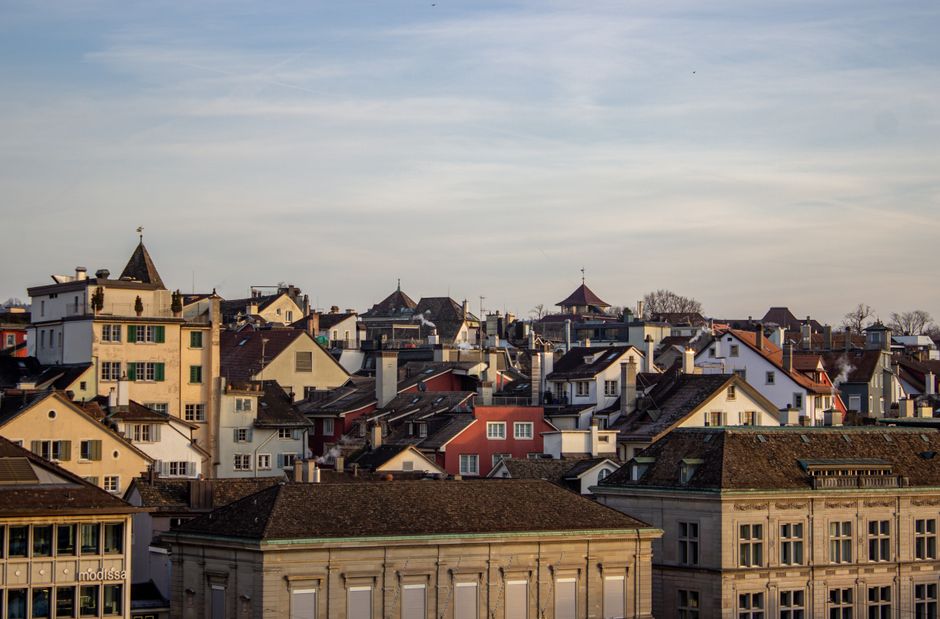
Walk across the Münsterbrücke on any weekday morning, and you'll witness the problem that shaped a generation of urban planning debates in Zurich: thousands of commuters converging on a medieval bridge designed for neither cars nor crowds of this magnitude. This bottleneck has become the physical embodiment of a larger infrastructure story—one rooted not in sudden crisis, but in the slow accumulation of deferred decisions.
The roots of today's transport pressures trace back to the 1990s, when regional growth around the Greater Zurich Area accelerated faster than planners anticipated. The city's population remained relatively stable at around 415,000, but the metropolitan area swelled to 1.3 million. This asymmetry created what transport experts call the "commuter paradox": Zurich's compact core became increasingly congested precisely because surrounding communities—from Schlieren to Dietikon to Thalwil—developed faster than transit networks could absorb.
Throughout the 2000s and 2010s, the city pursued what might be called "defensive infrastructure." The extension of the U6 tram line to Sihlcity in 2007, the incremental improvements to S-Bahn frequency—these were necessary but insufficient responses. Meanwhile, road congestion on the Gotthard route and through Zurich's eastern districts became endemic, with average commute times rising 22 percent between 2010 and 2025. By 2022, traffic analysis showed vehicles spent an estimated 8.3 million hours annually in congestion across the canton.
The turning point came not from any single event, but from the convergence of three pressures. First, Switzerland's 2050 climate targets demanded transport modal shift away from cars. Second, regional cooperation frameworks matured sufficiently that previously siloed suburban jurisdictions began coordinating infrastructure planning. Third, and perhaps most decisive, the Federal Office of Transport's 2023 assessment concluded that Zurich's existing networks had reached functional capacity.
This assessment catalyzed the current €4.2 billion program: the Durchmesserlinie project, expanded tram routes through Wiedikon and Aussersihl, and the long-debated restructuring of rail connections at Zurich Hauptbahnhof. What appears to some observers as a sudden acceleration is, in fact, the inevitable consequence of three decades of incremental problem-deferral finally reaching critical mass.
The irony is instructive: Zurich's legendary civic orderliness and planning culture, which created the compact, livable city that attracted such growth in the first place, inadvertently enabled the very congestion that now demands radical intervention. Success, as they say, breeds its own complications.
This article was compiled by AI from the sources linked above and screened before publishing. See our editorial standards.
How does this story make you feel?
Spread the word
About this article
Published by The Daily Zurich
Daily brief
Free, in your inbox before 7am. Weekdays.
More in News