Resilience AI: The Zurich Climate-Tech Startup You Need to Know About This Month
A Wiedikon-based deep-learning firm is quietly reshaping how insurers price risk in an age of extreme weather—and just closed a €12 million Series A round.
A Wiedikon-based deep-learning firm is quietly reshaping how insurers price risk in an age of extreme weather—and just closed a €12 million Series A round.
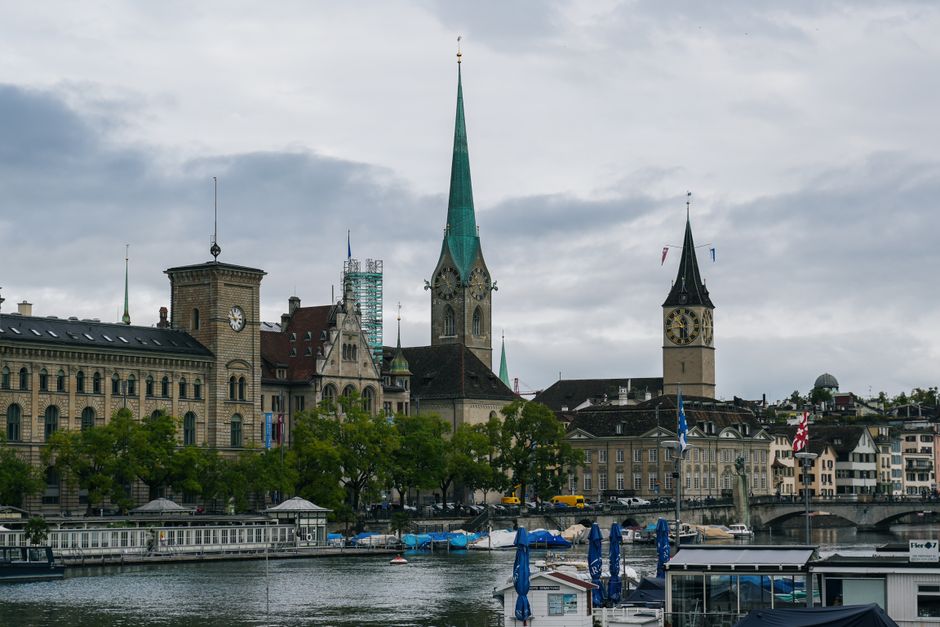
Walk down Geroldstrasse in Zurich's gritty Wiedikon district, and you'll find startup accelerators, design studios, and the kind of converted warehouse spaces that have become synonymous with Swiss tech innovation. Tucked among them is Resilience AI, a two-year-old climate analytics company that's rapidly becoming essential infrastructure for Europe's insurance sector—and just secured funding that signals serious institutional confidence.
The startup, which emerged from the ETH Zurich spinoff ecosystem, uses machine learning to predict hyper-local climate risks with unprecedented accuracy. Rather than relying on broad regional models, Resilience AI ingests satellite imagery, weather patterns, and hydrological data to generate risk assessments at the building level. For insurers—particularly those operating across Switzerland's fragmented Alpine geography—that granularity is transformative.
The €12 million Series A, led by Munich Re Ventures and Swiss reinsurer partner Zurich Insurance, closed last week. It's a validation of a thesis gaining traction in the Swiss venture ecosystem: climate adaptation technology isn't just socially necessary; it's becoming a primary economic driver. Switzerland's insurance industry, historically conservative but now under regulatory pressure to quantify climate exposure, is actively hunting for these tools.
What makes Resilience AI distinctive isn't just the science—it's the local moat. Their founding team includes researchers with deep roots at ETH and the University of Zurich, giving them access to computational resources and climate data partnerships that startups elsewhere struggle to replicate. They're also headquartered in a city where insurance brokers, reinsurers, and pension funds cluster within walking distance, eliminating the typical enterprise-sales friction that kills climate-tech companies in less-concentrated regions.
The broader context matters. Zurich's venture funding landscape has matured considerably—2025 saw roughly CHF 4.8 billion deployed across Swiss startups, with climate and deep-tech accounting for an outsized share. But capital alone isn't the differentiator. Resilience AI benefits from what might be called the Zurich advantage: embedded customer relationships, regulatory tailwinds, and a talent pool that hasn't yet migrated to California in search of higher valuations.
With offices planned in Amsterdam and Singapore by Q4, Resilience AI is clearly thinking beyond Switzerland. But like several other deep-tech winners emerging from Zurich's unglamorous but highly productive neighborhood hubs—from Europaallee to the Technopark—they're built on the principle that European problems deserve European solutions, developed with European capital.
For investors and entrepreneurs tracking climate adaptation opportunities, this is the inflection point worth watching.
This article was compiled by AI from the sources linked above and screened before publishing. See our editorial standards.
How does this story make you feel?
Spread the word
About this article
Published by The Daily Zurich
Daily brief
Free, in your inbox before 7am. Weekdays.
More in tech