Zurich's government technology roadmap is entering a critical acceleration phase. Over the next 18 months, the city administration plans to launch a suite of digital services that could fundamentally reshape how 440,000 residents interact with public institutions—and position Switzerland's largest city as a model for governed innovation across Europe.
The centerpiece is the expansion of the unified civic portal, currently being piloted in the Wiedikon and Altstetten districts. By Q4 2027, residents citywide will access permit applications, tax filings, parking reservations, and library services through a single biometric-verified interface. The pilot phase has already processed over 12,000 transactions, with average completion times dropping from 45 minutes to under 12 minutes for routine applications.
"We're not just digitising existing processes," explains the Stadtkanzlei's digital transformation team. "We're redesigning them from the ground up." That philosophy underpins the second major initiative: AI-assisted planning permissions. The system, developed in partnership with ETH Zurich's Computer Vision Lab, will automatically validate zoning compliance for residential building applications—reducing assessment time from weeks to days. Initial deployment targets the congested Europaplatz corridor and surrounding neighbourhoods, where housing demand remains acute.
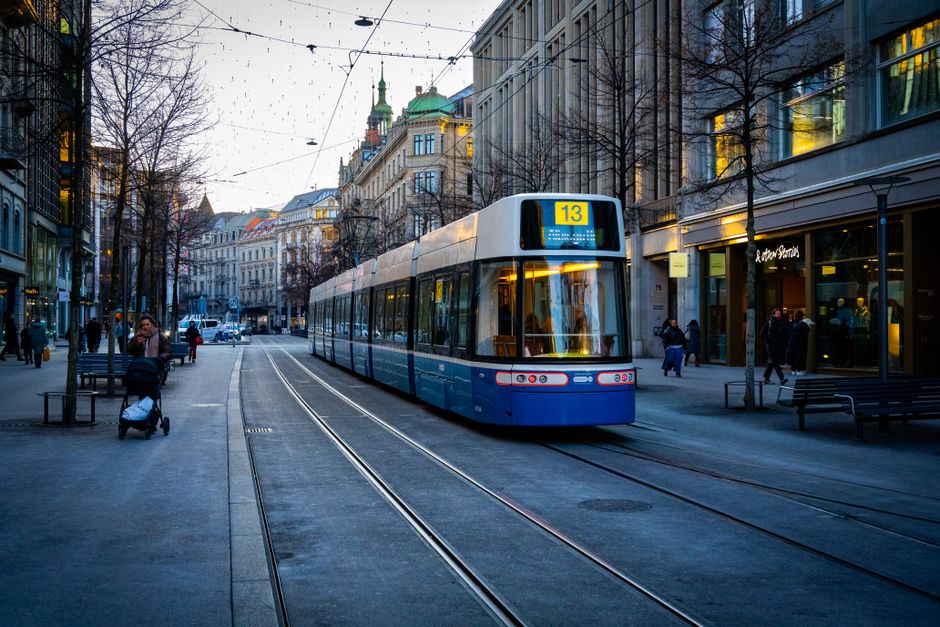
A third initiative addresses mobility friction. By early 2027, Zurich's integrated transport platform will consolidate data from ZVV buses, trams, the railway station, and private bike-sharing operators. Residents using the app will receive real-time journey planning that automatically rebooking trips if delays exceed five minutes—a feature particularly valuable given last winter's service disruptions.
Perhaps most ambitious: the "digital twin" of Zurich's utilities infrastructure. Jointly developed by the city and Siemens' Zug-based innovation hub, this 3D model will map water, electricity, and heating networks with centimetre-level precision. Municipal teams can now visualise infrastructure conflicts before breaking ground, reducing construction delays and costs by an estimated 18-22 percent.
Budget allocations remain substantial. The 2026-2027 technology appropriation reached CHF 47 million—a 34 percent increase over the previous biennium—reflecting the scale of ambition. Yet challenges persist. Data privacy concerns have surfaced in civic forums, particularly around biometric systems. The administration has committed to third-party audits and published a detailed privacy impact assessment available on the Stadt Zurich website.
These initiatives reflect a broader strategy: positioning Zurich not merely as a prosperous financial hub, but as a place where civic innovation and resident experience drive competitive advantage. By 2028, city officials predict that 70 percent of common transactions will be entirely digital—a figure that seemed distant just three years ago.
This article was compiled by AI from the sources linked above and screened before publishing. See our editorial standards.