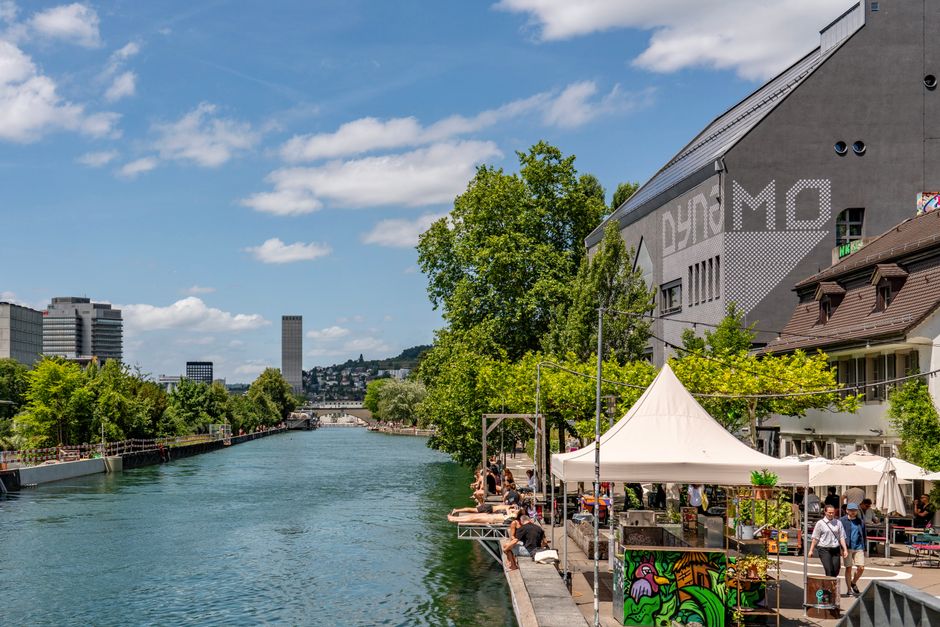
Walk through Zurich's Industriequartier today and you'll encounter murals that rival gallery exhibitions: sprawling abstract geometries on Geroldstrasse, photorealistic portraits spanning entire warehouse facades, intricate lettering that speaks to the neighbourhood's labour history. But this didn't happen by accident. Behind every legally sanctioned wall lies years of negotiation, creative risk-taking, and a handful of determined individuals who refused to accept that street art belonged only in the shadows.
The shift began around 2015 when scattered crews working illegally across the city's industrial zones started formalising their practice. Unlike the vandalism culture of earlier decades, this generation of artists—many trained at the Zurich University of Teacher Education or the School of Design and Art—began approaching property owners directly. They pitched visions. They showed portfolios. They made the case that blank concrete was wasted potential.
Key players included established collective Kraftfeld, which helped pioneer the artist-landlord dialogue model, and independent organisers who founded platforms like the annual Zurich Street Art Festival in 2017. The latter now draws over 15,000 visitors and has legitimised the medium in ways local authorities once resisted. Today, the city permits approximately 40 major public art installations annually, a tenfold increase from a decade ago.
The economics shifted too. What once existed in legal grey zones now generates measurable value. Property owners report increased foot traffic to formerly neglected industrial areas. Restaurants and design studios have opened along previously marginalised streets like Turnerstrasse, where murals by international artists now function as informal landmarks. A 2024 Zurich Tourism study estimated that street art districts attracted 200,000 additional visitors annually, generating roughly 8 million francs in secondary spending.
Yet the community remains protective of its grassroots DNA. Recent conflicts over corporate sponsorship of street art festivals and disputes over gentrification in Wiedikon show that artists and neighbourhood residents are wary of institutional co-option. The tension is real: formalisation brings resources and protection, but risks domesticating the rebellious energy that made street art vital.
Today's emerging artists navigate this carefully. They work within approved frameworks while maintaining creative autonomy. They're designing not just individual pieces but entire neighbourhood identities—transforming Zurich's relationship with public space itself. The walls that once represented transgression now tell the city's evolving story, written in paint by those determined enough to reimagine what urban culture could be.
This article was compiled by AI from the sources linked above and screened before publishing. See our editorial standards.