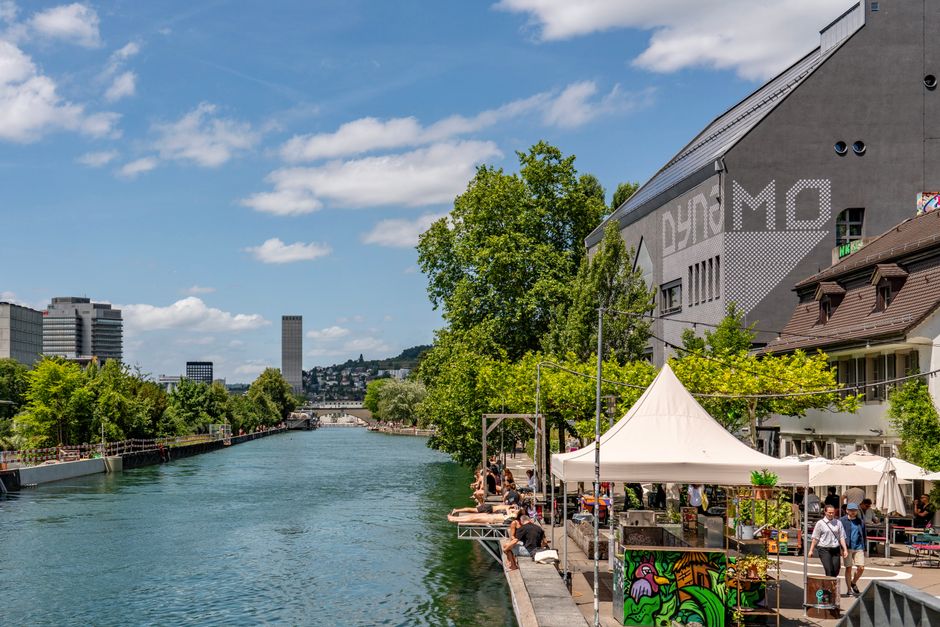
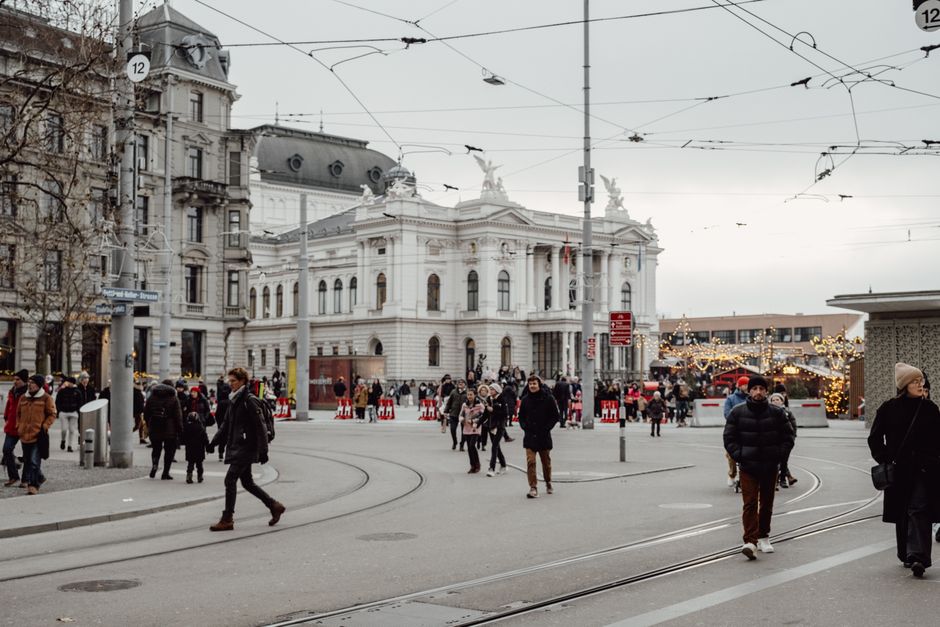
Walk through the Europaallee on a Friday afternoon, and you'll find Zoë Ghertner threading samples in a light-filled studio that, five years ago, was raw concrete and ambition. Her label, launched in 2021, sits alongside seventeen other independent fashion practices in what has become Zurich's most significant creative cluster outside the traditional luxury corridors of Bahnhofstrasse.
"We chose here because rent was sustainable," Ghertner explains, gesturing to the neighbourhood's renovated industrial spaces. "You can't build anything meaningful when you're haemorrhaging money to landlords." That pragmatism defines the current wave of Zurich fashion creators—a cohort less interested in the inherited prestige of Swiss watchmaking aesthetics than in questioning what Swiss fashion actually means in 2026.
The shift reflects broader patterns. Switzerland's fashion and creative industries employ roughly 89,000 people, generating 9.2 billion francs annually, according to the Federal Office of Culture. Yet most global fashion conversations still bypass Zurich entirely, fixating instead on Milan, Paris, and Copenhagen. Local designers have noticed.
In Wiedikon, atelier collective Krafthaus occupies a decommissioned textile factory—appropriate, given that Switzerland's fashion heritage is industrial rather than aristocratic. The twelve resident designers share equipment, knowledge, and deliberately unglamorous workspace. Monthly open studios draw collectors and press, but the real work happens in the everyday: pattern-cutting conversations, shared fabric suppliers, mentorship that flows laterally rather than downward.
"There's no hierarchical gatekeeping here," says one Krafthaus resident, whose sustainable knitwear line has grown 40 percent year-on-year through direct sales and limited wholesale. "That's not how we were trained, and frankly, it's not how Zurich works either."
The city's design schools—particularly ZHdK and the Zurich Fashion Institute—have shifted curriculums toward systems thinking and production ethics. Graduates increasingly reject traditional apprenticeship models, instead forming horizontal collectives or launching labels with deliberately limited collections. Prices reflect genuine material and labour costs rather than aspirational markup, challenging an industry conditioned to assume luxury requires obscurity.
What emerges isn't a scene in the Instagram sense—deliberately modest, sometimes aggressively anti-promotional. Rather, it's a reconception of what fashion's purpose could be: craft without mystique, quality without exclusion, innovation rooted in regional responsibility rather than global prestige.
By late autumn, Zurich's independent designers will mount their biennial showcase in Altstetten. It won't trend on TikTok. It doesn't need to. The real architecture here is relational: who teaches whom, what knowledge is shared, how creativity survives without the mythology.
This article was compiled by AI from the sources linked above and screened before publishing. See our editorial standards.