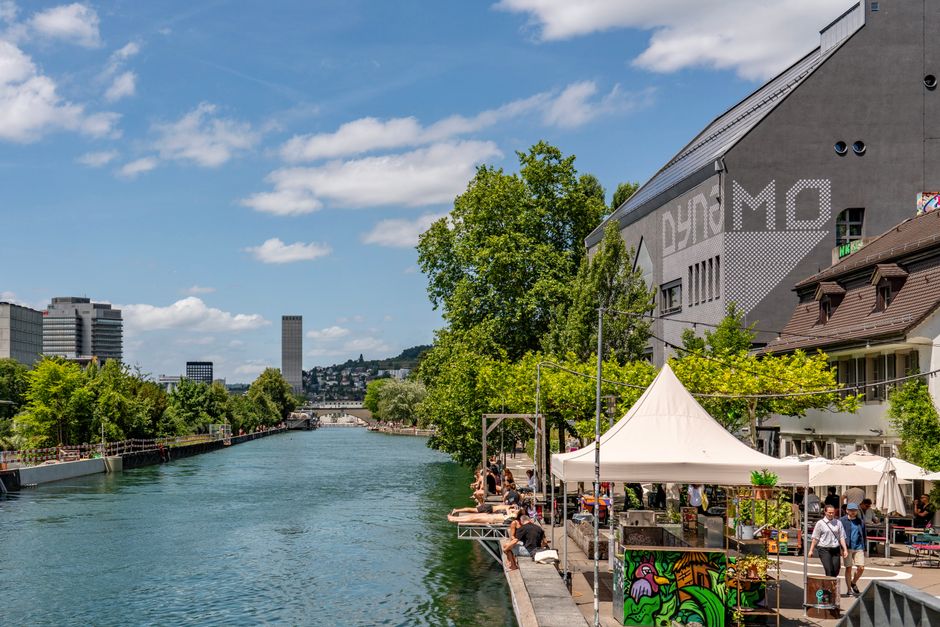
Walk through Zurich's Wiedikon district on a Saturday morning, and you'll encounter something unthinkable here fifteen years ago: an entire neighbourhood claiming street art as its cultural anchor. Massive murals wrap around converted warehouses on Geroldstrasse, while gallery-quality stencil work adorns the former industrial buildings along Europaallee. What began as isolated acts of creative defiance has crystallised into a genuine movement—one that's forcing Switzerland's wealthiest city to reckon with its relationship to urban culture.
The transformation didn't happen overnight, nor was it handed down from the city's planning department. It grew organically from a coalition of young designers, international artists, and local residents tired of Zurich's reputation for sterility. Between 2016 and 2020, a loosely organised network began approaching property owners with proposals: allow us to activate your blank walls, and watch what happens to foot traffic and community engagement. Some owners dismissed the idea. Others, particularly in struggling retail zones, saw an opportunity.
Today, the numbers tell a striking story. Wiedikon has seen a 34% increase in small creative businesses since 2019, according to local commerce associations. Rental prices for studio and gallery spaces in the district have climbed accordingly—a 400-square-metre artist studio now commands 800–1,200 CHF monthly, up from 450 CHF a decade ago. The Kunsthalle Zurich and Museum of Fine Arts have begun acquiring pieces from street artists who've legitimised their practice through gallery representation. What was once marginal is becoming economically significant.
The movement's strength lies in its distributed nature. There's no single authority directing the aesthetic. Instead, collectives like Zurich's underground design scene operate through networks of trust, peer review, and shared philosophy. Community groups such as the Wiedikon Culture Association now broker relationships between artists and property owners, formalising what were once guerrilla operations. The city's recent revision of public art guidelines—which now permits mural projects in designated creative zones—reflects how thoroughly this grassroots vision has penetrated institutional thinking.
Yet tensions persist. Gentrification shadows this success story. As Wiedikon becomes more desirable, original residents and artists who catalysed the transformation are being priced out. Long-time residents worry the neighbourhood's authenticity is being commodified. Some see the city's cooperation not as validation but as co-optation.
Still, the movement endures because it remains rooted in genuine creative conviction rather than marketing strategy. Street art in Zurich has evolved from transgression to cultural identity—a shift driven not by institutions, but by communities willing to imagine their city differently.
This article was compiled by AI from the sources linked above and screened before publishing. See our editorial standards.