Zurich's Migration Policy at a Crossroads: The Key Decisions Ahead
With integration funding up for renewal and a cantonal vote looming, Zurich's multicultural communities face a pivotal autumn that will shape the city for years.
With integration funding up for renewal and a cantonal vote looming, Zurich's multicultural communities face a pivotal autumn that will shape the city for years.
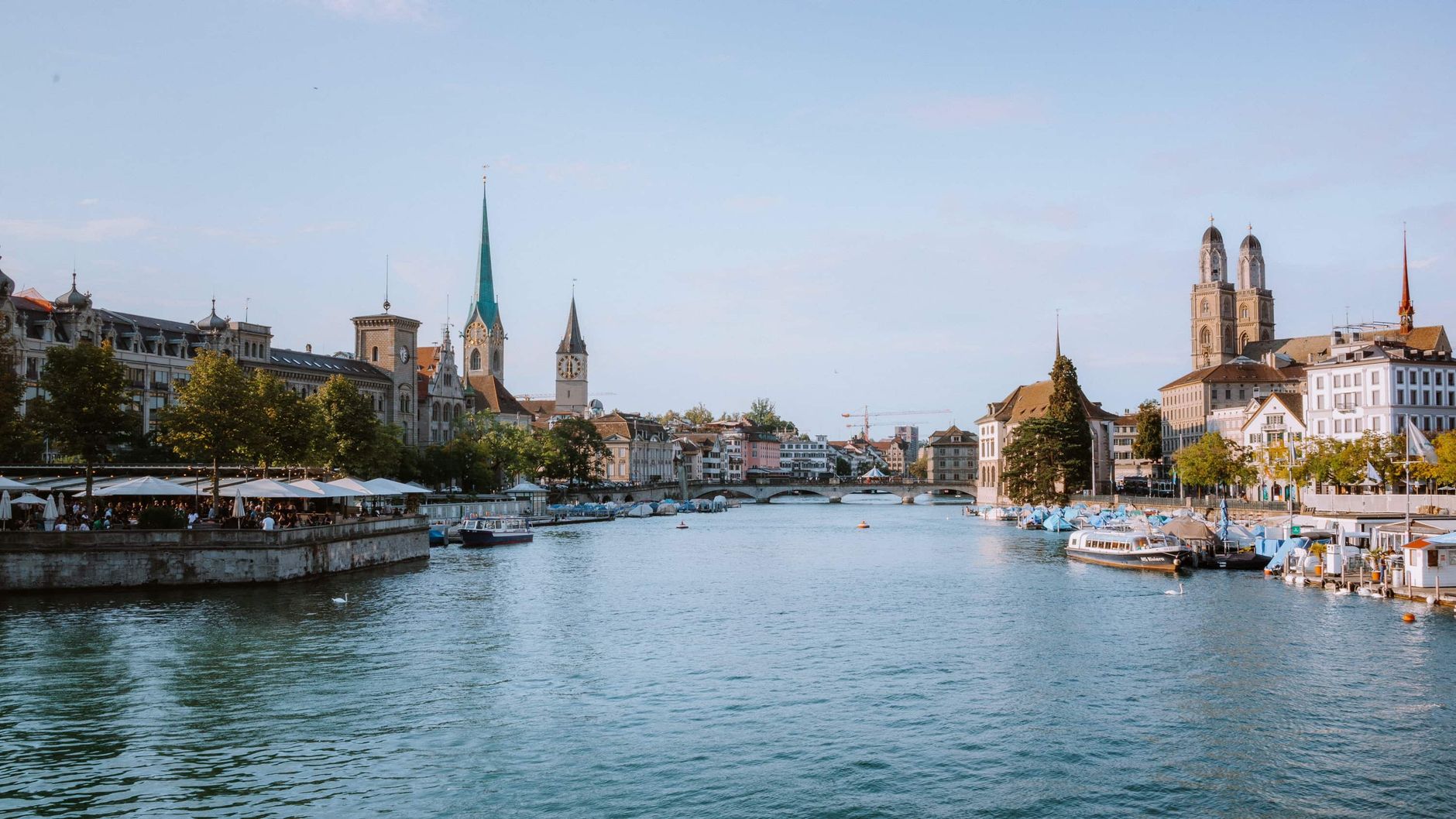
The city of Zurich will decide before year's end whether to extend its flagship integration programme, Integrationsagenda Zürich, beyond its current mandate — a choice that directly affects roughly 140,000 foreign-born residents who arrived in the canton after 2015. The programme's funding cycle expires on 31 December 2026, and cantonal authorities have given themselves until September to table a renewal proposal before the Kantonsrat.
The timing is not incidental. Across Europe, governments are recalibrating migration and integration spending under fiscal pressure. France recorded more than 2,000 excess deaths during last month's heatwave, exposing how marginalised communities — many of them migrant workers in poorly insulated housing — bear disproportionate climate costs. In Russia, domestic instability is generating new displacement pressures eastward into Central Asia and onward to Western Europe. Zurich, home to one of the continent's most internationally diverse urban populations, cannot pretend these dynamics are happening somewhere else.
The arguments are loudest in Langstrasse and Aussersihl, the two districts that together host the highest concentration of newly arrived residents — including significant Ukrainian, Eritrean, Afghan and Syrian communities. The Zurich-based NGO AOZ (Asylorganisation Zürich) runs language and vocational courses out of its Hohlstrasse facility and processed more than 12,000 individual case interactions in 2025 alone, according to its annual review. Staff there say demand for German A1-B1 language slots outstripped capacity by roughly 30 percent last year.
The city's Stadtentwicklung Zürich office released a housing stress index in May showing average rents in Kreis 4 — covering Langstrasse — have climbed to CHF 2,340 per month for a two-room flat, a 14 percent rise since 2023. Newly arrived families under temporary protection status, known as Schutzstatus S — a category introduced for Ukrainians in March 2022 — are not eligible for subsidised city housing until they have held continuous residence for 24 months. That creates a concrete bottleneck: several hundred households are currently caught in the gap between private-market rents they cannot afford and social housing they do not yet qualify for.
At the Volkshaus on Stauffacherstrasse, a cross-party working group met twice in June to sketch out what a revised integration framework might look like. The sticking point is money. The current programme is jointly financed — the federal government contributes CHF 6,000 per person per year under the cantonal integration programme (KIP) framework, with the canton matching roughly half that amount. Bern has signalled it will not increase the per-capita federal contribution before 2028, which means any expansion of services in Zurich must be Canton-funded or absorbed through municipal budgets already strained by the Wohnungsnot crisis.
Three decisions will define the next six months. First, the Kantonsrat is expected to vote in October on whether to allocate an interim CHF 18 million bridging package to keep AOZ and partner organisations funded through 2027. Second, a citizens' initiative backed by the SP and Grüne — demanding that S-status holders be granted full access to city housing waiting lists after 12 months rather than 24 — has until 15 August to gather the 3,000 signatures required to force a communal vote. Organisers say they have collected around 2,100 so far. Third, ETH Zurich's Social Sciences department is scheduled to publish a longitudinal study on labour market integration outcomes in September; its preliminary findings, circulated internally, reportedly show that migrants who completed AOZ vocational modules had employment rates 22 percentage points higher than those who did not, data that advocates intend to use as leverage with fiscal conservatives in the Kantonsrat.
For families currently navigating the system, the most practical near-term step is to register with AOZ's counselling office on Hohlstrasse before the autumn intake closes — places in the next German B1 cohort, starting 6 October, are already more than half-allocated. The political outcome remains open. The bridging vote in October will be the first real test of whether Zurich's governing coalition holds together on migration spending when the pressure is real rather than rhetorical.
How does this story make you feel?
Spread the word
About this article
Published by The Daily Zurich
Daily brief
Free, in your inbox before 7am. Weekdays.
More in News


