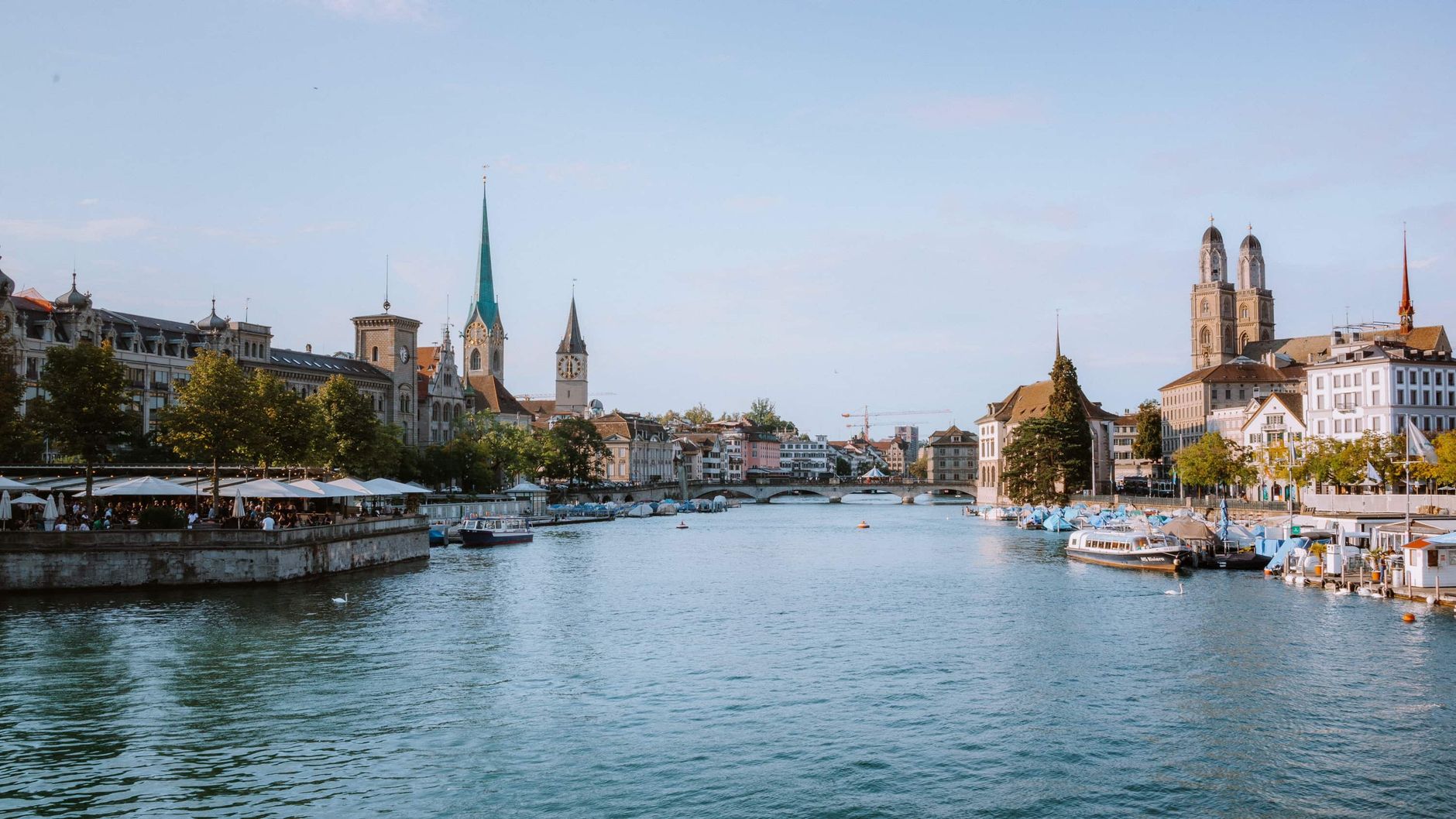
Zurich's municipal government confirmed last month that the city's per-capita CO₂ emissions fell to 3.1 tonnes in 2025, down from 5.8 tonnes in 2010. The number sounds like a victory lap. Officials at the Stadthaus on Stadthausquai are not treating it as one.
Europe is watching. France buried more than 2,000 people in excess deaths during this summer's heatwave peak. West African floods have killed dozens this week alone. The pressure on every major city to show it has a credible climate plan — not just aspirational documents — has rarely been higher. Zurich's trajectory matters because it offers one of the few municipal case studies where voters have repeatedly approved costly measures through the ballot box rather than having them imposed from above.
The Votes That Built the Framework
The foundation was laid not in a council chamber but in a series of cantonal and municipal referendums stretching back to 2008, when Zurich voters approved the 2000-Watt Society target — a national Swiss framework committing the city to cutting its energy consumption per person to 2,000 watts of continuous power draw. The concept, developed at ETH Zurich in the 1990s, gave planners a hard numerical ceiling rather than a vague aspiration. By 2021, a further city-level vote backed the Netto-Null 2040 target, cutting ten years off the federal government's timeline.
What followed was a cascade of policy. The city's Amt für Städtebau, the urban planning office, introduced mandatory energy retrofit standards for buildings constructed before 1990 — a significant move in a city where pre-war residential blocks crowd neighbourhoods from Wiedikon to Höngg. Landlords in older districts including Kreis 4 and Kreis 5 faced binding schedules to replace oil and gas heating with heat pumps or district heating connections by 2035. The Energie 360°, the city-owned energy utility headquartered on Förrlibuckstrasse in Kreis 5, expanded its district heating network by 38 kilometres between 2018 and 2024.
Public transport was already a strength, but the city doubled down. The Glattalbahn tram network, which links Zurich-Oerlikon to Kloten through the northeastern suburbs, carried 47,000 passengers daily in 2024 according to ZVV figures. Tram Line 2 and the S-Bahn network now handle roughly 400,000 daily boardings across the canton, keeping car dependency lower than in comparable German and French cities of similar size.
Where the Gaps Are
The harder problem is housing. Zurich's Wohnungsnot — the structural housing shortage that has pushed average rents above CHF 2,400 per month for a three-room apartment in central districts — creates a direct conflict with climate retrofitting. Landlords who invest in heat pump installations and insulation upgrades are permitted under Swiss tenancy law to pass a portion of costs onto tenants. In a market where vacancy rates sat at 0.07 percent as recently as 2023, that is enough to displace lower-income residents from Aussersihl and Altstetten into the outer ring or beyond the city limits entirely.
The city's Liegenschaftenverwaltung, which manages around 9,000 municipal apartments, has tried to model a different approach — subsidising retrofits on its own stock without rent increases. But it controls only a fraction of the total housing supply. Private landlords and institutional investors, including pension funds managing post-Credit Suisse portfolios, own the bulk of residential property and face different incentives.
ETH Zurich's urban resilience research group published findings in April 2026 showing that without direct subsidy instruments for private landlords, roughly 30 percent of the pre-1990 building stock would miss the 2035 heating deadline. The cantonal government is expected to table a financing proposal before the Kantonsrat before the end of the year.
Residents who want to track their own neighbourhood's progress can consult the city's publicly accessible Energiestadt dashboard, updated quarterly on the Stadt Zürich website, which maps building retrofit status down to the block level. The next municipal budget vote, scheduled for November 2026, will include a line item for CHF 180 million in retrofit co-financing — and given Zurich's history, that vote is the one worth watching.