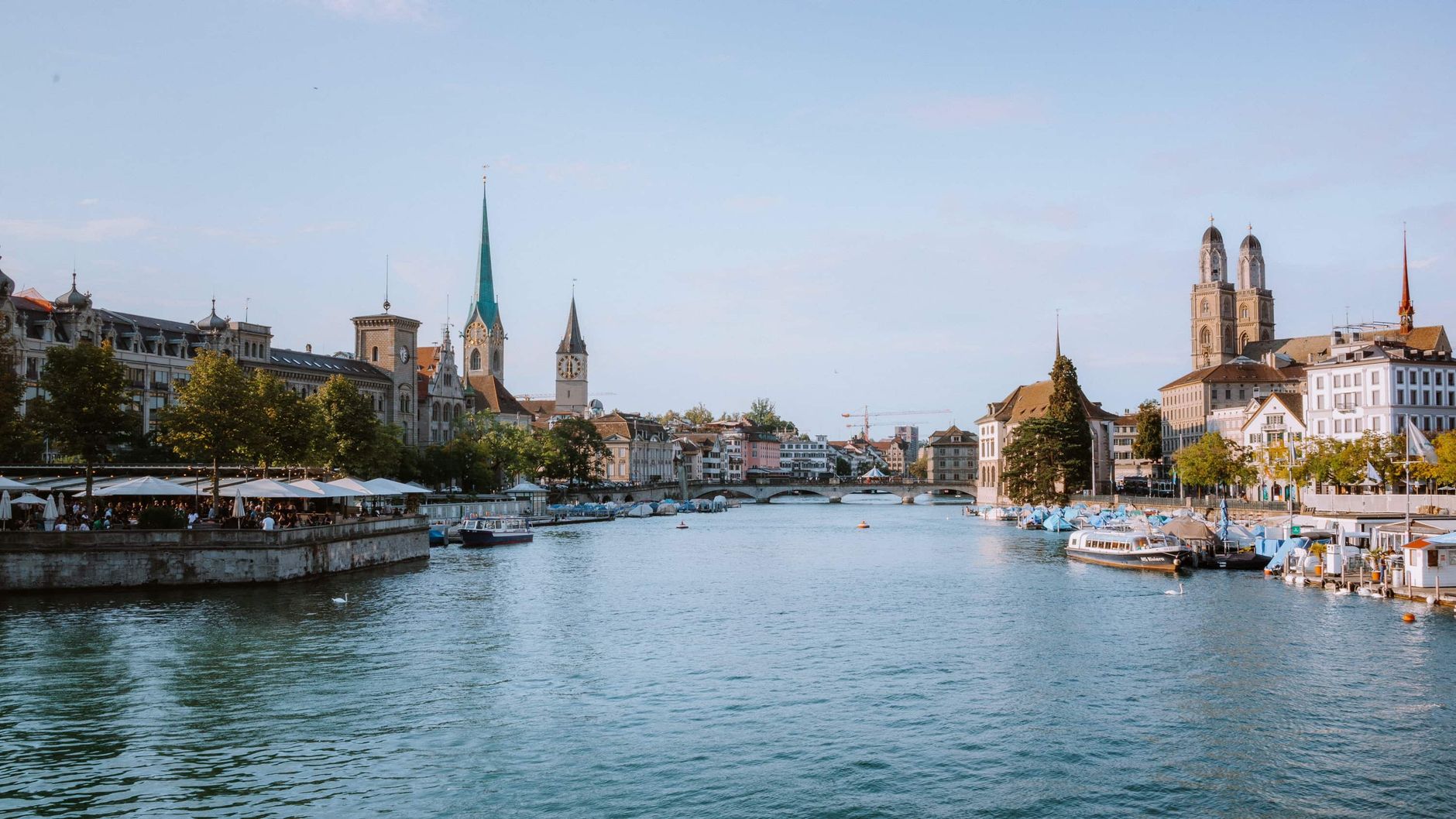
Zurich's rental vacancy rate hit 0.07 percent in the canton's most recent survey — effectively zero — and the people tasked with managing the consequences say the city has entered territory that standard policy tools cannot easily fix. That number, published by the Cantonal Statistical Office in April 2026, is the lowest recorded since unified tracking began in 1999. For residents in Kreis 4 and Kreis 5, the districts absorbing the heaviest redevelopment pressure, the figure is not abstract.
The timing matters. The wider European backdrop — heatwaves killing thousands in France, war anxiety tightening budgets across the continent — is accelerating migration patterns into Switzerland's economic core. ETH Zurich's Centre for Urban and Regional Planning flagged in a June 2026 working paper that net inward movement to the greater Zurich agglomeration ran at roughly 14,000 people in 2025, outpacing new housing completions by a ratio of nearly three to one. Demand is not slowing. Construction is.
What Officials Are Actually Saying
City councillor Simone Brander, who holds the urban development portfolio at Stadthaus Zürich on Stadthausquai, has been unusually direct in public forums this spring. Without attributing any specific quote to her, her department's official communications have framed the situation as a structural failure rather than a cyclical blip — language that represents a significant shift from the measured optimism that characterised the city's messaging as recently as 2023.
The Wohnungsnot crisis has become a standing agenda item at the Gemeinderat, Zurich's city parliament, where debates in May and June 2026 focused heavily on the Kalkbreite cooperative model in Kreis 4 and whether it can be replicated fast enough to absorb demand. Kalkbreite, the mixed-use cooperative development on Kalkbreitestrasse that opened in 2014, is frequently cited by housing economists as proof that community-led density can work — but it took twelve years and sustained political will to reach completion. Critics in the Gemeinderat have pointed out the city does not have twelve years to wait.
The Zurich Housing Office — Amt für Städtebau — estimates that the city needs a minimum of 5,000 new units by 2030 to stabilise the vacancy rate above 0.5 percent, a threshold broadly considered the minimum for a functioning rental market. Current pipeline projects, including the Hunziker Areal extension in Leutschenbach and the ongoing Neu-Oerlikon densification, account for roughly 2,800 units. The gap is not invisible to anyone paying attention.
Neighbourhood Voices and the Pressure Points
Community associations in Aussersihl and Langstrasse — historically Zurich's most diverse and densely populated streets — report that long-term residents are being pushed toward outer districts like Schwamendingen and Altstetten, where rents remain comparatively lower but public transport links are under strain. The Quartierverein Aussersihl submitted a formal petition to the city in March 2026 requesting a temporary moratorium on luxury conversions of rental stock, citing the loss of 340 affordable units in the district since 2022.
Housing economists at the University of Zurich's Department of Geography have been less sympathetic to demand-side interventions, arguing in published research that rent controls — already tightly regulated under the Swiss Code of Obligations — are being stretched to their legal limits without producing measurable relief. Their preferred prescription: accelerate rezoning on the city's western fringe, particularly around the Altstetten S-Bahn corridor, and reduce the approval timeline for cooperative building applications from the current average of four years to eighteen months.
For residents watching the debate from inside cramped apartments, the practical advice from community organisations right now is blunt: register with multiple housing cooperatives simultaneously, including GBMZ and Wogeno Zürich, and do not wait for a single preferred option. Waiting lists at both organisations currently run between three and seven years depending on apartment size. The city's Beratungsstelle für Wohnungssuchende on Geroldstrasse offers free consultations on Tuesdays and Thursdays — slots that, according to the office's own figures, have been fully booked two weeks in advance since February.