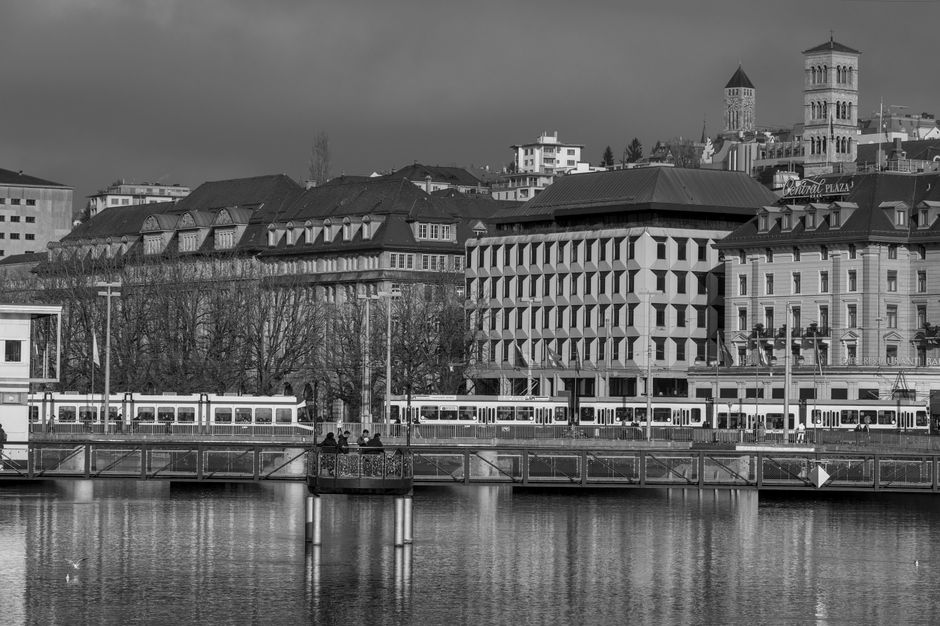
As Switzerland prepares for crucial votes on asylum and labour migration, Zurich's diverse communities face an uncertain future—and city leaders must decide whether to lead or follow.
As vacancy rates plummet to 0.3%, municipal leaders and housing advocates reveal their competing visions for tackling affordability in Switzerland's most expensive city.
From early morning tram conductors to night-shift cycle couriers, the daily journeys of ordinary Zurichers reveal the beating heart of a city that runs on human connection.
Behind the legendary venues and movements that defined Zurich's cultural identity are the visionary organisers, artists, and activists who challenged the establishment and created spaces for radical expression.
From industrial warehouses to riverside galleries, the city's creative districts have transformed into open-air museums that rival any traditional collection.
This week's municipal vote paves the way for improved transit connections while sparking intense discussion over housing affordability in the lakeside canton.
City council's controversial vote on mixed-use development could finally ease the affordability crisis—or accelerate gentrification in districts like Wiedikon and Aussersihl.
Fresh statistics show ETH Zurich and University of Zurich struggling with record enrolment while government investment stalls, raising questions about quality and accessibility.
As affordable rents in Zurich's most diverse neighbourhood hit a breaking point, residents and planners face pivotal decisions that could reshape the district within three years.
Municipal officials and sustainability experts detail concrete plans to reduce emissions by half within four years, citing shifts in public transport, building retrofits, and green finance as critical pillars.
As the SZU expansion deadline approaches, transport officials and urban architects voice sharply divergent views on whether the ageing bridge can sustain the city's growth.